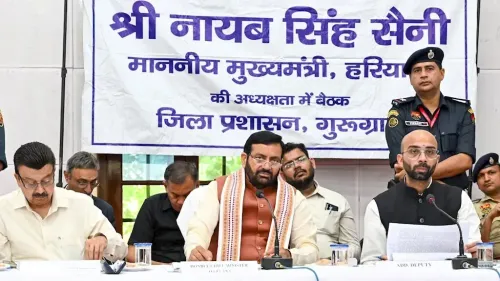
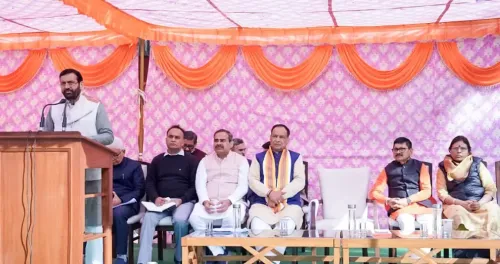
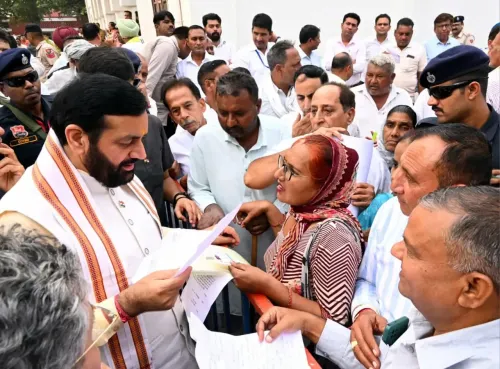
CM Nayab Saini Reviews Samadhan Portal in Chandigarh
Synopsis
Haryana CM Nayab Singh Saini reviewed the Samadhan Prakosth Portal in Chandigarh on October 9, directing all state departments to resolve public grievances in a transparent, time-bound manner and ensure regular monitoring of Samadhan Shivir camps.
Key Takeaways
CM Nayab Singh Saini reviewed the Samadhan Prakosth Portal in Chandigarh on October 9, 2026 .
The review focused on complaints received through Samadhan Shivir camps held across Haryana.
Officials were directed to ensure effective and time-bound resolution of all pending grievances.
Saini called for inter-departmental coordination to prevent complaints from stalling between ministries.
Regular monitoring of Samadhan Shivirs was mandated to track complaint closure rates.
The Chief Minister stressed transparency as a non-negotiable standard for the redressal process.
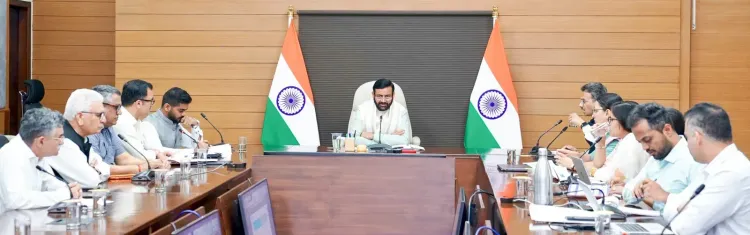
Haryana Chief Minister Nayab Singh Saini chaired a review of the state's 'Samadhan Prakosth Portal' in Chandigarh on Friday, October 9, pushing officials to resolve public grievances faster, more transparently, and within strict timelines — a direct signal that the government's citizen-redressal machinery is under active scrutiny at the top.
What the Samadhan Portal review demanded
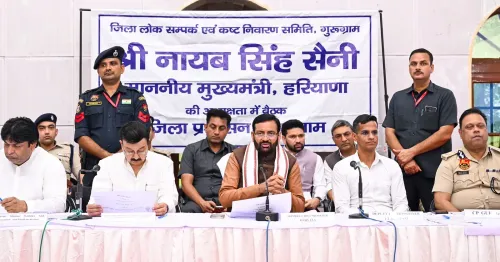
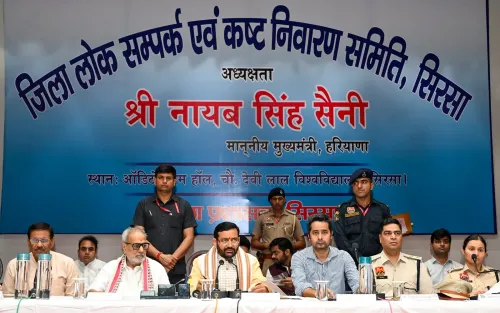
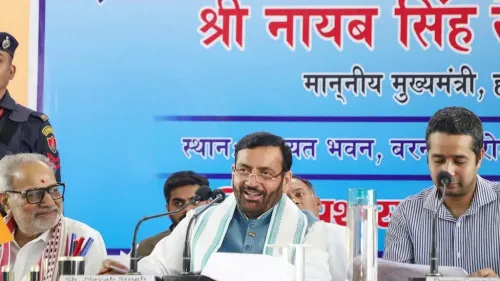
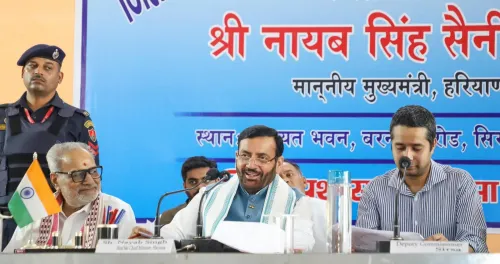
Saini convened the session to examine the status of complaints received through the Samadhan Shivir camps — government outreach drives where citizens submit grievances in person. He directed officials to take the pending cases seriously and to ensure 'effective and time-bound resolution,' as he put it in his post: 'prabhavi evam samayabaddh samadhan' (effective and time-bound redressal).
The Chief Minister did not stop at directives. He called for all departments to operate with mutual coordination and for regular monitoring of the Samadhan Shivir process — a clear acknowledgment that siloed functioning between departments has been a bottleneck in turning complaints into closures.
Samadhan Shivirs: Haryana's grievance-camp model
The Samadhan Shivir model is a field-level grievance-redressal format under which state officials travel to districts and blocks, holding open camps for residents to file complaints directly with the administration. The Samadhan Prakosth Portal is the digital backbone tracking these complaints — logging receipt, department assignment, status, and closure. Reviewing the portal at the Chief Ministerial level is significant: it places accountability for pending cases squarely on departmental heads, not just field officers.
Saini framed the effort as continuous work for 'the family members of Haryana' — 'mere parivaarjanon ki shikaayaton aur samasyaon ka samay par aur paardarshi tarike se nivaaran' — emphasising timeliness and transparency as the twin benchmarks his government will be judged on.
The governance message behind the review
Calling a high-level review of a grievance portal is rarely accidental political theatre. It signals to the bureaucracy that unresolved complaints have a paper trail that reaches the Chief Minister's office. The instruction for departments to coordinate — rather than pass complaints between themselves — targets one of the most common reasons public grievances languish: jurisdictional ambiguity. That instruction, combined with a monitoring mandate, is designed to remove the two most common escape routes for inaction.
For Haryana citizens who have filed complaints at a Samadhan Shivir, Friday's review means their cases are now on a dashboard that the state's top executive is watching. The next measure of success will be in the numbers: how many complaints get closed, how fast, and whether the portal's data backs up the promise.
Point of View
Not buried in departmental queues. For Saini, this is consistent governance optics: visible, process-oriented action that is hard to attack but easy to communicate to voters. The emphasis on inter-departmental coordination and regular monitoring addresses a structural failure — siloed administration — that has historically made grievance redressal systems more symbolic than functional. The real test will come when the portal's closure-rate data is made public.
NationPress
9 Oct 2026
Frequently Asked Questions
What is the Samadhan Prakosth Portal in Haryana?
The Samadhan Prakosth Portal is Haryana's digital grievance-tracking system that logs public complaints received at Samadhan Shivir camps, monitors their status across departments, and tracks resolution timelines.
What is a Samadhan Shivir in Haryana?
A Samadhan Shivir is a government-organised outreach camp held at the district or block level where Haryana residents can directly submit complaints and problems to state officials for redressal.
What did CM Nayab Singh Saini direct officials during the October 9 review?
Saini directed officials to resolve portal-listed complaints in an effective and time-bound manner, ensured all departments work in mutual coordination, and mandated regular monitoring of Samadhan Shivir outcomes.
Where did the Samadhan Portal review meeting take place?
The review meeting was held in Chandigarh, the capital of Haryana, on Friday, October 9, 2026.
Why is inter-departmental coordination important for Haryana's grievance system?
Many public complaints involve multiple government departments, and without coordination they can stall between ministries. CM Saini specifically called for coordinated functioning to prevent such delays in closing citizen grievances.