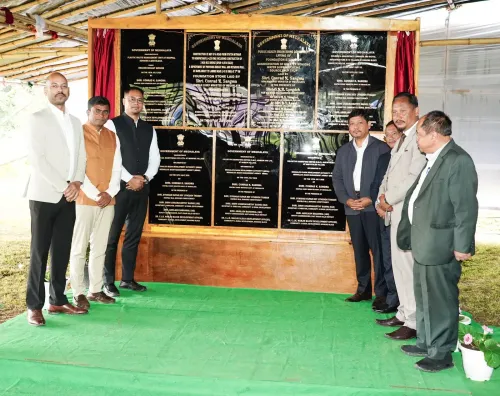
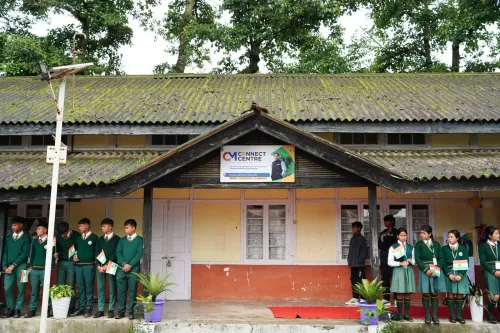
CM Conrad Sangma inaugurates Synod College new building in Nongstoin

Synopsis
Meghalaya CM Conrad Sangma inaugurated a new building, library, and interactive smart classrooms at Synod College, Nongstoin, on October 15, 2026, expanding higher education infrastructure in West Khasi Hills District in partnership with the Presbyterian Church.
Key Takeaways
Synod College, Nongstoin received a newly constructed building, a library, and interactive smart classrooms inaugurated on October 15, 2026 .
The college is affiliated with the Presbyterian Church , a historically dominant provider of formal education across Meghalaya and the northeast.
CM Conrad Sangma cited eight years of government effort to strengthen Meghalaya's education ecosystem from grassroots to higher education.
The project is located in West Khasi Hills District , with Nongstoin as its headquarters — a geographically challenging region where infrastructure upgrades carry high impact.
Sangma called on the Presbyterian Church and Synod College community to continue partnering with the state on 'better learning environments' for Meghalaya's youth.
A new building, a library, and smart classrooms — Meghalaya Chief Minister Conrad Sangma on Thursday, October 15, 2026, inaugurated the freshly constructed facilities at Synod College, Nongstoin, marking a concrete upgrade to higher education infrastructure in the West Khasi Hills District.
Smart classrooms reach West Khasi Hills
The inauguration covers three distinct additions to the campus: a new main building, a library, and interactive smart classrooms. For students in Nongstoin — the district headquarters of West Khasi Hills — the upgrade means access to digital learning tools that have long been concentrated in larger urban centres. Sangma noted that education 'remains central to Meghalaya's progress,' and cited eight years of consistent work to strengthen the state's education ecosystem 'from grassroots learning to higher education.'
The Presbyterian Church's century-long classroom
Synod College is affiliated with the Presbyterian Church, one of the most significant providers of formal education across Meghalaya and the broader northeast. Church-managed institutions have historically formed the backbone of schooling in the region long before state infrastructure caught up — a reality successive governments have leaned into rather than worked around. Sangma explicitly acknowledged this, appreciating 'the Presbyterian Church and the Synod College community for their continued contribution to education and nation-building.' That framing — church as partner, not just recipient — signals the government's intent to deepen rather than replace the existing institutional network.
Eight years of infrastructure, one district at a time
Since 2018, the Sangma administration has consistently flagged education infrastructure as a priority, with upgrades rolled out from school to college level across the state. The Synod College project fits that pattern: government support flowing into an institution it does not own, to serve students it is accountable to. West Khasi Hills, geographically challenging and sparsely connected, represents precisely the kind of district where physical infrastructure improvements carry outsized impact. A new library and smart classrooms do not just update a campus — they change what a student from that district believes is possible.
The Chief Minister closed with a forward-looking note, expressing hope to 'work together to create better learning environments and greater opportunities for the youth' of Meghalaya. The next test is whether district-level upgrades like this one translate into measurable outcomes — enrolment numbers, graduate placements, and eventually, a state budget that makes the next Synod College possible without waiting eight years.
Point of View
Sangma's framing of education as the thread linking his entire tenure signals that higher education infrastructure will likely feature prominently in any pre-election narrative. The inclusion of smart classrooms in a district headquarters like Nongstoin is also part of a wider northeastern push to close the digital education gap without waiting for broadband-first strategies to mature. Whether these investments translate into retention of educated youth within the state — rather than outmigration — remains the deeper structural question.
NationPress
15 Oct 2026
Frequently Asked Questions
What was inaugurated at Synod College Nongstoin?
Chief Minister Conrad Sangma inaugurated a newly constructed main building, a library, and interactive smart classrooms at Synod College, Nongstoin, on October 15, 2026.
Where is Synod College located?
Synod College is located in Nongstoin, the headquarters of West Khasi Hills District in Meghalaya.
Which church runs Synod College Meghalaya?
Synod College is affiliated with the Presbyterian Church, one of the largest providers of educational institutions across Meghalaya and the northeastern states.
What is Conrad Sangma's education policy for Meghalaya?
Since taking office in 2018, CM Conrad Sangma has stated a consistent focus on upgrading educational infrastructure from school to college level and expanding digital learning facilities across the state.
How long has Conrad Sangma been Chief Minister of Meghalaya?
Conrad Sangma has been Chief Minister of Meghalaya since 2018 — a span he himself described as 'over 8 years' of work on the state's education ecosystem.