Meghalaya CM Conrad Sangma launches ₹5.90 crore Pine Home eco-tourism project in South West Khasi Hills
Synopsis
Meghalaya's Pine Home project in Mawlangwir isn't just a ₹5.90 crore eco-resort — Chief Minister Conrad Sangma is positioning it as the prototype for replicating climate-resilient, community-owned tourism infrastructure across all three hill regions, backed by a 3,000-homestay target by 2028 and a cultural scholarship programme reaching Vietnam, Cambodia, and Tibet.
Key Takeaways
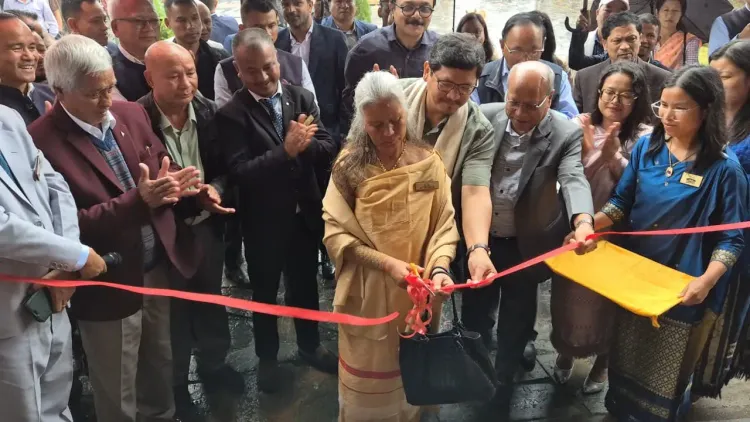
Sangma inaugurated the Pine Home Eco-Sustainable Project at Mawlangwir village, South West Khasi Hills on 17 August .
The project cost approximately ₹5.90 crore , developed through the Saitsnat Multipurpose Cooperative Society .
Facilities include a restaurant, community hall, conference rooms, guest rooms, and a Tourism Information Centre, built using local materials and artisans.
The CM Homestay Mission targets 3,000 homestays across Meghalaya by 2028 .
Sangma also remotely inaugurated the Twahlongwar Open-Air Museum in Mawsynram at the same event.
Under 'Tracing the Roots' , 75 scholars will visit Vietnam, Cambodia, and Tibet to research Khasi, Jaintia, and Garo community origins.
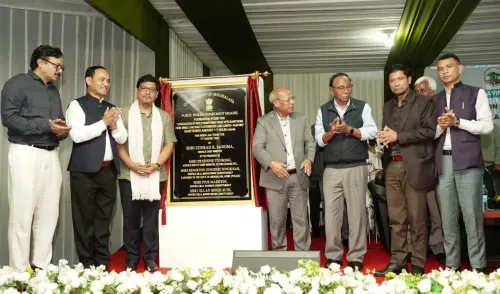
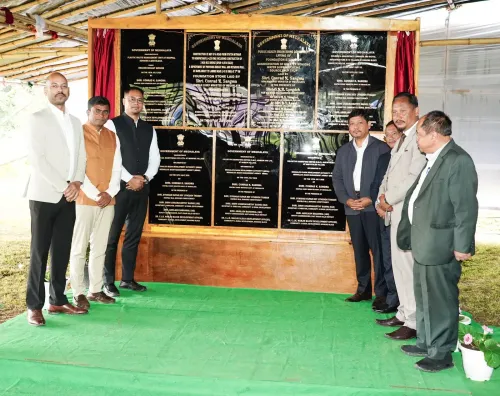
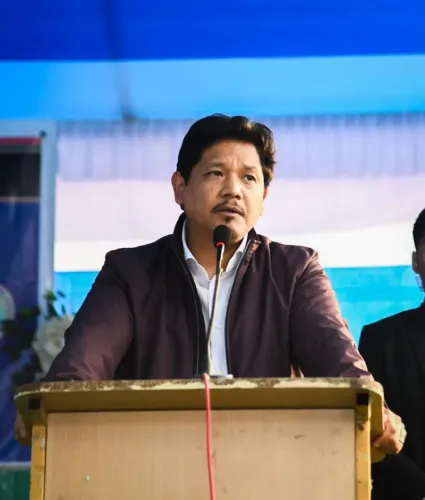
Meghalaya Chief Minister Conrad K. Sangma on Monday, 17 August inaugurated the Pine Home Eco-Sustainable Project at Mawlangwir village in South West Khasi Hills, describing it as a blueprint for community-driven, environmentally responsible tourism across the state. The facility, developed at an investment of approximately ₹5.90 crore through the Saitsnat Multipurpose Cooperative Society, combines traditional building knowledge with modern sustainable infrastructure.
What the Pine Home Project Offers
The facility spans a restaurant and community hall, conference and training spaces, guest rooms, and a Tourism Information Centre. Notably, construction relied on materials sourced largely from the local area, with artisans and workers from the community playing a central role. Sangma highlighted features including natural heating systems, recycled materials, and rainwater conservation as evidence that sustainability and innovation need not conflict.
'The idea is to preserve the natural landscape while bringing in modern innovation,' Sangma said at the inauguration.
A Wider Vision for Meghalaya Tourism
Sangma said the government wants South West Khasi Hills to become a destination where visitors stay longer and spend more within local economies. He cited the CM Homestay Mission, under which the state aims to establish 3,000 homestays across Meghalaya by 2028, generating employment and supplementary income for households across the hills.
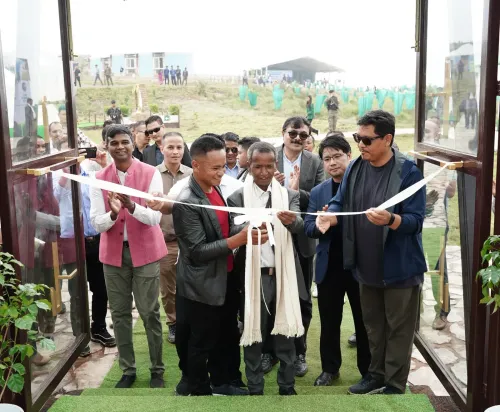
At the same event, Sangma remotely inaugurated the Twahlongwar Open-Air Museum in Mawsynram, framing both projects as part of the government's push to extend development beyond Shillong. He described Pine Home as a 'living laboratory' and Twahlongwar as a 'living classroom' for replicating climate-resilient infrastructure — schools, healthcare facilities, eco-lodges, and homestays — across the state.
Cultural Research and Community Identity
Beyond tourism, Sangma underscored the government's investment in cultural continuity. The Chief Minister's Research Grant has supported 48 scholars in its first year. Under the 'Tracing the Roots' initiative, 75 scholars will travel to Vietnam, Cambodia, and Tibet to study the origins and migration histories of the Khasi, Jaintia, and Garo communities.
'A society that knows where it came from walks with far greater confidence into where it is going,' Sangma said.
Officials and Leaders Present
Deputy Chief Minister Prestone Tynsong, Tourism Minister Timothy D. Shira, Chief Secretary Shakil P. Ahammed, traditional leaders, and community representatives attended the programme. Their presence signals broad institutional backing for the project's replication model across Meghalaya's three hill regions — Garo Hills, Khasi Hills, and Jaintia Hills.
With the CM Homestay Mission's 2028 deadline and a pipeline of community-anchored projects, Meghalaya's sustainable tourism framework is set to be tested at scale in the years ahead.
Point of View
But the real question is replicability. Meghalaya has a history of promising community tourism models that remain isolated showcases rather than scalable templates — the 3,000-homestay target by 2028 is ambitious given that land tenure complexity and connectivity gaps have historically slowed similar rollouts. The 'Tracing the Roots' scholarship programme adds cultural depth but is peripheral to the economic challenge of keeping tourism revenue within village economies. If Pine Home's cooperative ownership structure is genuinely transferable, that is the detail worth scrutinising — not the inauguration itself.
NationPress
2 Oct 2026
Frequently Asked Questions
What is the Pine Home Eco-Sustainable Project in Meghalaya?
The Pine Home Eco-Sustainable Project is a community-owned tourism facility at Mawlangwir village in South West Khasi Hills, inaugurated by Chief Minister Conrad K. Sangma on 17 August. Built at a cost of approximately ₹5.90 crore through the Saitsnat Multipurpose Cooperative Society, it includes a restaurant, community hall, conference facilities, guest rooms, and a Tourism Information Centre.
Why is Pine Home significant for Meghalaya's tourism policy?
Chief Minister Sangma has positioned Pine Home as a model for replicating sustainable, community-driven tourism infrastructure across Meghalaya's three hill regions. The project demonstrates how local materials, indigenous skills, and modern eco-design can be combined while keeping economic benefits within local communities.
What is the CM Homestay Mission and its target?
The CM Homestay Mission is a Meghalaya government programme that aims to establish 3,000 homestays across the state by 2028. It is designed to generate employment and supplementary income for households in rural and hill communities.
What is the Twahlongwar Open-Air Museum in Mawsynram?
The Twahlongwar Open-Air Museum, located in Mawsynram, was remotely inaugurated by CM Sangma at the same event. Sangma described it as a 'living classroom' for sustainable development, complementing Pine Home's role as a 'living laboratory.'
What is the 'Tracing the Roots' initiative announced by CM Sangma?
'Tracing the Roots' is a cultural scholarship initiative under which 75 scholars will travel to Vietnam, Cambodia, and Tibet to study the origins and migration histories of the Khasi, Jaintia, and Garo communities. The Chief Minister's Research Grant has already supported 48 scholars in its first year.