BRICS summit outcome vindicates Modi's leadership, says Assam CM Sarma
Synopsis
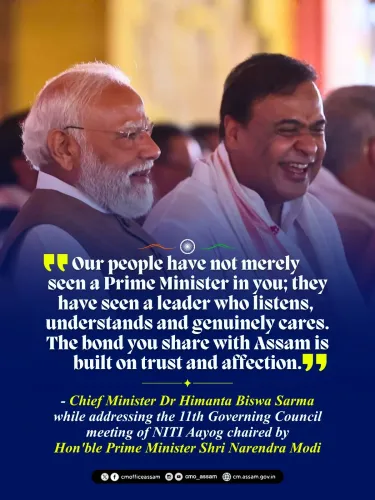
Assam CM Himanta Biswa Sarma publicly credited PM Modi with defying pre-summit sceptics and forging meaningful consensus at the BRICS summit hosted in India — framing the outcome as proof that strong leadership can bridge deep geopolitical divides within the expanding bloc.
Key Takeaways
Assam CM Himanta Biswa Sarma praised PM Narendra Modi 's role in achieving BRICS consensus on 13 September 2026 .
Sarma posted his remarks on social media platform X , citing widespread global media recognition of Modi's diplomatic role.
Critics had predicted the summit would fail to produce meaningful outcomes given divisions among member nations.
The BRICS grouping has expanded significantly in recent years, bringing together countries with divergent political and strategic interests.
India hosted the summit as it seeks a stronger voice in global economic governance and multilateral cooperation.
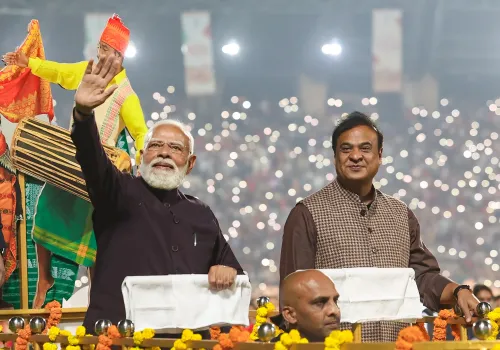
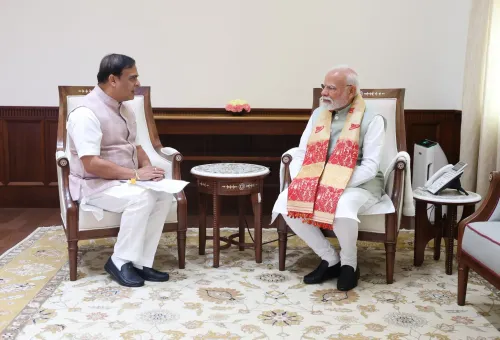
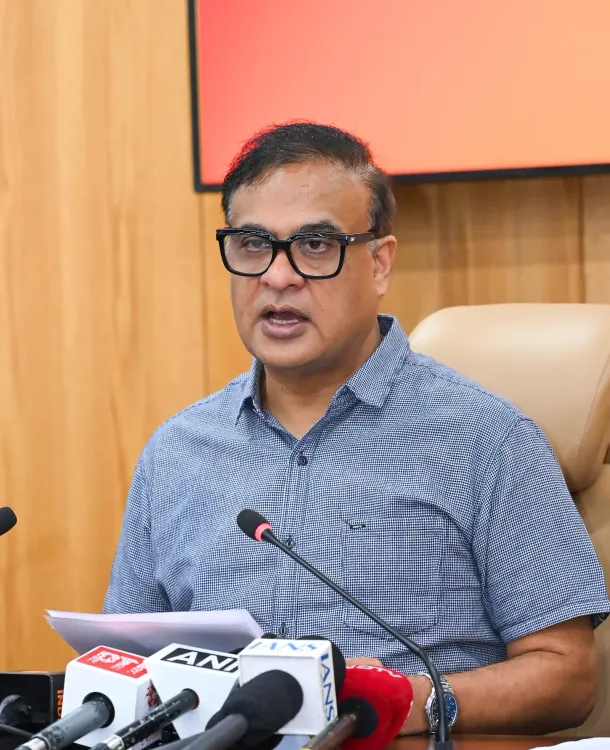
Assam Chief Minister Himanta Biswa Sarma on Sunday, 13 September 2026, praised Prime Minister Narendra Modi for forging consensus among BRICS nations, asserting that the summit's outcome proved that complex geopolitical challenges can be resolved through determined leadership, sustained dialogue, and multilateral cooperation.
Sarma's Remarks on X
In a post on social media platform X, Chief Minister Sarma said he was encouraged by international media coverage acknowledging Modi's diplomatic role. 'This morning, as I scanned the headlines of leading newspapers across the world, it was heartening to see the widespread recognition of Prime Minister Narendra Modi Ji's stellar role in forging consensus among the BRICS nations,' Sarma wrote.
Defying Pre-Summit Scepticism
Sarma noted that significant scepticism had surrounded the summit ahead of its conclusion, with critics warning that deep differences among member nations could reduce the gathering to ceremonial declarations. 'In today's complex geopolitical climate, the doomsayers were out in full force, certain the summit would collapse into empty statements,' he said. The summit's outcome, he argued, demonstrated otherwise. 'Yet the outcome speaks for itself: with the right leadership, consensus and solutions can be forged even in the most difficult circumstances,' Sarma added.
India's Diplomatic Positioning
The summit was held in India, where leaders of the expanded BRICS grouping deliberated on a wide range of global economic and geopolitical issues. The bloc has grown considerably in recent years, now encompassing countries with sharply divergent political, economic, and strategic interests — making internal consensus increasingly difficult to achieve. Sarma's comments framed India's hosting of the summit and Modi's role within it as a demonstration of the country's growing influence in shaping the multilateral order.
Broader Significance for India's Global Role
The remarks come as India actively seeks to strengthen its standing in global economic governance discussions, including within multilateral forums such as BRICS, G20, and the UN. Analysts have noted that managing the bloc's internal contradictions — particularly between members with competing geopolitical alignments — has emerged as one of the central challenges of India's current diplomatic engagement. Chief Minister Sarma's statement underlined the importance New Delhi attaches to consensus-building as a marker of effective international leadership.
What Comes Next
The focus now shifts to how the agreements and positions reached at the BRICS summit translate into concrete multilateral action. India's ability to sustain momentum from the summit outcome will be closely watched, particularly as global geopolitical pressures — including tensions among major powers — continue to test multilateral frameworks.
Point of View
Ideologically diverse BRICS that includes countries with conflicting geopolitical alignments makes real consensus harder, not easier, to achieve — and headline declarations are not the same as binding commitments.
NationPress
13 Sept 2026
Frequently Asked Questions
What did Assam CM Himanta Biswa Sarma say about PM Modi and BRICS?
Sarma praised PM Modi for successfully forging consensus among BRICS nations at the India-hosted summit, saying the outcome proved that strong leadership could overcome deep geopolitical differences. He posted his remarks on social media platform X on 13 September 2026, citing global media recognition of Modi's diplomatic role.
Where was the BRICS summit held and what was discussed?
The summit was hosted in India, where leaders of the expanded BRICS grouping deliberated on a range of global economic and geopolitical issues amid continuing international tensions. The specific agreements reached have not been detailed in the available statements.
Why had critics been sceptical about the BRICS summit outcome?
Critics argued that deep differences among BRICS member nations — which now span countries with divergent political, economic, and strategic interests — could prevent the grouping from reaching meaningful conclusions. Sarma acknowledged this scepticism but said the summit results proved the doubters wrong.
Why does BRICS consensus matter for India?
India has been positioning itself as a key voice in global economic governance and multilateral diplomacy. Achieving consensus within an expanded and ideologically diverse BRICS is seen as a marker of India's diplomatic influence and its ability to bridge competing global interests.
What happens after the BRICS summit?
Attention now turns to whether the consensus positions reached at the summit translate into concrete multilateral action. India's ability to sustain the diplomatic momentum will be closely watched as geopolitical pressures among major powers continue to test multilateral frameworks.