Himanta Biswa Sarma Marks World Bicycle Day With Health, Climate Pitch
Synopsis
On World Bicycle Day, Assam Chief Minister Himanta Biswa Sarma urged citizens to rediscover cycling as a daily habit for health and a cleaner, sustainable future. His message, posted on 3 June 2026, ties personal lifestyle choices to India's wider climate and urban mobility goals, and revives the bicycle's cultural place in Indian childhood memory.
Key Takeaways
Assam CM Himanta Biswa Sarma posted a World Bicycle Day message on 3 June 2026.
He urged citizens to embrace cycling as a habit for health and sustainability.
The post evokes childhood memories tied to the bicycle in Indian households.
World Bicycle Day was established by a UN General Assembly resolution in 2018.
The message aligns with India's climate commitments under the Paris Agreement.
Focus now shifts to whether Assam will expand dedicated cycling infrastructure.
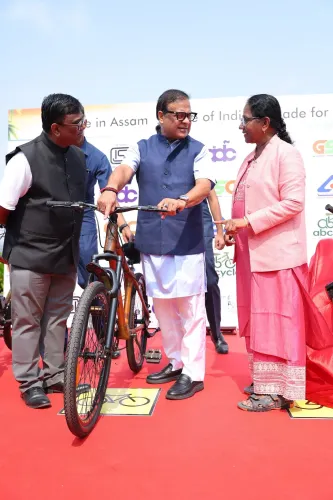
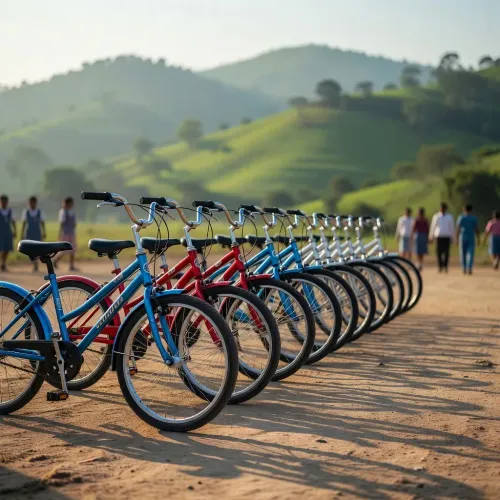
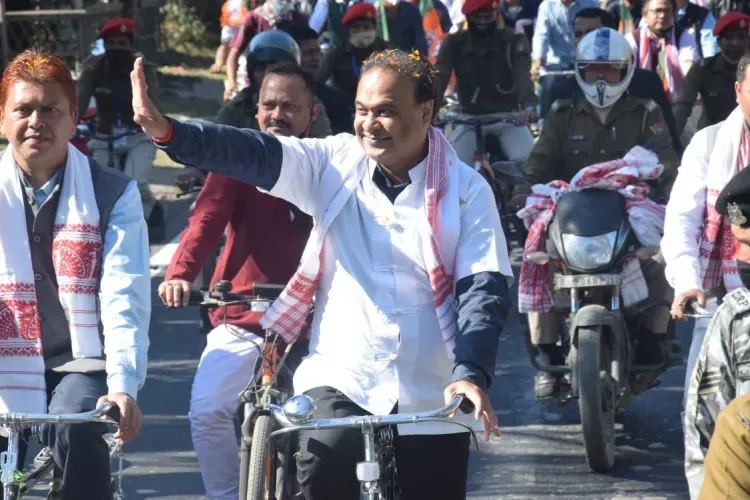
Assam Chief Minister Himanta Biswa Sarma on Wednesday, 3 June 2026, marked World Bicycle Day with a social-media message urging citizens to take up cycling as a daily habit for personal health and environmental sustainability. The post, accompanied by two images, framed the bicycle as both a nostalgic object and a tool for a cleaner future.
'For many of us, some of our fondest childhood memories began on a bicycle,' the Chief Minister wrote. 'On World Bicycle Day, let us rediscover the joy of cycling and embrace it as a habit for our health and a cleaner & sustainable future.'
Context
World Bicycle Day is observed every 3 June under a United Nations General Assembly resolution adopted in 2018. The day recognises the bicycle as a simple, affordable, reliable and environmentally fit means of transport, and encourages member states to integrate cycling into development and public-health policies.
Sarma, who has led Assam since May 2021 and serves as convenor of the North-East Democratic Alliance (NEDA), has frequently used his social-media platforms to connect lifestyle choices with larger policy themes such as fitness, sanitation and climate action. His Wednesday message follows that pattern, blending personal memory with a public-policy appeal.
Policy backdrop
The message aligns with India's broader climate commitments under the Paris Agreement, where the country's updated Nationally Determined Contributions emphasise a shift toward non-motorised and low-carbon transport. Cycling has featured in national urban missions as a complement to public transit and as a strategy to reduce vehicular emissions in fast-growing cities.
For the Northeast, where state capitals such as Guwahati are managing rising vehicle density and worsening air quality, non-motorised transport is increasingly cited by planners as a way to ease congestion and improve liveability. Sarma's framing of cycling as a 'habit' rather than a one-day event signals an attempt to mainstream the idea among Assam's urban residents.
Stakeholders and impact
The Chief Minister's appeal speaks to several audiences at once: urban commuters weighing alternatives to two-wheelers and cars, health-conscious citizens responding to rising lifestyle-disease burdens, and younger users of social media for whom the bicycle has acquired a recreational and fitness identity.
For civic agencies, such high-profile messaging can create pressure to back rhetoric with infrastructure — dedicated cycle lanes, safe parking, last-mile connectivity to bus and rail nodes, and cycle-sharing systems. Without those, behavioural appeals tend to remain aspirational, particularly in cities where road design still privileges motor vehicles.
The post's emphasis on childhood memory also has a cultural dimension. In many Indian households, the bicycle has historically been the first independent vehicle of mobility, especially for students and women in smaller towns. Reviving that association is a softer route into a conversation that is otherwise dominated by emissions data and traffic statistics.
What's next
Observers will watch whether Wednesday's message is followed by concrete Assam government action — for instance, expansion of cycling infrastructure under urban-renewal programmes, integration of cycle tracks into ongoing road projects in Guwahati, or school-level cycling initiatives. Any such moves would convert a symbolic observance into a sustained policy thrust.
More broadly, the post reinforces a template in which Indian state leaders use global observance days to nudge citizens toward behaviours that dovetail with national climate and public-health goals. Whether that nudge translates into measurable change in commuting patterns will depend on the supporting ecosystem that follows the tweet.
Point of View
He widens the appeal beyond policy circles to ordinary households. The political test, however, lies downstream: such posts gain credibility only when matched by cycle lanes, safe road design and last-mile integration. Without that follow-through, the bicycle remains a symbol rather than a serious mode of urban transport.
NationPress
17 Oct 2026
Frequently Asked Questions
When is World Bicycle Day observed?
World Bicycle Day is observed every year on 3 June. It was established by a United Nations General Assembly resolution adopted in 2018 to promote cycling as a sustainable and healthy mode of transport.
What did Himanta Biswa Sarma say on World Bicycle Day 2026?
The Assam Chief Minister urged citizens to rediscover the joy of cycling and adopt it as a habit for health and a cleaner, sustainable future. He linked the bicycle to fond childhood memories in his post on 3 June 2026.
Why is cycling important for India's climate goals?
Cycling is a zero-emission mode of transport that supports India's Nationally Determined Contributions under the Paris Agreement. It helps cut vehicular pollution, reduces fuel demand and complements public-transit systems in congested cities.
Does Assam have dedicated cycling infrastructure?
Assam, like several Indian states, has begun integrating non-motorised transport into urban planning, particularly in Guwahati. Expansion of dedicated cycle tracks and parking remains a work in progress under national urban-renewal programmes.
Who is Himanta Biswa Sarma?
Himanta Biswa Sarma is the Chief Minister of Assam, having taken office in May 2021. He is a senior BJP leader and serves as convenor of the North-East Democratic Alliance, the party's regional bloc in northeastern India.