Nepal flash floods 2024: Indians from Bengal, Maharashtra, Kerala recount close shaves
Synopsis
A bus swept away fifteen minutes after theirs had passed the same spot. Buildings, trees, and people disappearing into a river. Indians who escaped Nepal's flash floods are home — and their accounts reveal just how razor-thin the margin between survival and tragedy was.
Key Takeaways
Indians from West Bengal , Maharashtra , and Kerala returned home on 30 August after being evacuated from flood-hit Nepal .
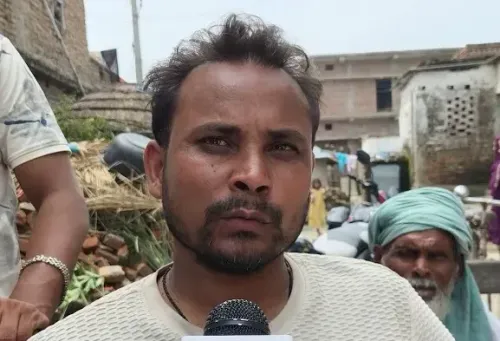
Anukul Poddar of Basirhat described watching 'a white, cloud-like mass' surge down a river valley near Rasuwa after a landslide warning halted his tourist convoy.
A Maharashtra tourist said a bus was swept away from the same spot their vehicle had crossed just 15 minutes earlier .
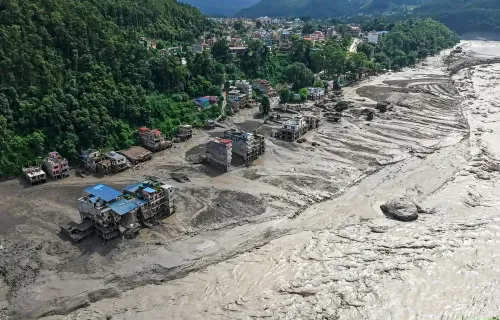
A Kerala survivor recounted watching 'parts of buildings, trees, people and smaller vehicles' swept into a river after a reported dam breach near Gorkha district on 26 August .
The Kerala group drove 60 kilometres through forest terrain with a repeatedly breaking-down vehicle to reach safety.
Maharashtra CM Devendra Fadnavis was credited by returning tourists for using state government contacts to facilitate their evacuation.
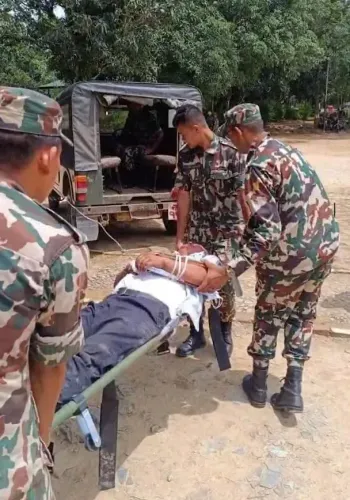
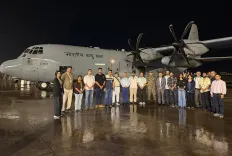
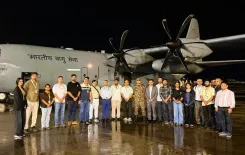
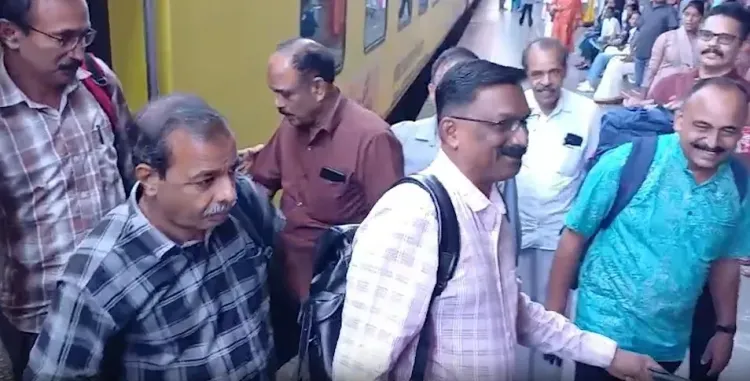
Indians from West Bengal, Maharashtra, and Kerala who were evacuated from flood-ravaged Nepal returned home on Sunday, 30 August, counting themselves fortunate to be alive after devastating flash floods tore through the Himalayan nation. Their first-hand accounts paint a picture of chaos, split-second decisions, and narrow escapes.
The Bengal Survivor: A White Wall of Water
Anukul Poddar, who returned to Basirhat in West Bengal, was part of a tourist group travelling from Kathmandu to Rasuwa on the Nepal-China border when disaster struck. The group had departed their Kathmandu hotel at 6:30 am in two tourist buses before drivers halted the convoy after receiving a landslide warning from local administration.
'Sitting in the vehicle, we saw schoolchildren crowding the road as schools had been closed. Many were running uphill,' Poddar recalled. From higher ground, the group watched what he described as 'a white, cloud-like mass flowing down the river — we had never witnessed anything like it.' The driver made the call to turn back immediately, warning that a blocked road would strand them entirely. They made it back to their Kathmandu hotel safely.
Maharashtra Tourists: Fifteen Minutes from Disaster
A woman from Maharashtra, who arrived at Nagpur railway station with her family, credited Chief Minister Devendra Fadnavis and the state government for facilitating their return through diplomatic contacts in Nepal. 'I am extremely thankful to Devendra Fadnavis ji,' she said, adding that the family had managed to complete portions of their tour despite the crisis.
Her most chilling recollection: 'A bus got swept away from the same place through which our bus had passed fifteen minutes earlier. All of us were scared since we did not know what to do.' The margin between a holiday and a tragedy, she said, was a quarter of an hour.
Kerala Group: Buildings, Trees, People Swept Away
In Kasaragod, Kerala, five members of a 36-member Malayali group returned safely after being stranded in Nepal. One member of the group described being en route to the Manakamana Temple in Gorkha district from Kathmandu on 26 August when their driver halted the bus, citing an accident ahead.
'We saw passengers getting down from vehicles beside us and running to the lower side of the road... from a distance, parts of buildings, trees, people and smaller vehicles were being swept away into the river,' he recounted. Locals on the scene reportedly said a dam had breached upstream. The group only confirmed it was a flash flood after checking social media.
With roads cut off, the group diverted their bus into a forest, travelling approximately 60 kilometres through jungle terrain with the vehicle breaking down repeatedly. 'At that time, we thought that we would not be able to go back home,' the survivor said.
Context and Scale of the Nepal Floods
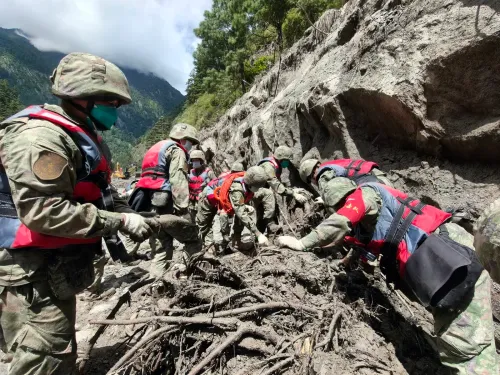
The flash floods, which struck multiple districts of Nepal in late August, caused widespread destruction across the country's river valleys and mountain roads — areas heavily frequented by Indian tourists visiting temples, trekking routes, and border regions. The disaster affected road connectivity between Kathmandu and several popular destinations, stranding hundreds of visitors. This comes amid a broader pattern of increasingly severe monsoon-season flooding across the Himalayan belt, which scientists attribute in part to accelerating glacial melt and erratic precipitation.
State governments in Maharashtra, West Bengal, and Kerala coordinated with Indian missions in Nepal to facilitate the return of their residents. With the monsoon season still active, travel advisories for Nepal remain in force.
Point of View
But it also exposes a gap: why does evacuation coordination depend on a chief minister's personal network rather than a standing protocol? With Himalayan flash floods intensifying each monsoon season, the absence of a structured early-warning and extraction framework for Indian tourists in Nepal, Bhutan, and Tibet-border zones is a policy blind spot that this disaster has once again laid bare.
NationPress
30 Aug 2026
Frequently Asked Questions
What happened to Indian tourists in Nepal during the August 2024 floods?
Indian tourists from West Bengal, Maharashtra, and Kerala were caught in devastating flash floods that struck Nepal in late August 2024, cutting off roads and sweeping away vehicles. Most were evacuated safely, though several described extremely close escapes.
How did the Maharashtra government help stranded tourists in Nepal?
According to returning tourists, the Maharashtra state government used its contacts in Nepal to facilitate the evacuation and return of its residents. A woman who arrived at Nagpur railway station publicly thanked Chief Minister Devendra Fadnavis for the assistance.
What did the Kerala tourists witness near Gorkha district?
Members of a 36-member Malayali group travelling to the Manakamana Temple on 26 August witnessed parts of buildings, trees, people, and smaller vehicles being swept into a river after locals reported a dam breach upstream. The group later drove 60 kilometres through forest to escape.
How close were some tourists to being caught in the floods?
One Maharashtra tourist recounted that a bus was swept away from the exact spot their own bus had passed just fifteen minutes earlier, illustrating how narrowly many travellers avoided the worst of the disaster.
Are travel advisories for Nepal still active?
With the monsoon season still active at the time of the survivors' return, travel advisories for Nepal remained in force. Tourists were advised to monitor official government and embassy advisories before travelling to the region.