Supreme Court admits Somnath Bharti's plea against BJP MLA Satish Upadhyay's Malviya Nagar win
Synopsis
The Supreme Court has agreed to hear AAP leader Somnath Bharti's challenge to BJP MLA Satish Upadhyay's Malviya Nagar win — a seat Bharti lost by just 2,131 votes in February 2025. The Delhi High Court had shut the door on procedural grounds, ruling Bharti's failure to implead a Congress candidate was an incurable defect. The apex court's admission reopens that door and puts a key RPA procedural question back on the table.
Key Takeaways
The Supreme Court on 17 July admitted Somnath Bharti's special leave petition challenging Satish Upadhyay's election from Malviya Nagar .
A Bench of Justices Vikram Nath and Sandeep Mehta granted leave against the Delhi High Court's 17 January judgment.
Upadhyay defeated Bharti in February 2025 by 2,131 votes — polling 39,564 against Bharti's 37,433 .
The High Court dismissed Bharti's petition for failing to implead Congress candidate Jitender Kumar Kochar , ruling it an incurable defect under the RPA .
BJP won 48 of 70 Delhi Assembly seats in 2025, ending AAP's decade-long governance of the capital.
Upadhyay's election remains valid for now; the Supreme Court will decide the case on merit.
The Supreme Court on Friday, 17 July agreed to examine a plea filed by Aam Aadmi Party (AAP) leader Somnath Bharti challenging the election of Bharatiya Janata Party (BJP) MLA Satish Upadhyay from Delhi's Malviya Nagar Assembly constituency. A Bench of Justices Vikram Nath and Sandeep Mehta granted leave and admitted Bharti's special leave petition (SLP), keeping alive a legal challenge that the Delhi High Court had shut down in January.
Background: The 2025 Malviya Nagar Contest
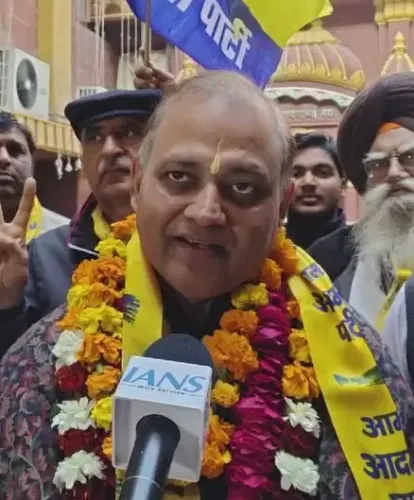
In the February 2025 Delhi Assembly elections, Upadhyay defeated Bharti — a three-time AAP MLA — by a margin of 2,131 votes, polling 39,564 votes against Bharti's 37,433. Upadhyay's win was part of BJP's sweeping mandate, in which the party captured 48 of 70 seats, ending AAP's decade-long rule in the national capital.
What Bharti Alleged in His Election Petition
Bharti's election petition before the Delhi High Court sought to have Upadhyay's election declared void, citing alleged corrupt practices under Sections 123, 127A and 130 of the Representation of the People Act (RPA). Specifically, he alleged that Upadhyay had deployed vehicles to ferry voters to polling booths, manipulated electoral rolls in collusion with election officials, failed to properly disclose election expenditure, and allegedly extended financial support to Congress candidate Jitender Kumar Kochar to split anti-BJP votes and gain an electoral advantage.
Why the High Court Dismissed the Petition
A single-judge Bench of Justice Jasmeet Singh dismissed the petition at the threshold on the ground of non-joinder of a necessary party. The court held that under Sections 82(b) and 86(1) of the RPA, any candidate against whom allegations of corrupt practices are levelled must mandatorily be impleaded as a respondent — and Bharti had failed to add Kochar in that capacity.
Rejecting Bharti's argument that the defect could be remedied by subsequently impleading Kochar or deleting the allegations against him, the High Court ruled that the RPA is a self-contained code demanding strict procedural compliance. 'The petitioner's omission to implead Mr Kochar is not a mere technical lapse but an incurable defect,' the judgment observed, noting that once the statutory 45-day window for filing an election petition closes, such a defect cannot be cured through amendment.
The Supreme Court's Intervention
Bharti's SLP challenges the 17 January High Court judgment on the ground that the dismissal on a procedural technicality denied him the opportunity to contest serious allegations of electoral malpractice on merit. By admitting the petition and granting leave, the Supreme Court has signalled that the legal questions involved — particularly around the mandatory impleadment rule and the scope for curative amendments — merit fresh examination. The matter is now set for further hearing before the apex court.
What Happens Next
With the Supreme Court's admission, Upadhyay's election remains technically valid for now, but the legal cloud over his Malviya Nagar seat will persist until the case is finally decided. The outcome could have broader implications for how election petitions handle multi-party corrupt-practice allegations under the RPA — a procedural point that courts have grappled with in several past contests.
Point of View
It could meaningfully lower the procedural barrier for election petitions across the country. Conversely, upholding the High Court would reinforce a strict-compliance standard that critics argue disproportionately punishes petitioners over technicalities rather than merits.
NationPress
16 Oct 2026
Frequently Asked Questions
Why did the Supreme Court admit Somnath Bharti's plea?
The Supreme Court admitted Bharti's special leave petition to examine whether the Delhi High Court was correct in dismissing his election petition solely on the ground that he had failed to implead Congress candidate Jitender Kumar Kochar as a respondent. Justices Vikram Nath and Sandeep Mehta granted leave on 17 July, finding the legal question worthy of examination.
What were Somnath Bharti's allegations against Satish Upadhyay?
Bharti alleged corrupt practices under the Representation of the People Act, including deploying vehicles to ferry voters, manipulating electoral rolls in collusion with officials, non-disclosure of election expenditure, and financially supporting Congress candidate Kochar to split anti-BJP votes. These allegations formed the basis of his election petition before the Delhi High Court.
Why did the Delhi High Court dismiss Bharti's election petition?
Justice Jasmeet Singh dismissed the petition because Bharti had made corrupt-practice allegations against Congress candidate Kochar but failed to implead him as a respondent — a mandatory requirement under Sections 82(b) and 86(1) of the Representation of the People Act. The court ruled this was an incurable defect, not a technical lapse, since the 45-day statutory filing window had already closed.
What was the result of the Malviya Nagar seat in the 2025 Delhi elections?
BJP's Satish Upadhyay won the Malviya Nagar Assembly seat in February 2025, defeating three-time AAP MLA Somnath Bharti by 2,131 votes — polling 39,564 votes against Bharti's 37,433. The result was part of BJP's broader sweep of 48 out of 70 Delhi Assembly seats.
What are the broader implications of this Supreme Court case?
The case could clarify how strictly courts must apply the mandatory impleadment rule in election petitions involving multi-party corrupt-practice allegations. A ruling in Bharti's favour could make it easier for petitioners to cure procedural defects, while upholding the High Court would reinforce strict compliance with the RPA's procedural code.