SC allows RIPL board meeting, bars director and signatory agenda in RK Family Trust row

Synopsis
The Supreme Court let RIPL's board meeting go ahead but drew a clear line — no action on independent directors or bank signatories until mediation concludes. With former CJI D.Y. Chandrachud as mediator and the case posted for August, the court is giving the Kapur family one last real chance to settle a bitter estate battle before it becomes a decade-long legal war.
Key Takeaways
The Supreme Court on 14 May allowed RIPL 's board meeting scheduled for 18 May to proceed but barred action on two agenda items: appointment of independent directors and changes in bank signatories.
Rani Kapur , 80 , had sought a full stay on the meeting, alleging it was a 'fraudulent attempt to bypass court-ordered mediation.' Respondent Priya Sachdev Kapur 's counsel argued the meeting was called to comply with RBI directions following a regulatory inspection.
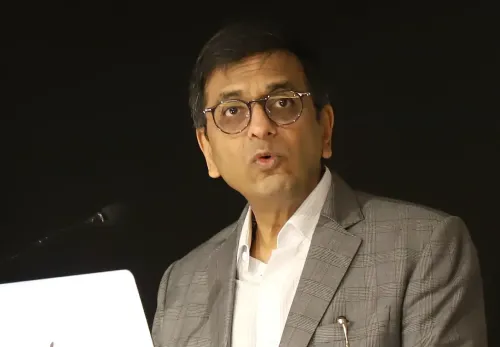
Former Chief Justice of India D.Y.
Chandrachud was appointed mediator on 7 May ; the court awaits his preliminary report before the next hearing in August .
Rani Kapur alleges her majority shareholding in group companies was transferred into a trust without her consent after the death of her son Sunjay Kapur .
The Supreme Court on Thursday, 14 May declined to halt a scheduled board meeting of Raghuvanshi Investment Private Limited (RIPL) in the high-profile RK Family Trust dispute, but directed the company to keep two contentious agenda items — appointment of independent directors and changes in authorised bank signatories — off the table for now. The order came while hearing a plea filed by Rani Kapur, the 80-year-old mother of late businessman Sunjay Kapur, who had sought a complete stay on the board meeting slated for 18 May.
What the Court Directed
A Bench of Justices J.B. Pardiwala and Ujjal Bhuyan clarified that while the 18 May board meeting may proceed, the two disputed agenda items — induction of independent directors and changes in bank account signatories — shall not be acted upon pending further orders. The court emphasised that since the dispute had already been referred to mediation, neither party should take steps that could directly prejudice those proceedings.
'We have already requested the mediator to start with the mediation proceedings. For the present, we request the opponents not to do anything which may directly affect mediation. Time and again, we have said it will be in the interest of all parties to put an end to this dispute, else it will be a long drawn battle,' the Justice Pardiwala-led Bench observed.
Rani Kapur's Allegations
Senior advocate Navin Pahwa, appearing for Rani Kapur, argued that the proposed board meeting was designed to ensure she is 'completely drowned out' from the affairs of the family-controlled entities. He submitted that Rani Kapur's majority shareholding in the group companies had allegedly been transferred into a trust without her consent.
'My shareholding was transferred into the trust behind my back. I was holding the majority shares in all the companies. My daughter-in-law transferred my shareholding into a trust,' senior counsel submitted on behalf of Rani Kapur.
She had described the 18 May meeting — convened via a notice dated 8 May — as a 'fraudulent attempt to bypass court-ordered mediation' and had also sought directions restraining Priya Sachdev Kapur and other respondents from interfering in the functioning of the alleged RK Family Trust during the pendency of mediation.
The Respondents' Position
Senior advocate Kapil Sibal, appearing for respondents including Priya Sachdev Kapur and RIPL, countered that the appointment of independent directors was being undertaken pursuant to directions issued by the Reserve Bank of India (RBI) following a regulatory inspection. He argued the meeting was convened primarily to fulfil statutory and regulatory obligations, and was not intended to alter the status quo during mediation.
Background: The Trust Dispute
The dispute centres on the creation and control of the alleged RK Family Trust — also referred to as the Rani Kapur Family Trust — which Rani Kapur has challenged as fraudulent and illegal. According to her plea, she is the sole beneficiary of the estate of her late husband, industrialist Dr Surinder Kapur, who allegedly bequeathed all movable and immovable properties to her through a will probated by the Bombay High Court in 2016.
She has alleged that despite this, the family estate was clandestinely transferred into a newly created trust without her informed consent, and that control over key group companies was assumed without her knowledge following the death of her son Sunjay Kapur. This is the latest in a series of court interventions in the matter, which has drawn repeated judicial appeals for an out-of-court settlement.
Mediation and What Comes Next
On 7 May, the Supreme Court had appointed former Chief Justice of India D.Y. Chandrachud as mediator to resolve the ongoing family dispute after all parties agreed to explore a settlement. The court had also cautioned parties against making public statements or social media posts about the case, noting it was a 'family affair' that 'should not be a source of entertainment.'
Striking a notably personal note, the Bench urged both sides to approach mediation in good faith: 'She is an 80-year-old woman. We all came with empty hands, and we have to go with empty hands. All we carry is our souls. There has to be a will to settle the matter,' Justice Pardiwala observed. The apex court has posted the case for further hearing in August, pending a preliminary report from the mediator.
Point of View
But it also signals how difficult it is to pause corporate governance while a family feud plays out in mediation. The RBI compliance angle raised by the respondents is not trivial: if independent director appointments are genuinely regulator-mandated, deferring them carries its own legal risk. The court's repeated, almost emotional, appeals for settlement suggest the bench is acutely aware that prolonged litigation will erode whatever family wealth remains in dispute. Whether former CJI Chandrachud can break the deadlock where the courts have so far only managed to contain it is the real question heading into August.
NationPress
1 Oct 2026
Frequently Asked Questions
What did the Supreme Court order in the RK Family Trust RIPL case on 14 May?
The Supreme Court allowed RIPL's board meeting on 18 May to proceed but directed that agenda items on the appointment of independent directors and changes in authorised bank signatories must not be acted upon for now. The order came while the dispute is under court-referred mediation.
Who are the main parties in the RK Family Trust dispute?
The primary parties are Rani Kapur, the 80-year-old mother of late businessman Sunjay Kapur, and Priya Sachdev Kapur. The dispute centres on control of the alleged RK Family Trust and group companies including Raghuvanshi Investment Private Limited (RIPL).
What is the RK Family Trust dispute about?
Rani Kapur alleges that her majority shareholding in family-controlled companies was transferred into a newly created trust without her informed consent after her son Sunjay Kapur's death. She claims to be the sole beneficiary of her late husband Dr Surinder Kapur's estate, as recognised by a Bombay High Court-probated will from 2016.
Who is mediating the RK Family Trust case?
The Supreme Court on 7 May appointed former Chief Justice of India D.Y. Chandrachud as mediator. The court has posted the case for a further hearing in August, pending a preliminary report from the mediator.
Why did RIPL's counsel say the board meeting was necessary?
Senior advocate Kapil Sibal, appearing for the respondents including Priya Sachdev Kapur and RIPL, argued that the appointment of independent directors was required to comply with directions issued by the Reserve Bank of India following a regulatory inspection, and was not intended to prejudice mediation.