SC permits Karthigai Deepam lighting atop Thiruparankundram hill on Nov 24
Synopsis
The Supreme Court has allowed the Karthigai Deepam to be lit atop the contested Thiruparankundram hill on 24 November — but with a pointed legal caveat: the one-time permission recognises no custom, no essential religious practice, and no enforceable right. The court essentially chose irreversibility of the festival over irreversibility of a legal ruling, drawing a narrow, carefully hedged line between judicial intervention and adjudication.
Key Takeaways
The Supreme Court granted a one-time permission on 20 November 2026 to light the Karthigai Deepam at the deepa thoon atop Thiruparankundram hill on 24 November .
Only authorised Devasthanam representatives and designated government officials may access the site; the general public will be excluded.
The Madurai District Collector will coordinate with the temple's executive officer, ASI , and the Police Commissioner on team size and security.
CISF deployment is permitted if authorities deem it necessary; no processions, congregations, or demonstrations are allowed.
The court stayed findings in paragraphs 1–140 of the Madras High Court judgment and clarified that the interim order does not endorse any custom or recognise any enforceable religious right.
The dispute involves the Arulmigu Subramaniya Swamy Temple and a dargah that share the same hilltop, with the substantive legal question still to be decided.
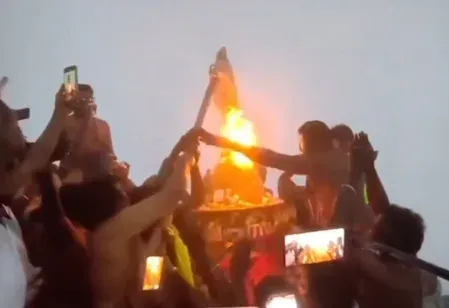
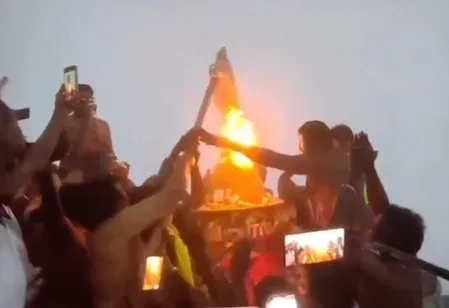
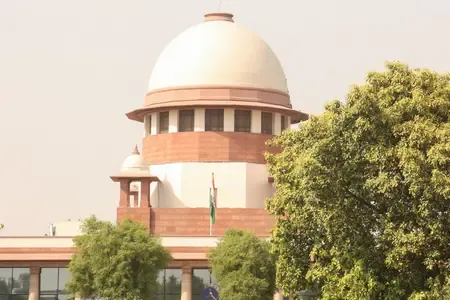
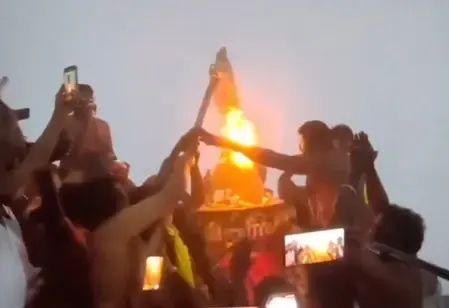
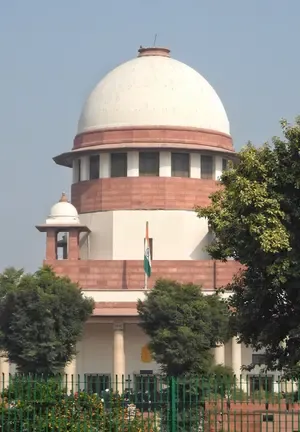
The Supreme Court on Friday, 20 November 2026, granted a one-time permission for the lighting of the traditional Karthigai Deepam at the deepa thoon (lamp pillar) atop Thiruparankundram hill in Madurai district on 24 November, while simultaneously staying certain findings of the Madras High Court until further orders. The apex court, however, underscored that the permission was strictly interim and carried no legal recognition of any customary right or essential religious practice.
What the Court Permitted
A Bench of Justices Aravind Kumar and Vipul M. Pancholi ruled that only authorised representatives of the Devasthanam (temple administration) and designated government officials would be allowed to access the disputed spot for performing the ritual. The general public will not be permitted to visit the deepa thoon during the ceremony.
The court further prohibited any procession, public congregation, slogan-raising, or demonstration at the site, and directed authorities to put in place adequate security arrangements. It also permitted the deployment of the Central Industrial Security Force (CISF), if deemed necessary by the authorities.
Who Coordinates the Arrangements
Under the Supreme Court's framework, the Madurai District Collector will coordinate with the temple's executive officer, the Archaeological Survey of India (ASI), and the Police Commissioner to determine the size and composition of the authorised team. The team must leave the location immediately after the ceremony and carry back all materials used for the ritual. No excavation, construction, or alteration of any existing structure will be permitted.
What the Court Explicitly Did Not Decide
The Justice Kumar-led Bench was careful to ring-fence its intervention. It clarified that the interim permission should not be construed as an endorsement of the claimed custom of lighting the lamp at the disputed location, nor as a recognition of any enforceable religious right. The court stressed that the permission did not proceed on any finding that the stone pillar was historically a place of customary religious observance.
Notably, the interim arrangement will not determine whether lighting the lamp at the disputed location constitutes an essential religious practice, or whether any individual, institution, or religious denomination holds an enforceable right in this regard.
Why the Court Acted Now
The Bench cited the proximity of the 24 November festival and the 'peculiar nature of the occasion' as the decisive factors in granting limited relief. It observed that if the opportunity to perform the festival on the scheduled date were denied, that loss could not be restored through any subsequent judicial decision — a classic irreversibility argument in constitutional courts.
At the same time, the court acknowledged that once the ceremony was performed, it equally could not be undone, which is why it stressed that the interim arrangement must remain narrowly confined and subject to stringent safeguards.
Background and the High Court Dispute
The dispute centres on the lighting of the traditional Karthigai Deepam at a stone pillar — the deepa thoon — located near a dargah atop the historic Thiruparankundram hill. The hill houses the famed Arulmigu Subramaniya Swamy Temple as well as a dargah near its summit, making the site religiously sensitive for multiple communities.
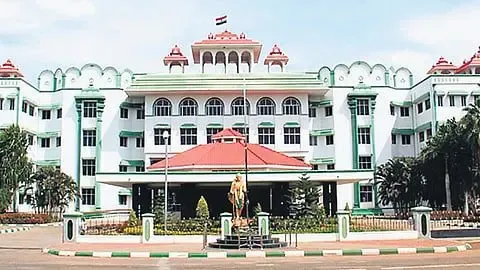
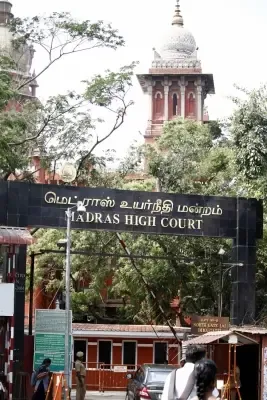
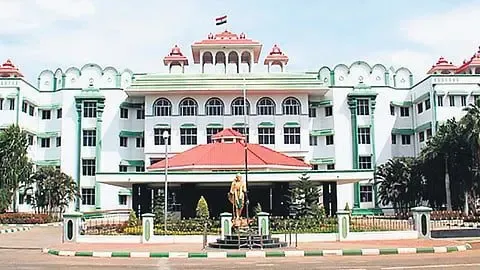
The Supreme Court stayed the findings recorded in paragraphs 1 to 140 of the Madras High Court judgment, to the extent they are under challenge in the present proceedings, and clarified that its interim order should not be read as approval of the reasoning adopted by the High Court. It also made clear that customary worship at established religious sites, and access to the nearby dargah and mosque, would continue without obstruction. The matter is expected to proceed to a fuller hearing on the substantive questions of law.
Point of View
The Bench has preserved its own room to rule against the temple trust on the merits later. The harder question — whether the deepa thoon is a site of historic customary worship, and whether its proximity to a dargah creates competing rights — remains wide open. Courts have historically struggled with these multi-faith hilltop disputes, and the Thiruparankundram case, with its combination of ASI-protected heritage, temple administration, and an active dargah, could well become a landmark reference point regardless of which way the final verdict goes.
NationPress
20 Nov 2026
Frequently Asked Questions
What did the Supreme Court order on the Thiruparankundram Deepam dispute?
The Supreme Court on 20 November 2026 permitted, as a one-time measure, the lighting of the traditional Karthigai Deepam at the deepa thoon (lamp pillar) atop Thiruparankundram hill in Madurai on 24 November. The court simultaneously stayed certain findings of the Madras High Court and clarified that the permission does not recognise any custom or enforceable religious right.
Who is allowed to attend the Karthigai Deepam ceremony under the court order?
Only authorised representatives of the Devasthanam (temple administration) and designated government officials may access the spot. The general public is explicitly excluded, and no processions, congregations, or demonstrations are permitted at the site.
What is the Thiruparankundram Deepam dispute about?
The dispute concerns the lighting of the Karthigai Deepam at a stone pillar called the deepa thoon, located near a dargah atop the historic Thiruparankundram hill in Madurai. The hill is home to the Arulmigu Subramaniya Swamy Temple as well as a dargah near its summit, making the site sensitive for multiple communities.
Does the Supreme Court's permission mean the temple has a legal right to light the lamp there?
No. The court explicitly stated that the one-time permission should not be construed as an endorsement of any claimed custom or as recognition of any enforceable religious right. The question of whether lighting the lamp constitutes an essential religious practice remains to be decided in the substantive proceedings.
What happens to the Madras High Court judgment in the meantime?
The Supreme Court has stayed the findings recorded in paragraphs 1 to 140 of the Madras High Court judgment, to the extent they are under challenge, until further orders. The apex court also clarified that its interim order should not be read as approval of the High Court's reasoning.