Will the Supreme Court Hear Tamil Nadu's Plea on Karthigai Deepam Controversy?
Synopsis
Tensions rise in Tamil Nadu as the government appeals to the Supreme Court over a controversial ruling allowing the Karthigai Deepam ceremony on sacred grounds. The situation escalates with protests and clashes, highlighting the delicate balance of tradition and law.
Key Takeaways
Tamil Nadu government seeks urgent Supreme Court review.
Deepam ceremony controversy stirs public protests.
Legal arguments focus on communal harmony and public order.
Madras High Court's ruling challenged by state officials.
Prohibitory orders imposed amid escalating tensions.
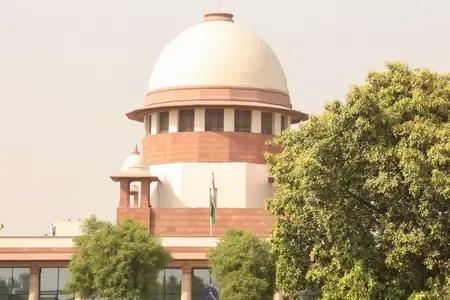
New Delhi, Dec 5 (NationPress) The government of Tamil Nadu has formally requested the Supreme Court to expedite the hearing of its appeal against the Madras High Court ruling that allows the time-honored Deepam ceremony to take place on the revered hill above the Thiruparankundram Arulmigu Subramaniya Swamy Temple.
During a request for urgent consideration before Chief Justice of India Surya Kant, another attorney raised an objection, stating, “The state government is merely staging a drama. They aim to inform the Madras High Court that they have approached the Supreme Court.”
In reply, the legal representative for the Tamil Nadu administration made it clear that he was solely seeking urgent listing of the special leave petition (SLP).
After reviewing the arguments, CJI Kant indicated that the apex court would assess the situation and determine if the case would be listed promptly.
“No mentioning! Let it be numbered and listed,” clarified the CJI.
The dispute surrounding the lamp-lighting ceremony emerged after Justice Swaminathan of the Madurai Bench of the Madras High Court instructed that the Karthigai Deepam be lit at the hilltop lamp post and mandated the deployment of CISF personnel for security.
This directive came in response to a petition requesting authorization to light the customary Karthigai Deepam at the designated lamp post on the hill, which is among the six barrack areas at Thiruparankundram.
Responding to the plea, Justice Swaminathan instructed that the Maha Deepam should be lit at the hilltop and requested the temple administration to make necessary arrangements.
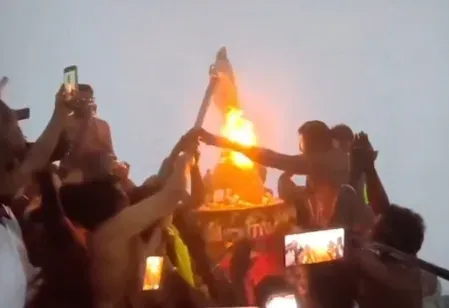
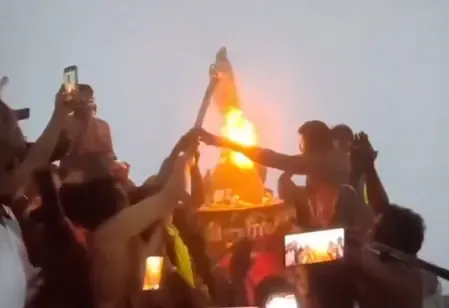
Despite initial preparations being made on Wednesday morning, the temple officials abruptly canceled the plans. This decision led to protests from groups including Hindu Makkal Katchi, Akhila Bharath Hanuman Sena, South India Forward Bloc, and others, who marched in support of lighting the lamp as requested by the petitioner. However, adhering to temple customs, the Deepam was ultimately lit at 6 p.m. near the Uchchipillaiyar Temple on the hilltop, not at the lamp post.
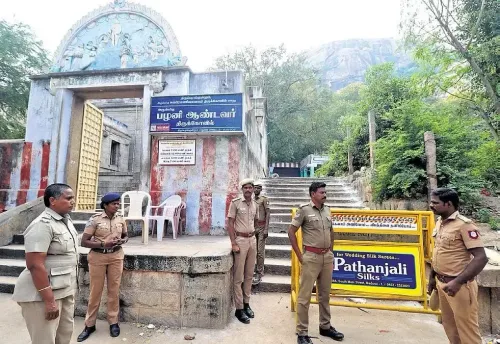
Dissatisfied, the petitioner and supporters insisted on lighting the Deepam at the lamp post with CISF protection. Justice Swaminathan granted permission for them to access the area with security personnel. This ruling resulted in tense scenes on Wednesday evening as BJP supporters and members of Hindu organizations attempted to breach barricades to reach the hill. Police intervened, leading to clashes that left two officers injured.
Given the escalating tensions, District Collector Praveen Kumar enforced Section 144 prohibitory orders in the vicinity. Several demonstrators were arrested for disregarding these restrictions. Some factions later performed rituals by lighting camphor along the pathway before dispersing.
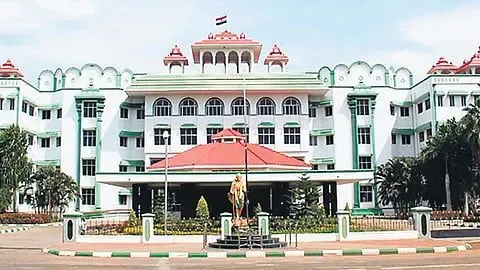
The Tamil Nadu government swiftly approached the Administrative Judge of the Madurai Bench, Justice Jayachandran, seeking to overturn the single judge’s ruling.
The Additional Chief Public Prosecutor contended that the single-judge Bench lacked the jurisdiction to deploy CISF, which is designated solely for the security of the Madras High Court premises and not for maintaining public order.
The state government further asserted that the order directly impacted communal harmony and law enforcement in Thiruparankundram. Concurrently, the Collector submitted another petition requesting a stay on the contempt proceedings initiated by the original petitioner. Both cases were prioritized by a Bench of Justices G. Jayachandran and K.K. Ramakrishnan.
The Tamil Nadu government maintained that punitive action against the temple administration could not proceed without a hearing, emphasizing that contempt proceedings cannot yield immediate penalties on the same day they are filed. They urged the division Bench led by Justice Jayachandran to annul the single-judge Bench’s orders, arguing they exceeded judicial authority and heightened tensions in the region.
In a ruling delivered on Thursday, the Justice Jayachandran-led Bench dismissed the state government’s appeal, characterizing it as a “ruse” to evade timely compliance, which prompted the Tamil Nadu government to turn to the Supreme Court.
Point of View
Law, and communal harmony. As the Tamil Nadu government seeks intervention from the Supreme Court, it underscores the need for a balanced approach that respects cultural practices while ensuring public order and coexistence.
NationPress
20 Sept 2026
Frequently Asked Questions
What is the Karthigai Deepam ceremony?
The Karthigai Deepam ceremony is a traditional Hindu festival celebrated primarily in Tamil Nadu, involving the lighting of lamps to signify the arrival of the full moon in the month of Karthigai.
Why did the Tamil Nadu government appeal to the Supreme Court?
The Tamil Nadu government appealed to the Supreme Court to challenge the Madras High Court's order allowing the Deepam ceremony to proceed, citing concerns over public order and communal harmony.
What were the protests about?
Protests erupted after the temple administration canceled arrangements for the Deepam ceremony, with various groups demanding that the lamp be lit at the specified location as per tradition.
What is the significance of the Thiruparankundram Temple?
The Thiruparankundram Temple is a revered Hindu temple dedicated to Lord Murugan, situated on a hill and is an important pilgrimage site in Tamil Nadu.
What does Section 144 entail?
Section 144 is a legal provision that prohibits the assembly of four or more persons in an area to maintain public order and prevent disturbances.