Supreme Court closes Ram temple donation theft case pleas after UP files charge sheet
Synopsis
The Supreme Court has stepped back from the Ram temple donation theft case — but only after a charge sheet was filed and a reconstituted SIT reportedly uncovered 105 theft incidents. The matter now moves to trial court, with petitioners permitted to assist, keeping public accountability in the frame.
Key Takeaways
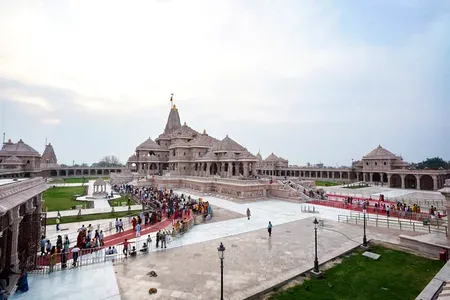
The Supreme Court on 2 November 2026 disposed of petitions seeking a court-monitored probe into alleged donation irregularities at the Shri Ram Janmabhoomi Teerth Kshetra Trust .
The Uttar Pradesh government confirmed a charge sheet had been filed, prompting the court to refer the matter to the trial court.
The SIT investigation reportedly identified 105 incidents of theft of donations, based on analysis of CCTV footage.
Accused employees' bank accounts and past transactions were examined; some reportedly invested in properties.
Petitioners — including RJD MP Sudhakar Singh and advocate Narendra Kumar Goswami — retain the right to assist the trial court proceedings.
The reconstituted SIT was headed by IG Kiran S. , with DIG Somen Verma and SSP Dr Gaurav Grover as members.
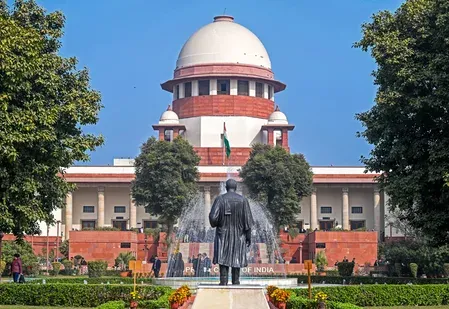
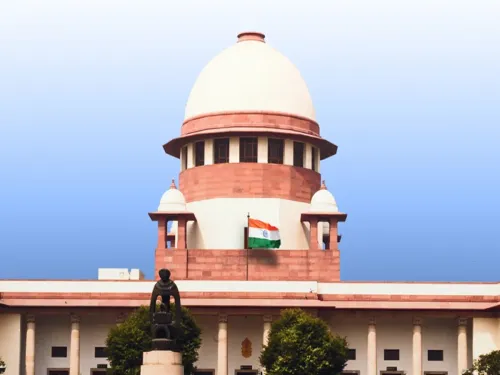
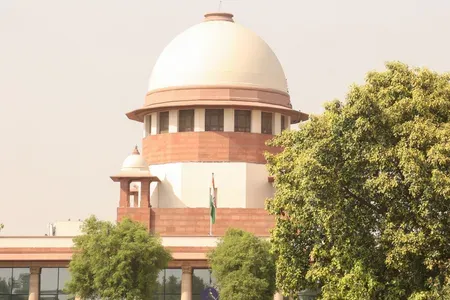
The Supreme Court on Monday, 2 November 2026, disposed of a batch of petitions seeking a court-monitored investigation into alleged financial irregularities at the Shri Ram Janmabhoomi Teerth Kshetra Trust, after the Uttar Pradesh government confirmed that a charge sheet had been filed in the matter. The apex court directed the concerned Judicial Magistrate to proceed in accordance with law, bringing the Supreme Court-level intervention to a close.
What the Court Decided
A bench comprising Chief Justice of India (CJI) Surya Kant, Justice Joymalya Bagchi, and Justice V. Mohana disposed of the petitions while granting petitioners the liberty to assist the trial court, given the public interest dimension of the case. The court clarified it had not expressed any opinion on the merits of the allegations, adding that petitioners could assist the proceedings on the same basis as the law permits victims of crime to participate.
Notably, the bench observed that the case involved an element of public interest and therefore PIL litigants should be permitted to assist judicial proceedings wherever necessary.
What the UP Government Told the Court
Solicitor General Tushar Mehta, appearing for both the Centre and the Uttar Pradesh government, informed the bench that the charge sheet had been filed. He submitted that the investigation had revealed thefts were taking place during the counting of donations and offerings at the temple. According to Mehta, the bank accounts of each employee accused in the case — including their past transactions — had been examined to ascertain the amounts deposited, and that some of the accused had also invested in properties.
Key Findings of the SIT Probe
In a previous hearing, the Uttar Pradesh government had submitted a status report in a sealed cover detailing the investigation by the reconstituted Special Investigation Team (SIT). According to that report, the SIT had analysed CCTV footage and other material to identify the accused. The analysis reportedly revealed 105 incidents of theft of donations at the temple. Receipts for valuable items received as offerings were generated through software, and such valuables were reportedly kept in State Bank of India (SBI) lockers.
The reconstituted SIT was headed by Inspector General of Police Kiran S., with DIG Ayodhya Somen Verma and SSP Ayodhya Dr Gaurav Grover as members. The Supreme Court had earlier directed the reconstitution of the SIT to ensure a fair, speedy and qualitative investigation.
Background: The Petitions and Earlier Orders
The batch of petitions included a writ petition filed by advocate Narendra Kumar Goswami, a criminal writ petition by petitioner-in-person Ajay Kumar Rai, a plea by Rashtriya Janata Dal (RJD) Member of Parliament Sudhakar Singh, and another petition by Hindu Dharma Parishad. Together, the petitions had sought a court-monitored investigation into alleged financial irregularities, preservation of donation-related records, greater transparency in accounting, and a comprehensive forensic audit of the Trust's finances.
The apex court had earlier also indicated that a forensic auditor should be associated with the investigation. 'Since the nature of the investigation involves alleged misappropriation of trust funds, the Solicitor General has fairly agreed that a forensic auditor shall also be associated as a member of the SIT,' the Supreme Court had recorded in an earlier order.
What Happens Next
With the Supreme Court having disposed of the petitions, the matter will now proceed before the competent trial court. Petitioners retain the right to assist in the proceedings, ensuring continued public scrutiny of the case. The outcome of the trial will be closely watched given the national significance of the Ram Janmabhoomi Trust and the scale of donations it handles.
Point of View
But the real accountability question now shifts to the trial court — a forum far less visible to public scrutiny. With 105 alleged theft incidents documented and accused employees reportedly investing in properties, the scale of the alleged wrongdoing at one of India's most prominent religious trusts is significant. The PIL petitioners' right to assist the trial is a partial safeguard, but without the apex court's oversight, the pace and rigour of proceedings will be harder to monitor. How the trial court handles a case touching a politically sensitive institution will itself be a test of institutional independence.
NationPress
2 Nov 2026
Frequently Asked Questions
Why did the Supreme Court close the Ram temple donation theft case petitions?
The Supreme Court disposed of the petitions because the Uttar Pradesh government confirmed that a charge sheet had been filed, making a separate court-monitored investigation redundant. The apex court directed the Judicial Magistrate to proceed in accordance with law and allowed petitioners to assist the trial court.
What did the SIT investigation find in the Ram temple donation case?
According to a status report submitted by the UP government, the Special Investigation Team analysed CCTV footage and identified 105 incidents of theft of donations at the Ram temple. It also examined bank accounts and past transactions of accused employees, some of whom reportedly invested in properties.
Who filed the petitions in the Supreme Court regarding the Ram Janmabhoomi Trust?
The petitions were filed by advocate Narendra Kumar Goswami, petitioner-in-person Ajay Kumar Rai, RJD MP Sudhakar Singh, and Hindu Dharma Parishad. They had sought a court-monitored probe, forensic audit, and greater transparency in the Trust's financial handling.
Can the petitioners still participate in the Ram temple donation theft case?
Yes. The Supreme Court granted petitioners the liberty to assist the trial court proceedings, given the public interest dimension of the case. They may participate on the same basis as the law permits victims of crime to assist the court.
Who led the SIT probing the Ram Janmabhoomi Trust donation irregularities?
The reconstituted SIT was headed by Inspector General of Police Kiran S., with DIG Ayodhya Somen Verma and SSP Ayodhya Dr Gaurav Grover as members. The Supreme Court had earlier ordered the SIT's reconstitution to ensure a fair and qualitative investigation.