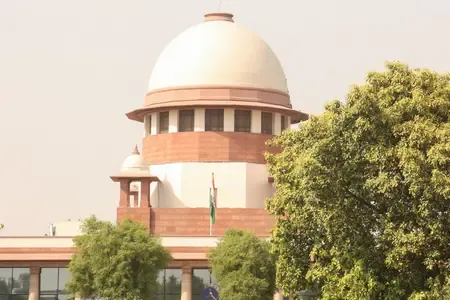
Karthigai Deepam row: SC contempt notices to TN Chief Secy, DGP

Synopsis
The Supreme Court has accused Tamil Nadu's executive of acting 'at the behest of their political masters.' It issued contempt notices to the Chief Secretary and DGP, handed security of Thiruparankundram hill to the CRPF, and suspended the temple board. The court has also ordered the Karthigai Deepam to be lit at the disputed Deepathoon on Saturday.
Key Takeaways
The Supreme Court issued contempt notices to the Tamil Nadu Chief Secretary , DGP and HR&CE officials on 27 November 2026 .
The Bench of Justices Aravind Kumar and Vipul M.
Pancholi said officials prima facie acted 'at the behest of their political masters'.
The CRPF will take over security on Thiruparankundram hill , and the temple's Board of Trustees has been suspended.
The lamp must be lit at the Deepathoon on Saturday .
On 24 November , it was lit near the Uchipillaiyar temple instead.
The Chief Secretary must file an affidavit on internal communications and appear in person at the next hearing.
The Supreme Court on Friday, 27 November 2026, issued contempt of court notices to the Tamil Nadu Chief Secretary, the Director General of Police (DGP), officials of the Hindu Religious and Charitable Endowments (HR&CE) Department and other senior state authorities. The notices concern the alleged wilful disobedience of the court's order permitting the traditional Karthigai Deepam lamp to be lit at the 'deepathoon' atop Thiruparankundram hill in Madurai district.
A Bench of Justices Aravind Kumar and Vipul M. Pancholi asked the officials to show cause why contempt proceedings should not be initiated against them. The court had directed in its 20 November order that the ceremonial lamp be lit at the disputed spot, and the officials failed to comply.
Court's Sharp Observations on the Executive
The Bench took a stern view of how events unfolded. It observed that the sequence of events prima facie indicated the executive had acted under political pressure.
“The sequence of events which have unfolded in this case indicates that the executive authorities have acted at the behest of their political masters,” the Supreme Court observed.
The court said officials could not decide for themselves whether an order of a constitutional court should be implemented. It pointed to Article 144 of the Constitution, which requires all civil and judicial authorities in the country to act in aid of the Supreme Court.
Key Directions Issued by the Bench
The Bench led by Justice Aravind Kumar directed the Chief Secretary to file an affidavit disclosing all communications exchanged between officials about implementing the order. This includes emails, telephone calls and messages. The Chief Secretary must also appear in person before the court on the next date of hearing.
The court also issued the following directions:
- The Central Reserve Police Force (CRPF) will take over security arrangements across the hill.
- The temple's Board of Trustees stands suspended.
- Authorities must ensure the lamp is lit at the Deepathoon on Saturday.
How the November 20 Order Was Bypassed
On 20 November, the Supreme Court allowed the Karthigai Deepam to be lit at the Deepathoon on 24 November. The permission was a one-time measure and came with stringent safeguards. Only an authorised team from the temple administration and designated government officials were allowed to access the spot. Public gatherings, processions and demonstrations were prohibited.
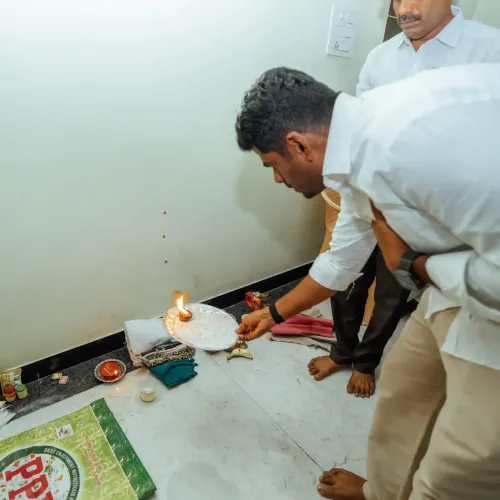
However, on 24 November, the lamp was lit at its customary location near the Uchipillaiyar temple instead of at the disputed stone pillar.
The Tamil Nadu government then filed a review petition challenging the direction. It expressed regret that the ceremony was not held at the Deepathoon and blamed the temple administration for the lapse.
What the Petitioners Sought
The contempt proceedings followed petitions alleging that state authorities and temple functionaries had wilfully disobeyed the court's directions. The petitioners also asked the court to examine whether any instructions against implementing the order had come from the Chief Minister or other ministers.
What Happens Next
The immediate test is whether the lamp is lit at the Deepathoon on Saturday under CRPF security. After that, the court will turn to the Chief Secretary's affidavit on internal communications and his personal appearance at the next hearing. The state's pending review petition will also have to be decided.
Point of View
Deploy a central force on a state-administered site and call the state's top bureaucrat in person, all in one order. Seeking calls and messages is significant: the Bench wants the chain of command, not a convenient scapegoat. Blaming the temple administration while filing a review petition looks more like resistance than a lapse. However the religious dispute is decided, compliance with Article 144 cannot depend on whether a government agrees with the order.
NationPress
27 Nov 2026
Frequently Asked Questions
Why did the Supreme Court issue contempt notices to Tamil Nadu officials?
The court issued the notices over the alleged wilful disobedience of its 20 November order. That order allowed the Karthigai Deepam to be lit at the Deepathoon atop Thiruparankundram hill on 24 November. The lamp was instead lit at its customary spot near the Uchipillaiyar temple.
Which officials received contempt notices?
The notices went to the Tamil Nadu Chief Secretary, the Director General of Police, HR&CE Department officials and other senior state authorities. They must show cause why contempt proceedings should not be initiated against them.
What directions did the Supreme Court issue on 27 November 2026?
The court directed the CRPF to take over security on the hill, suspended the temple's Board of Trustees, and ordered the lamp to be lit at the Deepathoon on Saturday. It also asked the Chief Secretary to file an affidavit on communications between officials and to appear in person.
What did the Tamil Nadu government say about the lapse?
The state filed a review petition challenging the Supreme Court's direction. It expressed regret over the failure to hold the ceremony at the Deepathoon and blamed the temple administration.
What is Article 144 of the Constitution?
Article 144 requires all civil and judicial authorities in India to act in aid of the Supreme Court. The Bench cited it to say officials cannot decide whether to implement a constitutional court's order.