Did the SC Dispose of the PIL Regarding the Killing of a Tripura Student?
Synopsis
The Supreme Court's recent dismissal of a PIL addressing racially motivated violence against North-Eastern citizens marks a pivotal moment in legal accountability. The court's referral to the Attorney General raises critical questions about the need for effective mechanisms to combat hate crimes in India.
Key Takeaways
Supreme Court dismisses PIL regarding racially motivated violence.
Refers issues to Attorney General for further examination.
PIL highlights lack of statutory recognition for hate crimes.
Calls for mechanisms to address identity-based discrimination.
Tragic murder of Angel Chakma underlines ongoing issues.
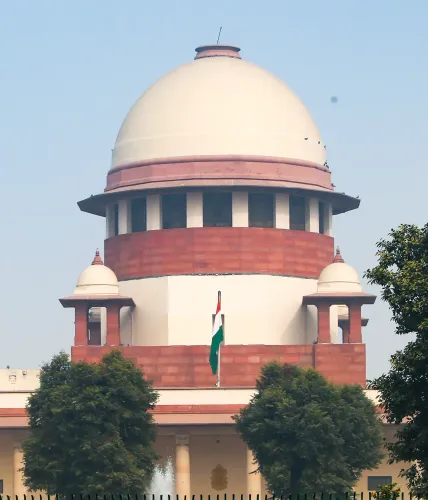
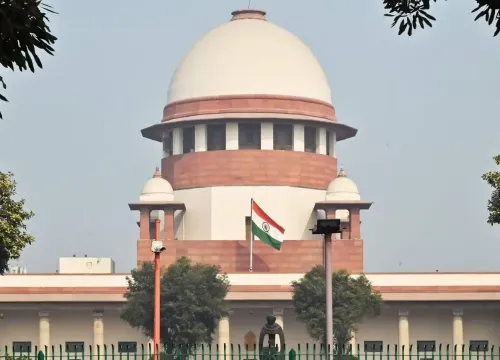
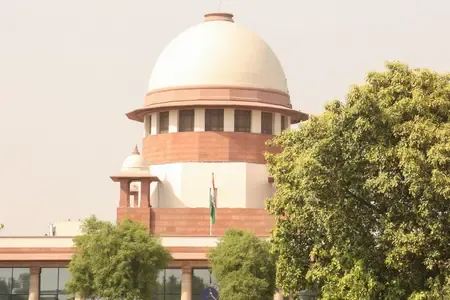
New Delhi, Feb 18 (NationPress) The Supreme Court has dismissed a public interest litigation (PIL) aimed at establishing comprehensive pan-India guidelines to tackle the ongoing constitutional failures in addressing racially motivated violence against individuals from the North-Eastern states. The court expressed its sorrow regarding the recent murder of a Tripura student in Uttarakhand’s Dehradun. A Bench led by Chief Justice of India (CJI) Surya Kant suggested that the PIL petitioner should present the concerns to the Attorney General (AG) for India, who serves as the primary legal representative of the Union government.
“At this juncture, we believe it's fitting that these important issues should be referred to the appropriate authority via the esteemed AG,” remarked the Bench, which also included Justices Joymalya Bagchi and Vipul Pancholi.
The PIL, filed under Article 32 of the Constitution, highlighted that despite the introduction of the Bharatiya Nyaya Sanhita, 2023, and the Bharatiya Nagarik Suraksha Sanhita, 2023, there remains a lack of statutory acknowledgment of hate or racial crimes, no obligatory recording of bias motivation at the FIR stage, and no specialized investigation or victim-protection protocols.
During the proceedings, the petitioner urged the apex court to create a dedicated system, especially within educational institutions, to resolve complaints stemming from identity-based discrimination.
“This is truly distressing. I have numerous friends from the Northeast. This issue is real and undeniable. It’s a significant concern. Often, when incidents occur, bystanders merely smile and walk away while the victim is attacked,” stated advocate Anoop Prakash Awasthi, who represented himself as the petitioner.
However, the CJI Kant-led Bench showed hesitance about forming region-specific frameworks.
“If we start to entertain litigations where victims are targeted based on their region, it sends a negative message. People will begin to identify individuals as Keralite, Tamilian, Kashmirian, etc. We have a robust federal structure that should promote unity rather than regional identification,” the Bench orally noted.
The PIL was filed in response to the brutal attack and eventual death of Tripura native Angel Chakma in Uttarakhand’s Dehradun. Chakma, a final-year MBA student, was reportedly assaulted on December 9, 2025, in Dehradun’s Selaqui area following a dispute with a group of youths who allegedly shouted racial insults before attacking him with sharp objects.
In reference to the incident, the petition quoted Chakma’s final words during the confrontation: “We are not Chinese… We are Indians. What certificate should we show to prove that?”
The PIL highlighted that these words “tragically turned out to be his last statement of constitutional belonging before the assault turned fatal.”
The plea argued that despite the evident hate-based and racial motivation behind such offenses, they continue to be regarded as “ordinary crimes,” thereby obscuring the motive and weakening their constitutional significance.
“There is no mechanism in the initial criminal justice response system to identify racial offenses as a unique constitutional violation,” the petition stated, emphasizing that this perpetuates a cycle of impunity.
By citing previous incidents, such as the 2014 death of Nido Taniam, the plea contended that the murder of Angel Chakma is “not an isolated case but part of a prolonged history of racial violence” against individuals from the North-Eastern states, a situation that the Union government has acknowledged in parliamentary responses.
The PIL demanded the issuance of binding guidelines to recognize racially motivated violence as a distinct constitutional violation and to ensure effective protection of dignity, equality, and fraternity for all citizens.
Point of View
It is imperative to recognize the gravity of racially motivated violence in our society. This Supreme Court ruling, while pivotal, underscores the urgent need for a unified approach to address these crimes. Our commitment must be towards fostering equality and dignity for all citizens, transcending regional identities.
NationPress
10 Sept 2026
Frequently Asked Questions
What was the Supreme Court's ruling on the PIL?
The Supreme Court dismissed the PIL that sought pan-India guidelines for addressing racially motivated violence against North-Eastern citizens.
What incident prompted the PIL?
The PIL was filed following the murder of a Tripura student, Angel Chakma, in Dehradun.
Who should the issues be referred to according to the Supreme Court?
The Supreme Court suggested that the issues should be presented to the Attorney General for India.
What does the PIL argue regarding hate crimes?
The PIL argues that there is no statutory recognition of hate or racial crimes, and such offenses are treated as ordinary crimes.
What are the implications of the ruling?
The ruling raises concerns about the adequacy of current legal frameworks to protect against racially motivated violence.