SC dismisses review plea on SC status denial to practising Christian converts
Synopsis
The Supreme Court has shut the door on a review of its March 2026 ruling that converting to Christianity — and continuing to practise it — means an immediate and complete loss of Scheduled Caste status. The judgment, now doubly affirmed, reiterates that the 1950 Presidential Order's religion bar is absolute, with no exceptions. For Dalit Christian communities seeking SC reservation benefits, the legal route is effectively closed until Parliament or a larger bench intervenes.
Key Takeaways
The Supreme Court dismissed a review petition on 15 July 2026 against its 24 March 2026 judgment on SC status for Christian converts.
A bench of Justice Prashant Kumar Mishra and Justice Manmohan found 'no error apparent on the record.' The court reaffirmed that only persons professing Hinduism , Sikhism , or Buddhism can hold Scheduled Caste status under the Constitution (Scheduled Castes) Order, 1950 .
Conversion to Christianity results in 'immediate and complete loss' of SC status, per the ruling.
The petitioner's request for an oral hearing in open court was also rejected.
The original case arose from Andhra Pradesh , where a pastor of over a decade had sought SC/ST Act protections.
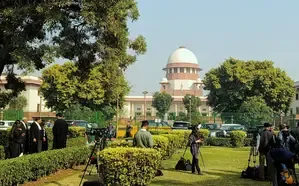
The Supreme Court of India has dismissed a review petition challenging its 24 March 2026 judgment, which held that a person who has converted to Christianity and continues to profess and practise the faith cannot claim Scheduled Caste (SC) status or invoke protections under the Scheduled Castes and Scheduled Tribes (Prevention of Atrocities) Act. The order rejecting the review was passed on 15 July 2026.
What the Court Ruled
A bench of Justice Prashant Kumar Mishra and Justice Manmohan found 'no error apparent on the record' warranting a reconsideration of the earlier verdict. The bench also rejected the petitioner's application for an oral hearing in open court, ordering that all pending applications stand disposed of.
'We have gone through the Review Petition and perused the judgment dated 24.03.2026 which has been sought to be reviewed. There is no error apparent on the record. The Review Petition is, accordingly, dismissed,' the bench stated in its order.
Background: The March 2026 Judgment
The original 24 March 2026 ruling had upheld an Andhra Pradesh High Court order quashing criminal proceedings under the SC/ST Act against certain accused. The complainant in that case had converted to Christianity and had been serving as a pastor for over a decade. The Supreme Court held that he could not claim Scheduled Caste status under those circumstances.
The court had ruled that 'no person who professes a religion other than Hinduism, Sikhism, or Buddhism can be regarded as a member of the Scheduled Caste,' holding that the bar under the Constitution (Scheduled Castes) Order, 1950, is 'absolute' and admits no exception.
Key Legal Principle Reaffirmed
The March judgment had further held that conversion to a religion not specified under the Presidential Order results in the 'immediate and complete loss' of Scheduled Caste status. A person, the court held, cannot simultaneously profess another religion and retain SC status.
The court had noted that the appellant had continued to profess Christianity and had functioned as a pastor for more than a decade, conducting regular Sunday prayer meetings — facts that, in its view, left 'no room for doubt' about his religious identity. Crucially, the petitioner had not claimed reconversion to his original religion or reacceptance into the Madiga community.
Andhra Pradesh High Court's Earlier Stand
The Andhra Pradesh High Court had reached the same conclusion before the matter reached the Supreme Court, holding that the Constitution (Scheduled Castes) Order, 1950 explicitly excludes persons professing religions other than those listed therein from claiming SC status. The Supreme Court's dismissal of the review petition now closes this legal challenge, reinforcing that position at the highest judicial level.
The ruling carries significant implications for Dalit Christian communities, who have long sought SC status and the accompanying reservation benefits — a debate that remains politically and judicially unresolved at the policy level.
Point of View
And that denying them SC status effectively punishes religious choice. The court's position is legally consistent with the text of the Order, yet Parliament has never amended that Order despite multiple commissions — including the Ranganath Misra Commission — recommending inclusion. The real accountability question is not judicial but legislative: why has no government acted on those recommendations? Until that changes, the Supreme Court's ruling, however legally sound, will continue to be experienced as institutional exclusion by a significant and historically marginalised community.
NationPress
27 Jul 2026
Frequently Asked Questions
What did the Supreme Court rule on SC status for Christian converts?
The Supreme Court held in its 24 March 2026 judgment that a person who has converted to Christianity and continues to practise the faith cannot claim Scheduled Caste status or invoke SC/ST Act protections. It reaffirmed this position on 15 July 2026 by dismissing a review petition against that ruling.
What is the Constitution (Scheduled Castes) Order, 1950, and why does it matter here?
The Constitution (Scheduled Castes) Order, 1950 is a Presidential Order that restricts SC status to persons professing Hinduism, Sikhism, or Buddhism. The Supreme Court held this bar to be 'absolute,' meaning no exception can be carved out for converts to other religions, including Christianity or Islam.
Who was the petitioner in this case?
The case originated in Andhra Pradesh and involved a person who had converted to Christianity and had been serving as a pastor for over a decade. The Supreme Court noted that he had not reconverted to his original religion or been reaccepted into the Madiga community, confirming his Christian identity.
Why did the court reject an oral hearing for the review petition?
The bench of Justices Prashant Kumar Mishra and Manmohan found no apparent error in the original judgment that would justify reopening the matter, and accordingly rejected the application for an oral hearing in open court — a standard threshold for review petitions in the Supreme Court.
What does this ruling mean for Dalit Christians seeking reservation benefits?
The ruling effectively closes the judicial route for Dalit Christians seeking SC status and the reservation benefits that come with it. For any change to occur, Parliament would need to amend the Constitution (Scheduled Castes) Order, 1950 — a legislative step that successive governments have not taken despite commission recommendations.