SC questions executive dominance in CEC, EC appointment law
Synopsis
The Supreme Court has put the Centre's 2023 election appointment law under a constitutional microscope — asking why a Cabinet Minister replaced the Chief Justice of India on the selection panel and why there is no independent voice at all. With the bench calling the Opposition's role 'ornamental' and flagging an 'executive veto,' the ruling's implications for electoral democracy could be significant.
Key Takeaways
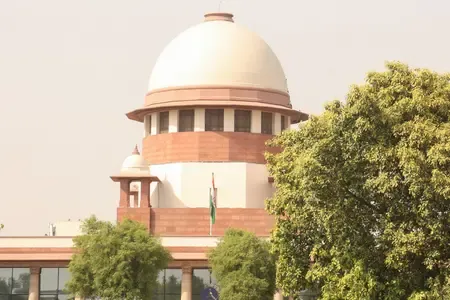
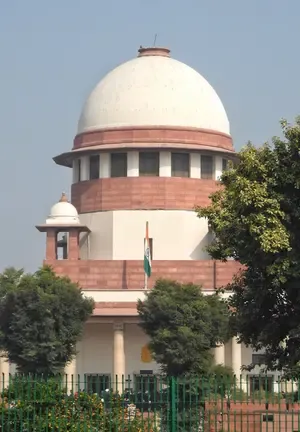
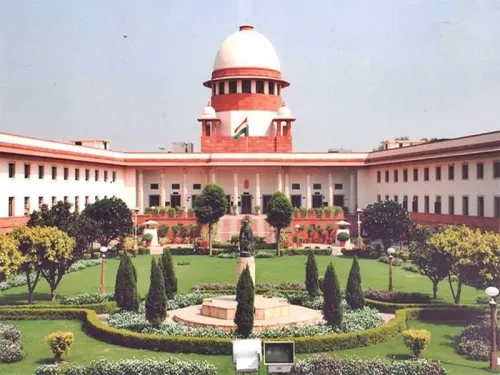
A Supreme Court bench of Justice Dipankar Datta and Justice Satish Chandra Sharma questioned the constitutional validity of the CEC and EC Appointment Act, 2023 on 14 May .
The court flagged that the 2:1 panel structure — Prime Minister, Cabinet Minister, and Leader of Opposition — gives the executive an effective veto over Election Commission of India appointments.
The bench asked why no independent member was included in the selection panel, drawing a comparison with the CBI Director appointment process where the CJI participates.
Parliament enacted the 2023 law after a March 2023 Supreme Court direction had included the CJI in the interim selection panel; the new law replaced the CJI with a Union Cabinet Minister .
The court clarified its role is limited to testing the law against Articles 14 and 324 of the Constitution, not to prescribe legislative solutions.
The Supreme Court on Thursday, 14 May sharply questioned the constitutional validity of the law governing the appointment of the Chief Election Commissioner (CEC) and Election Commissioners (ECs), observing that the current selection mechanism hands effective control to the executive and reduces the Leader of Opposition's role to a mere 'show of independence'.
What the Court Questioned
A bench of Justice Dipankar Datta and Justice Satish Chandra Sharma was hearing a batch of petitions challenging the constitutional validity of the Chief Election Commissioner and Other Election Commissioners (Appointment, Conditions of Service and Term of Office) Act, 2023. The bench pressed the Centre on why no independent member had been included in the selection panel responsible for appointing top officials to the Election Commission of India (ECI).
Under the 2023 law, the selection committee comprises the Prime Minister, the Leader of Opposition in the Lok Sabha, and a Union Cabinet Minister nominated by the Prime Minister — a composition the court found structurally skewed toward the ruling government.
The 'Ornamental' Opposition Argument
The bench was pointed in its critique of the panel's practical functioning. It observed that in any disagreement between the Prime Minister and the Leader of Opposition, the Cabinet Minister would invariably align with the government, making the outcome effectively predetermined.
'Why do you then include the Leader of the Opposition? He's ornamental. It will always be 2:1. Why do you put up this show of independence in the body? Will a member of Cabinet go against the Prime Minister?' the bench asked.
The court also drew a pointed comparison with the appointment process for the CBI Director, where the Chief Justice of India (CJI) is part of the selection panel. 'We were wondering. For a CBI Director, the CJI is there. We can say for the maintenance of law and order. But not for maintaining democracy? Not for ensuring pure elections?' the bench observed.
The Independent Member Question
The court clarified it was not specifically advocating for the CJI's inclusion in the ECI selection panel, but questioned the complete absence of any independent voice. 'We don't say the CJI should be there. But why shouldn't there be an independent member?' the bench asked. It further remarked: 'What troubles us prima facie is why there is an executive veto?'
The bench also underlined that the ECI's independence was not merely a procedural matter but a constitutional imperative. 'Free and fair elections have been held to be part of the basic structure. That can be accomplished by an independent ECI. Now ECI can only be independent if it has independent commissioners,' it observed, adding that it was 'not sufficient that the Election Commission is independent — it must appear to be independent also.'
Background: How the 2023 Law Came About
In March 2023, a Constitution Bench of the Supreme Court had directed, as an interim arrangement, that ECI appointments be made on the advice of a panel comprising the Prime Minister, the Leader of Opposition, and the CJI — pending parliamentary legislation. Parliament subsequently enacted the 2023 Act, replacing the CJI in that panel with a Union Cabinet Minister nominated by the Prime Minister.
In March 2024, the apex court declined to stay appointments made under the new law, even as it issued notice on petitions challenging its validity. Thursday's hearing marks a significant escalation in the court's scrutiny of the legislation.
Scope of the Court's Examination
The bench was careful to define the limits of its inquiry, stressing it was not attempting to formulate legislative policy. 'We are not here to provide a solution. We are only here to test whether the law is good in the angle of Article 14 or not. This is our limited job,' it stressed. The court's examination centres on whether the 2023 Act meets constitutional standards under Articles 14 and 324 of the Constitution.
The case is expected to have far-reaching implications for the institutional independence of the Election Commission ahead of future electoral cycles.
Point of View
'show of independence', 'executive veto' — signals deep scepticism about a law Parliament enacted specifically after the court had stepped in to fix the very problem it now questions again. Replacing the CJI with a Cabinet Minister on the selection panel was always going to draw scrutiny; what is notable is the bench's framing of ECI independence as a basic-structure concern, which raises the constitutional stakes considerably. The real question the court is circling is whether Parliament can structurally entrench executive dominance over an institution whose entire purpose is to check executive power at the ballot box. If the bench holds the 2023 Act unconstitutional, it would be a rare instance of the judiciary invalidating a law passed in direct response to its own earlier order.
NationPress
5 Oct 2026
Frequently Asked Questions
What is the Chief Election Commissioner and Election Commissioners Appointment Act, 2023?
It is a law enacted by Parliament that governs the appointment, conditions of service, and term of office of the Chief Election Commissioner and Election Commissioners. Under the Act, appointments are made by a three-member panel comprising the Prime Minister, the Leader of Opposition in the Lok Sabha, and a Union Cabinet Minister nominated by the Prime Minister.
Why is the Supreme Court questioning the 2023 appointment law?
The court is examining whether the law meets constitutional standards under Articles 14 and 324. It has flagged that the panel's structure gives the executive an effective 2:1 majority, making the Leader of Opposition's inclusion 'ornamental,' and questioned why no independent member sits on the selection committee.
How did the 2023 law change the earlier Supreme Court-directed process?
In March 2023, a Constitution Bench had directed as an interim measure that ECI appointments be made on the advice of a panel including the Prime Minister, the Leader of Opposition, and the Chief Justice of India. The 2023 Act replaced the CJI with a Union Cabinet Minister nominated by the Prime Minister.
Who is affected by the outcome of this case?
The ruling will directly affect how future Chief Election Commissioners and Election Commissioners are appointed, with implications for the institutional independence of the Election Commission of India — the body that oversees all national and state elections.
What is the court's stated role in this case?
The bench has clarified it is not formulating legislative policy or prescribing a solution. Its stated role is limited to testing whether the 2023 law conforms to Articles 14 and 324 of the Constitution — specifically whether the selection mechanism is constitutionally sound.