Supreme Court flags 'matrimonial bouquet' misuse of criminal law in marital disputes
Synopsis
The Supreme Court has put a name to a troubling legal pattern — the 'matrimonial bouquet' — where estranged spouses pile on multiple criminal charges, including POCSO, as leverage rather than remedy. In quashing a Meerut POCSO case, Justices Nagarathna and Bhuyan have drawn a sharp line: vague, omnibus allegations that harass rather than prosecute must be stopped at the threshold, and lawyers who enable them share the blame.
Key Takeaways
The Supreme Court quashed a POCSO Act complaint and related orders against a man and his family in Meerut , setting aside an Allahabad High Court ruling.
A Bench of Justice B.V.
Nagarathna and Justice Ujjal Bhuyan warned against a 'matrimonial bouquet' — simultaneous invocation of multiple criminal provisions in marital disputes.
The court flagged misuse of the POCSO Act as an alleged arm-twisting tactic to extract higher monetary settlements in matrimonial conflicts.
Judges stressed 'thorough scrutiny' at the threshold for vague, omnibus allegations unsupported by material evidence.
The legal fraternity was urged to refrain from advising clients to initiate false or exaggerated criminal proceedings.
The ruling clarified it would not affect other pending matrimonial proceedings between the parties, which will be decided on their own merits.
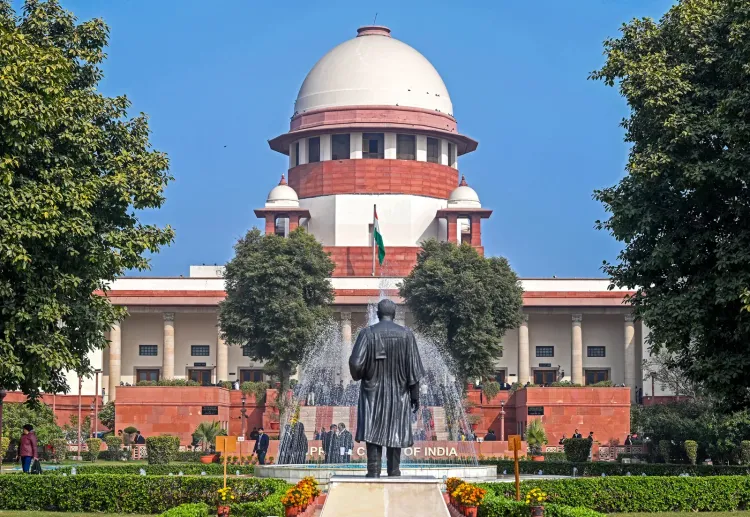
The Supreme Court of India has raised alarm over a 'worrying trend' of vexatious litigation in matrimonial disputes, warning that criminal law is increasingly being weaponised to settle personal scores and coerce opposing parties rather than seek genuine justice. The observation came in a judgment delivered by a Bench of Justice B.V. Nagarathna and Justice Ujjal Bhuyan while quashing criminal proceedings — including a POCSO Act complaint — initiated against a man and his family members in Meerut.
What the Court Ruled
The Bench set aside an Allahabad High Court order that had declined to quash the complaint, the cognisance order, and the summoning order issued by the Special Judge (POCSO Act), Meerut. The apex court held that permitting prosecution on the basis of vague, omnibus, and unsubstantiated allegations would amount to an abuse of the process of law. It clarified that the ruling would not affect any other matrimonial or related proceedings between the parties, which would be decided independently on their own merits.
The 'Matrimonial Bouquet' Pattern
The Supreme Court warned against a growing pattern it described as a 'matrimonial bouquet' of cases — where multiple criminal provisions, including dowry harassment and domestic violence laws, are invoked simultaneously, often with sweeping and unsubstantiated allegations targeting not just the spouse but also extended family members. Such complaints, the Bench observed, frequently contain 'vague and sweeping general allegations' without specific details or supporting evidence, aimed at widening the net of prosecution.
The court specifically flagged instances where serious charges under the POCSO Act are allegedly deployed as a pressure tactic in matrimonial or civil disputes, including situations where children are used as instruments in personal conflicts between estranged parents. 'A recent trend… is when the wife resorts to filing false complaints under the POCSO Act… against the father… to exact revenge or as an arm-twisting tactic to obtain a higher monetary settlement or to simply harass,' the judgment stated.
What the Supreme Court Said
The Justice Nagarathna-led Bench made pointed observations about the burden such litigation places on the judiciary. 'We also painfully take judicial cognizance of the fact that the courts of law are being misused and overburdened by such vague and vexatious litigations…to antagonise, pressurise, hound and harass the spouse and their family members,' the Bench said.
It further stressed that the surge in false cases often overshadows genuine grievances, delaying justice for those truly in need. Such litigation, the court noted, is frequently used as an 'arm-twisting' tactic to secure favourable settlements or extract monetary benefits. 'The onus is on courts to separate the wheat from the chaff,' it observed, underscoring the need to distinguish legitimate matrimonial oppression from malice-driven complaints.
Threshold Scrutiny and Lawyers' Responsibility
The apex court stressed that courts must conduct a 'thorough scrutiny' at the threshold to determine whether allegations disclose a prima facie case or are merely intended to harass the accused through prolonged criminal proceedings. 'If a person is made an accused and forced to face a criminal trial on general and sweeping allegations without bringing on record any specific instances of criminal conduct, it would tantamount to an abuse of the process of law and court,' the Bench said.
The judgment also placed responsibility on the legal fraternity, urging lawyers to refrain from advising clients to initiate false or exaggerated criminal proceedings. 'Invoking criminal process is a serious matter with penal consequences… and can be permitted only when specific acts constituting offences are alleged,' the court said, warning against the 'disastrous consequences' of criminalising domestic disputes without credible material.
Protecting Genuine Cases
The court was careful to balance its observations, stressing that genuine cases of sexual abuse and violence against women and children deserve the utmost judicial attention. It drew a clear line between such cases and allegations that are 'prima facie vague, omnibus and general in nature' and unsupported by material evidence — the latter of which, it held, must be scrutinised and, where warranted, quashed at the earliest stage. The ruling adds to a line of Supreme Court precedents addressing the misuse of criminal statutes in matrimonial conflicts.
Point of View
Particularly POCSO, to coerce settlements. The court's warning to lawyers is notable and rare, implicitly acknowledging that the bar has been complicit. What remains untested is whether this ruling will translate into consistent threshold-level quashing by trial courts and high courts, or remain a persuasive precedent selectively applied. The deeper tension — protecting genuine victims while curbing weaponised complaints — requires systemic reform, not just case-by-case adjudication.
NationPress
16 Oct 2026
Frequently Asked Questions
What is the 'matrimonial bouquet' of cases flagged by the Supreme Court?
The 'matrimonial bouquet' refers to a pattern where multiple criminal provisions — such as dowry harassment, domestic violence, and POCSO — are invoked simultaneously in matrimonial disputes, often with vague and sweeping allegations against the spouse and extended family members. The Supreme Court flagged this as an abuse of criminal process used to coerce settlements rather than seek genuine justice.
Why did the Supreme Court quash the POCSO case in Meerut?
The Supreme Court quashed the POCSO complaint, cognisance order, and summoning order against a man and his family in Meerut after finding the allegations to be vague, omnibus, and unsupported by material evidence. The Bench held that proceeding with such a case would amount to an abuse of the process of law.
Does the ruling affect all matrimonial proceedings between the parties?
No. The Supreme Court clarified that its ruling quashing the POCSO complaint and related orders does not affect any other matrimonial or related proceedings pending between the parties, which will be decided independently on their own merits.
What did the Supreme Court say about lawyers in such cases?
The court placed responsibility on the legal fraternity, urging lawyers to refrain from advising clients to initiate false or exaggerated criminal proceedings and instead encourage resolution of disputes without resorting to abuse of legal process.
How does this ruling protect genuine victims?
The Supreme Court was explicit that genuine cases of sexual abuse and violence against women and children deserve utmost judicial attention. The ruling targets only allegations that are prima facie vague, omnibus, and unsupported by evidence, directing courts to apply thorough threshold scrutiny to distinguish real grievances from harassment-driven complaints.