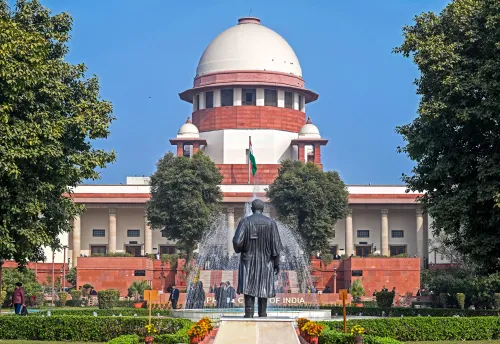
SC to hear ED plea against Mamata Banerjee over I-PAC raid row today

Synopsis
The Supreme Court's hearing on the ED's plea against Mamata Banerjee is more than a procedural update — it puts a sitting Chief Minister's conduct during a live federal raid under constitutional scrutiny. With the apex court already remarking that such interference could place 'democracy in peril,' Friday's hearing could set a landmark precedent on the limits of state executive authority against central investigative agencies.
Key Takeaways
The Supreme Court is hearing the ED's plea on Friday alleging interference by then West Bengal CM Mamata Banerjee in I-PAC office searches.
Searches were conducted on 8 January as part of a money laundering probe linked to an alleged coal smuggling scam .
The ED has sought FIRs against Banerjee, the then DGP , and the Kolkata Police Commissioner , and wants the probe transferred to the CBI .
Banerjee denied obstruction, saying she visited only to retrieve sensitive TMC election strategy data ahead of the 2026 West Bengal Assembly elections .
The Supreme Court on 15 January stayed FIRs against ED officials and ordered preservation of CCTV footage from the searched premises.
The Bench had earlier remarked that a Chief Minister's alleged interference in an active investigation could put 'democracy in jeopardy.'
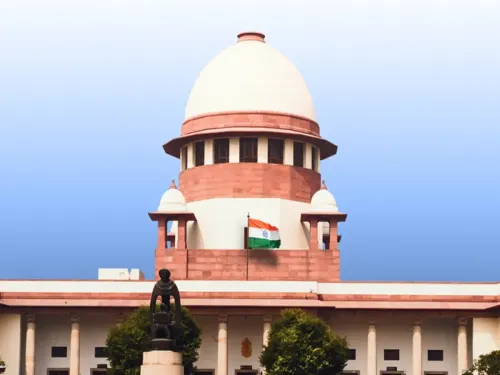
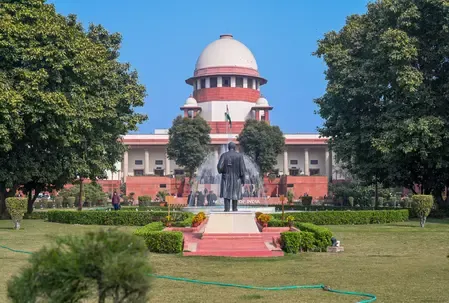
The Supreme Court is scheduled to hear on Friday a plea filed by the Enforcement Directorate (ED), alleging interference by then West Bengal Chief Minister Mamata Banerjee and senior state police officials during search operations at the Kolkata office of political consultancy firm Indian Political Action Committee (I-PAC). The case, rooted in a multi-crore money laundering probe linked to an alleged coal smuggling scam, has drawn sharp constitutional questions about the limits of executive authority during active federal investigations.
Background: The January 8 Searches
The dispute traces back to 8 January, when ED officials conducted search operations at the I-PAC Kolkata office and the residence of its co-founder, Pratik Jain, as part of a money laundering investigation linked to an alleged coal smuggling scam. The ED has alleged that Banerjee, accompanied by police personnel and senior officials, entered the premises while searches were underway and interfered with the investigation. The agency has further alleged that its officials were obstructed and 'terrorised' during the searches.
What the ED Is Seeking
The federal agency has sought directions for registration of First Information Reports (FIRs) against Mamata Banerjee, the then Director General of Police (DGP), and the Kolkata Police Commissioner. It has also sought a transfer of the probe to the Central Bureau of Investigation (CBI). Earlier, Additional Solicitor General S.V. Raju, appearing for the ED, strongly rejected allegations that the agency had 'weaponised' its powers, submitting before the apex court: 'It has not been weaponised, it has been terrorised.'
Mamata Banerjee's Counter
In her counter-affidavit, Banerjee denied all allegations of obstruction, asserting that her presence at the premises was limited and solely aimed at retrieving confidential and proprietary data belonging to the All India Trinamool Congress (TMC). According to the affidavit, she had visited after receiving information that sensitive political data linked to the party's strategy for the 2026 West Bengal Assembly elections was being accessed during the searches. The affidavit further claimed that ED officials had permitted retrieval of certain devices and documents, and that searches thereafter continued 'peacefully and in an orderly manner.'
Supreme Court's Observations So Far
The matter was earlier heard by a Bench of Justices Prashant Kumar Mishra and N.V. Anjaria, which had deferred proceedings after Solicitor General Tushar Mehta, appearing for the ED via video conferencing, sought an early listing. The Bench had previously made pointed oral observations, noting that alleged interference by a sitting Chief Minister during an ongoing investigation could place 'democracy in peril.' 'This is not per se a dispute between the State and the Union. This is, per se, an act committed by an individual who happens to be the Chief Minister of a State, keeping the whole system and democracy in jeopardy,' the Bench had remarked. In an order passed on 15 January, the Supreme Court had stayed FIRs registered by the West Bengal Police against ED officials and directed preservation of CCTV footage and other digital records from the searched premises.
Constitutional Questions at Stake
The then West Bengal government had also questioned the maintainability of the ED's writ petition under Article 32 of the Constitution, contending that the matter essentially concerns an inter-governmental dispute. The Supreme Court's eventual ruling is expected to clarify the boundaries of state executive authority when central investigative agencies are conducting searches — a question with significant implications for Centre-state relations across India.
Point of View
But its constitutional weight is far heavier — it asks the Supreme Court to adjudicate whether a Chief Minister can be present at a federal search without it constituting obstruction. The apex court's own oral remarks about 'democracy in peril' signal that it views this as more than an inter-governmental turf war. What is missing from the mainstream coverage is the precedent risk: a ruling either way will redraw the operational boundaries between state executives and central agencies at a time when Centre-state tensions over investigative jurisdiction are already elevated. Banerjee's affidavit defence — that she was protecting party data, not obstructing — is legally untested at this level, and the court's response to it may matter as much as the final order.
NationPress
7 Oct 2026
Frequently Asked Questions
What is the I-PAC raid case before the Supreme Court?
It is a case in which the Enforcement Directorate has alleged that then West Bengal Chief Minister Mamata Banerjee and senior state police officials interfered in ED search operations conducted on 8 January at the Kolkata office of political consultancy firm I-PAC and the residence of its co-founder Pratik Jain. The searches were part of a money laundering probe linked to an alleged coal smuggling scam.
What has the ED sought from the Supreme Court?
The ED has sought directions for registration of FIRs against Mamata Banerjee, the then Director General of Police, and the Kolkata Police Commissioner. It has also asked the court to transfer the investigation to the CBI.
What is Mamata Banerjee's defence in the case?
Banerjee has denied all allegations of obstruction in a counter-affidavit, stating her presence was limited and solely to retrieve confidential TMC political data that was allegedly being accessed during the searches. She has claimed the searches continued peacefully after her visit.
What has the Supreme Court said so far in this case?
The Supreme Court bench led by Justice Prashant Kumar Mishra has orally remarked that alleged interference by a sitting Chief Minister in an active investigation could place 'democracy in peril.' On 15 January, it stayed FIRs filed by the West Bengal Police against ED officials and ordered preservation of CCTV footage and digital records from the searched premises.
Why does this case matter beyond West Bengal?
The case raises a significant constitutional question about the limits of state executive authority when central investigative agencies are conducting searches. The Supreme Court's eventual ruling could set a binding precedent governing how state governments and their officials may interact with central agencies like the ED during active federal investigations across India.