NEET-PG 2026: SC issues notice on plea for candidate-wise question disclosure
Synopsis
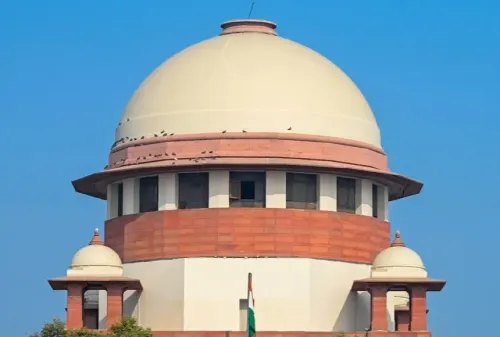
The Supreme Court has issued notice to NBEMS, the Union of India, and the NMC over NEET-PG 2026's opaque answer-key disclosure system — one that shows candidates numerical codes but not the actual questions or options they faced. The case, tagged with existing NEET-PG petitions, could force a structural overhaul of how India's premier postgraduate medical entrance exam handles post-result transparency.
Key Takeaways
The Supreme Court issued notice on 15 October 2026 in a plea challenging NEET-PG 2026 answer-key disclosure practices.
The bench of Justices P.S.
Narasimha and Alok Aradhe issued notice to the Union of India , NBEMS , and NMC .
NEET-PG 2026 was held on 30 August ; results were declared on 24 September .
Petitioners contend the current system shows candidates a coded numerical matrix without disclosing actual questions or full option text, preventing meaningful score verification.
The plea seeks a downloadable candidate-wise question paper, response sheet, and a time-bound objection mechanism reviewed by a subject-expert committee.
The next hearing is likely on 26 October .
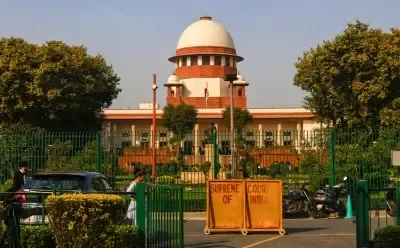
The Supreme Court on Thursday, 15 October 2026, issued notice on a plea challenging the manner in which the National Board of Examinations in Medical Sciences (NBEMS) disclosed the answer key and candidate responses for NEET-PG 2026. The petition was filed by the Democratic Medical Association and a group of NEET-PG aspirants seeking full, candidate-wise transparency in the postgraduate medical entrance examination process.
The Bench and the Parties
A bench of Justices P.S. Narasimha and Alok Aradhe issued notice to the Union of India, the NBEMS, and the National Medical Commission (NMC). The court tagged the matter with pending petitions already before it concerning the NEET-PG examination. The matter is likely to be listed next on 26 October. Senior Advocate Sidharth Suri, assisted by Advocate Satyam Singh Rajput, appeared for the petitioners.
What the Plea Challenges
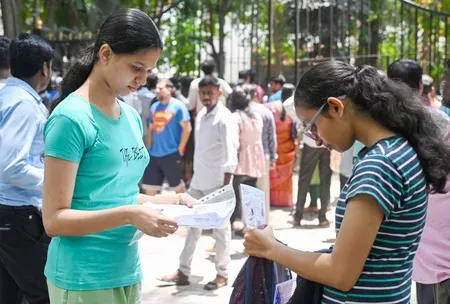
The petition targets the 1 October notice issued by NBEMS, titled 'Scorecard and Answer Key of NEET-PG 2026', under which candidates can access question-wise evaluation details only through their individual applicant login. NEET-PG 2026 was conducted on 30 August, and results were declared on 24 September. Following the result, several candidates sought access to the actual question paper, official answer key, and recorded responses to independently verify their scores.
The Core Transparency Concern
According to the petition, the existing disclosure mechanism provides only the Question ID, response status, a numerical correct-answer ID, the option selected by the candidate, and the marks awarded — but does not provide the actual text of questions or the complete text of options in the sequence in which they appeared during the examination.
'The candidate is consequently shown a coded numerical matrix, but is not able to correlate such identifiers with what he or she actually saw and answered during the examination,' the petition stated.
The petitioners further argued that NBEMS adopts candidate-specific shuffling of both the sequence of questions and the order of options. 'Thus, merely informing a candidate that, against a particular Question ID, Option 2 was correct and Option 3 was selected does not enable the candidate to ascertain what the underlying question was, what Options 2 and 3 actually contained, or whether the correct question and option sequence have been accurately mapped to that candidate's examination record,' the plea stated. This means candidates can reconcile marks arithmetically but cannot independently verify the substantive answer key or challenge ambiguous questions.
What the Petitioners Have Demanded
The plea has urged the apex court to direct NBEMS to make available a candidate-wise mapped question paper and response sheet containing the actual questions in the sequence presented during the examination, the complete options, recorded responses, correct answers, and marks awarded. It has also sought a downloadable and permanent electronic copy of each candidate's examination record, along with a reasonable, time-bound mechanism for raising question-wise objections.
The petitioners have proposed that such objections be examined by a duly constituted subject-expert committee, with consequential correction of scores and ranks wherever errors are established. The plea also seeks appropriate guidelines or standard operating procedures to govern post-examination transparency in future postgraduate medical entrance examinations.
Broader Context
This development comes amid sustained scrutiny of examination transparency in high-stakes national entrance tests. The Supreme Court has previously engaged with transparency and verifiability issues in NEET-PG, and tagging this petition with pending matters signals the court's intention to address systemic concerns in a consolidated manner. For hundreds of thousands of MBBS graduates whose postgraduate admissions hinge on NEET-PG ranks, the outcome of this case could set a lasting precedent for how examination bodies disclose and handle challenge mechanisms.
Point of View
When secure digital delivery can easily support full candidate-wise paper disclosure. The Supreme Court's decision to tag this petition with existing NEET-PG matters suggests the judiciary sees this as a systemic issue, not a one-off complaint. If the court orders a more robust disclosure regime, it would mark a significant shift in how exam bodies balance security concerns against candidates' constitutional right to verify and challenge their results. The larger question is whether NBEMS will act proactively or wait for a court mandate — a pattern that has plagued examination governance in India for years.
NationPress
15 Oct 2026
Frequently Asked Questions
What is the NEET-PG 2026 Supreme Court notice about?
The Supreme Court issued notice on 15 October 2026 on a plea by the Democratic Medical Association and NEET-PG 2026 aspirants, challenging NBEMS's answer-key disclosure system for the postgraduate medical entrance exam. The petitioners argue that the current mechanism does not allow candidates to verify their answers meaningfully because actual question texts and option sequences are not disclosed.
What is wrong with the current NBEMS answer-key disclosure?
The existing system shows candidates only numerical identifiers — Question IDs and option numbers — without the actual text of questions or options in the order they appeared during the exam. Because NBEMS uses candidate-specific shuffling of questions and options, a candidate told that 'Option 2 was correct and Option 3 was selected' cannot determine what either option actually said or whether the mapping is accurate.
What have the petitioners asked the Supreme Court to direct?
The petitioners have sought a direction to NBEMS to provide a downloadable, candidate-wise mapped question paper and response sheet with actual questions in examination sequence, complete option texts, recorded responses, correct answers, and marks awarded. They have also sought a time-bound objection mechanism reviewed by a subject-expert committee, with score and rank corrections wherever errors are found.
When was NEET-PG 2026 held and when were results declared?
NEET-PG 2026 was conducted on 30 August 2026, and results were declared on 24 September 2026. Following the result, multiple candidates sought access to the actual question paper and official answer key to independently verify their scores.
When is the next hearing in this case?
The matter is likely to be listed next before the Supreme Court on 26 October 2026. The case has been tagged with existing pending petitions concerning the NEET-PG examination.