SC issues notice on ex-Congress MLA Rajendra Bharti's plea in 1998 bank fraud case
Synopsis
The Supreme Court has issued notice in former Congress MLA Rajendra Bharti's challenge to his conviction in a 1998 bank fraud case — but refused to stay the conviction, keeping his disqualification as a Madhya Pradesh MLA intact. With the Datia Assembly by-election looming, the apex court's next hearing in four weeks could determine whether Bharti gets any relief before the poll.
Key Takeaways
The Supreme Court on 29 July issued notice on former Congress MLA Rajendra Bharti's petition but refused to stay his conviction in the 1998 bank fraud case .
Bharti's disqualification as a Madhya Pradesh MLA remains in force; the Datia Assembly seat has been declared vacant.
A bench of Justices Vikram Nath and Sandeep Mehta posted the matter for hearing after four weeks .
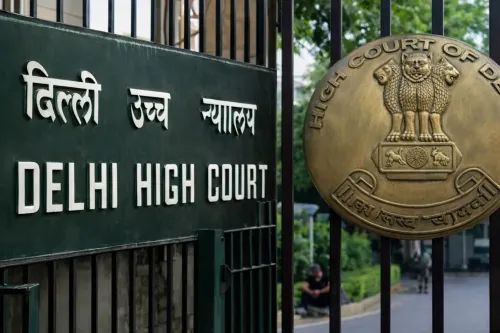
The Delhi High Court had on 10 July refused to suspend the conviction, finding no 'palpable or manifest error' in the trial court's findings.
Bharti was sentenced to three years' imprisonment and a fine of ₹1 lakh ; his sentence is suspended but the conviction stands.
The case involves alleged manipulation of a fixed deposit at the District Cooperative Agriculture and Rural Development Bank, Datia , with interest drawn at 13.5 per cent beyond the original maturity period.
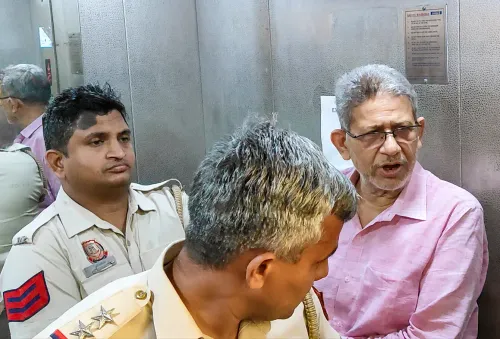
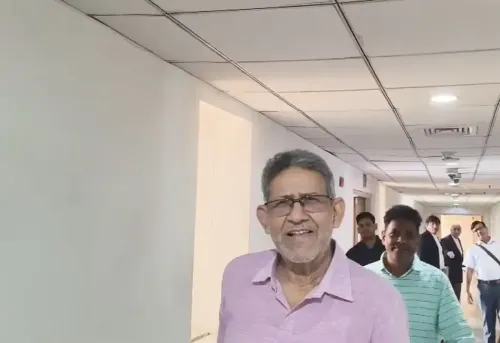
The Supreme Court on Wednesday, 29 July issued notice on a petition filed by former Congress MLA Rajendra Bharti, who has challenged the Delhi High Court's refusal to suspend his conviction in the 1998 Rural Development Bank fraud case. The apex court, however, declined to stay the conviction itself, leaving Bharti's disqualification as a member of the Madhya Pradesh Legislative Assembly intact for now.
A bench comprising Justices Vikram Nath and Sandeep Mehta sought responses from the prosecution and the Zila Sahkari Krishi Gramin Vikas Bank, through its General Manager, and scheduled the next hearing four weeks from the date of the order.
Background: The Conviction and Disqualification
Bharti was convicted by a Special MP/MLA court in New Delhi under multiple provisions of the Indian Penal Code — including Sections 120B, 420, 467, 468, 471 and 409 — in connection with alleged financial irregularities at the District Cooperative Agriculture and Rural Development Bank in Datia in 1998. Co-accused Raghuvir Sharan Prajapati was convicted alongside him.
According to the prosecution, Bharti and others conspired to manipulate a fixed deposit, with records allegedly showing the tenure was altered in stages — from three years to 10 years and eventually to 15 years — enabling a family trust linked to Bharti to continue drawing interest at 13.5 per cent well beyond the original maturity period.
Bharti was sentenced to three years' imprisonment and a fine of ₹1 lakh. While his sentence was suspended and bail was granted, the conviction remained in force. Under Section 8 of the Representation of the People Act, 1951, read with Article 191(1)(e) of the Constitution and the Supreme Court's 2013 ruling in the Lily Thomas case, the conviction triggered his immediate disqualification. The Madhya Pradesh Assembly Secretariat subsequently declared the Datia Assembly seat vacant, prompting the Election Commission of India (ECI) to notify a by-election.
What the Delhi High Court Ruled
Bharti had challenged a 10 July judgment of the Delhi High Court, which refused to suspend his conviction. A single-judge bench of Justice Manoj Jain held that suspension of conviction is an extraordinary power to be exercised only in 'exceptional circumstances' and found no apparent infirmity in the trial court's findings.
Bharti had argued that the impending Datia Assembly by-election constituted an irreversible consequence warranting relief. The High Court rejected this, with Justice Jain observing: 'The answer has to be in the negative.' The court further noted that electoral hardship was not unique to Bharti but was a consequence of the statutory framework governing disqualification of elected representatives.
The High Court also held that an MLA or MP whose electoral prospects are affected cannot, on that ground alone, seek a stay of conviction — and that 'in the absence of a serious infirmity or a fundamental flaw... the judgment of conviction is not liable to be stayed/suspended.' On a prima facie review, it found no 'palpable or manifest error' in the trial court's judgment.
Supreme Court's Position
The Supreme Court's decision to issue notice while refusing to stay the conviction is significant. It signals that the court considers the petition worthy of examination but is not persuaded — at least at this preliminary stage — that Bharti's disqualification should be paused. His inability to contest the Datia by-election, should it proceed before the matter is heard, remains a live consequence.
What Happens Next
The matter will return before the Supreme Court in approximately four weeks, by which time the prosecution and the bank are expected to file their responses. The timing is critical given the pending Datia by-election, and the outcome of this case could have implications for how courts weigh electoral consequences when deciding on suspension of conviction in cases involving sitting or former legislators.
Point of View
The legal question becomes largely academic for this electoral cycle. The broader pattern here is instructive: legislators convicted by trial courts are finding it progressively harder to obtain stays, which strengthens accountability norms but also places significant power in the hands of trial courts whose judgments may themselves be contested on appeal.
NationPress
28 Oct 2026
Frequently Asked Questions
Why was Rajendra Bharti disqualified as an MLA?
Rajendra Bharti was disqualified after being convicted by a Special MP/MLA court in connection with a 1998 bank fraud case in Datia. Under Section 8 of the Representation of the People Act, 1951, and the Supreme Court's 2013 Lily Thomas ruling, a conviction carrying a sentence of two years or more triggers automatic disqualification of a sitting legislator.
What did the Supreme Court decide on 29 July?
The Supreme Court issued notice to the prosecution and the Zila Sahkari Krishi Gramin Vikas Bank, asking them to respond to Bharti's petition, but declined to stay his conviction. His disqualification as a Madhya Pradesh MLA therefore continues, and the next hearing is scheduled four weeks later.
Why did the Delhi High Court refuse to suspend the conviction?
The Delhi High Court held on 10 July that suspension of conviction is an extraordinary remedy to be used only in exceptional circumstances. It found no palpable or manifest error in the trial court's judgment and ruled that electoral hardship — including the prospect of missing a by-election — does not by itself constitute exceptional circumstances.
What is the 1998 Rural Development Bank fraud case about?
The case involves alleged manipulation of a fixed deposit at the District Cooperative Agriculture and Rural Development Bank in Datia in 1998. The prosecution alleges that the fixed deposit's tenure was altered in stages from three years to 15 years, allowing a family trust linked to Bharti to draw interest at 13.5 per cent well beyond the original maturity date.
What happens to the Datia Assembly seat now?
The Datia Assembly seat has been declared vacant by the Madhya Pradesh Assembly Secretariat following Bharti's disqualification, and the Election Commission of India has notified a by-election. Unless the Supreme Court intervenes before the poll date, Bharti will remain ineligible to contest.