Supreme Court orders Manipur Chief Secretary to report on 25 unnatural deaths in relief camps
Synopsis
The Supreme Court has ordered Manipur's Chief Secretary to account for 25 unnatural deaths in relief camps — demanding post-mortem reports, FIR registrations, and explanations for compensation as low as ₹20,000. With 1,135 violence cases still under investigation and the Gita Mittal committee's findings on the table, India's highest court is signalling it will not allow the humanitarian fallout of 2023 to go unaccounted for.
Key Takeaways
The Supreme Court on 17 September 2026 directed Manipur's Chief Secretary to submit a report on 25 unnatural deaths in relief camps, with post-mortem records and preventive measures.
Post-mortem examinations were reportedly conducted in only 20 of 25 cases; the court sought an explanation for the gap.
Families of deceased were reportedly paid compensation of just ₹20,000–₹30,000 ; the court demanded justification for these amounts.
The Manipur Legal Services Authority was directed to ensure FIR registration in all unnatural-death cases and expedite existing investigations.
42 SITs have been formed; charge sheets filed in 302 cases , 1,135 cases still under investigation.
The bench is reviewing findings of the Justice Gita Mittal committee, constituted to address humanitarian concerns from the 2023 Manipur violence .
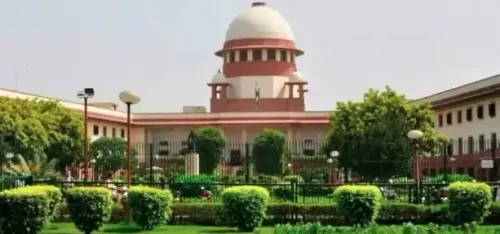
The Supreme Court on Thursday, 17 September 2026, directed the Manipur Chief Secretary to submit a detailed report on 25 unnatural deaths recorded in relief camps across the violence-affected state, demanding post-mortem records, causes of death, and preventive measures taken. The order came from a bench of Chief Justice of India (CJI) Surya Kant and Justices Joymalya Bagchi and V. Mohana after the court took note of material documenting deaths and the hardships faced by internally displaced persons (IDPs) in the camps.
Key Directions from the Bench
The bench directed the Chief Secretary of Manipur to place on record post-mortem reports for all 25 cases flagged in press reports, along with documentation of preventive steps adopted to forestall further deaths. The court also questioned why post-mortem examinations had been conducted in only 20 of the 25 cases, and sought an explanation for compensation amounts reportedly as low as ₹20,000–₹30,000 paid to families in unnatural-death cases — asking the state to justify the basis on which those figures were determined.
The Manipur government was additionally asked to explain what measures have been put in place to ensure the safety and dignity of displaced residents, and to ensure that adequate medical facilities and essential daily necessities are being provided in the camps.
Role of the Manipur Legal Services Authority
The Manipur Legal Services Authority was directed to immediately examine the situation and ensure that First Information Reports (FIRs) are registered in every case of unnatural death. It was further instructed to confirm that causes of death are properly ascertained and that investigations in already-registered FIR cases are completed expeditiously. The court's directions reflect mounting judicial concern over the pace and rigour of accountability in the camps, which house thousands displaced by the 2023 ethnic violence.
Status of Violence-Related Investigations
During the hearing, Additional Solicitor General (ASG) Aishwarya Bhati updated the bench on the state of investigations. According to her submission, 42 Special Investigation Teams (SITs) have been constituted across eight districts. Charge sheets have been filed in 302 cases, closure reports submitted in 1,583 cases, and 1,135 cases remain under active investigation.
The ASG also briefed the court on Central Bureau of Investigation (CBI) proceedings, including cases of sexual violence during the 2023 unrest. The Supreme Court had earlier transferred 11 sexual violence cases to the CBI and ordered trials to be held in Assam, while allowing victims and witnesses to depose via video conferencing from Manipur. Retired IPS officer Dattatray Padsalgikar continues to monitor these investigations.
Background: Gita Mittal Committee and Ongoing Oversight
Thursday's directions followed the court's review of a report submitted by the committee headed by former Jammu and Kashmir High Court Chief Justice Gita Mittal, constituted by the apex court to examine humanitarian concerns arising from the 2023 violence — covering women and children, relief-camp conditions, compensation, and rehabilitation. In February, the court had sought a CBI progress report on sexual violence investigations and explored a coordination mechanism between the Manipur and Gauhati High Courts for monitoring trials. The court had then stressed the need to provide victims and witnesses a 'free and fearless environment' for recording their statements. The latest directions signal that the Supreme Court intends to maintain active oversight until accountability is fully established.
Point of View
Displaced persons in Manipur's relief camps are dying under circumstances that have not been fully documented or investigated. The fact that post-mortems were skipped in five of 25 cases — and that families received compensation as low as ₹20,000 — points to systemic neglect, not administrative oversight. The court's decision to keep the Justice Gita Mittal committee's mandate active, while also tracking CBI progress on sexual violence cases, is a sign that the judiciary does not trust routine state reporting to deliver accountability. The critical question is whether this judicial pressure translates into on-ground change, or whether the camp conditions remain a deferred crisis managed through periodic status reports.
NationPress
17 Sept 2026
Frequently Asked Questions
What did the Supreme Court order regarding Manipur relief camp deaths?
The Supreme Court directed Manipur's Chief Secretary to submit a detailed report on 25 unnatural deaths reported in relief camps, including post-mortem records, causes of death, and preventive measures taken. The order was passed on 17 September 2026 by a bench led by CJI Surya Kant.
Why did the Supreme Court question the compensation paid to families?
Reports placed before the court indicated that families in unnatural-death cases received compensation of only ₹20,000–₹30,000. The bench sought an explanation for the basis on which these amounts were determined, implying the figures appeared inadequate.
What is the current status of investigations into the 2023 Manipur violence?
As of the 17 September hearing, 42 Special Investigation Teams have been constituted across eight districts. Charge sheets have been filed in 302 cases, closure reports in 1,583 cases, and 1,135 cases remain under active investigation. The CBI is separately handling 11 sexual violence cases.
Who is Justice Gita Mittal and why was her committee formed?
Justice Gita Mittal is the former Chief Justice of the Jammu and Kashmir High Court. The Supreme Court constituted a committee under her to examine humanitarian concerns arising from the 2023 Manipur ethnic violence, covering issues such as relief camps, compensation, rehabilitation, and the welfare of women and children.
What role does the Manipur Legal Services Authority play in this matter?
The Supreme Court directed the Manipur Legal Services Authority to immediately examine the relief camp deaths, ensure FIRs are registered in every unnatural-death case, verify that causes of death are properly ascertained, and expedite investigations in cases where FIRs have already been filed.