SC dismisses Brinda Karat review plea on Anurag Thakur 'goli maro' FIR case
Synopsis
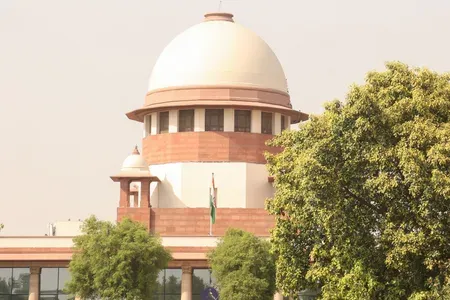
The Supreme Court has shut the door on Brinda Karat's bid to revive an FIR against Anurag Thakur over the 2020 'goli maro' speech, dismissing her review petition without an oral hearing. The ruling preserves a significant legal clarification — prior sanction cannot block FIR registration — but leaves Thakur untouched, finding no cognizable offence in the speeches.
Key Takeaways
The Supreme Court dismissed Brinda Karat's review petition on 29 July 2025 , declining to reconsider its 29 April judgment.
The 29 April ruling had refused to order an FIR against BJP MP Anurag Thakur over his alleged 'goli maro' speech during anti-CAA protests in January 2020 .
The court found 'no cognizable offence' in the speeches after independently examining the material on record.
The apex court corrected the legal position on prior sanction: it is required only at the cognisance stage , not for FIR registration or investigation under Section 156(3) CrPC .
Karat's application for an oral hearing of the review petition in open court was also rejected.
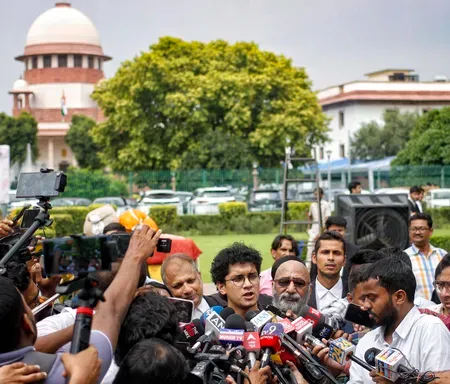
The Supreme Court on 29 July 2025 dismissed a review petition filed by Communist Party of India (Marxist) [CPI(M)] leader Brinda Karat, declining to reconsider its 29 April judgment that had refused to order registration of a First Information Report (FIR) against Bharatiya Janata Party (BJP) Member of Parliament Anurag Thakur over his alleged 'goli maro' (shoot them) speech made during the anti-CAA protests in January 2020. A bench of Justices Vikram Nath and Sandeep Mehta found no ground to revisit the earlier ruling.
What the Court Ruled
The bench categorically stated it found no error in the earlier order warranting reconsideration. 'We have gone through the review petition as well as the grounds in support thereof. We do not find any error, much less apparent, in the order impugned, warranting its reconsideration,' the apex court said in its order.
The court also rejected Karat's application seeking an oral hearing of the review petition in open court, ordering that the review petition stood dismissed and all pending applications stood disposed of.
The April 29 Verdict and Its Legal Significance
The 29 April judgment had delivered a nuanced ruling. While the Supreme Court partly sided with Karat by correcting the legal position on prior sanction, it ultimately declined to direct an FIR. The apex court had disagreed with the Delhi High Court and the trial court, which had held that prior sanction under the Code of Criminal Procedure (CrPC) was necessary before a magistrate could direct FIR registration under Section 156(3) CrPC.
The bench had clarified that prior sanction is required only at the stage of taking cognisance — not at the stage of FIR registration or investigation. It held that a magistrate's order under Section 156(3) CrPC is a pre-cognisance exercise and does not amount to taking cognisance of an offence. Notably, the court observed that making FIR registration contingent on prior sanction would be contrary to the statutory scheme governing criminal investigations.
Despite this correction of legal reasoning, the court independently examined the material on record and upheld the conclusion that 'no cognizable offence is made out' from the speeches in question.
Background: How the Case Reached the Supreme Court
The case originated from Karat's complaint seeking FIR registration against Anurag Thakur and then-BJP MP Pravesh Verma over alleged hate speeches delivered during the anti-CAA protests in January 2020. When the police declined to act on her complaint, Karat approached the trial court under Section 156(3) CrPC. The trial court refused to direct an FIR, citing the requirement of prior sanction — a view affirmed by the Delhi High Court. Karat then moved the Supreme Court, which corrected the prior-sanction reasoning but still declined to order the FIR.
What This Means Going Forward
With the review petition dismissed, the Supreme Court's 29 April ruling stands as final on the matter. The case, however, leaves behind an important legal precedent: courts and police cannot use the requirement of prior sanction as a ground to refuse FIR registration at the pre-cognisance stage. Whether that clarification influences future hate-speech cases arising from the 2020 anti-CAA protests or similar public order incidents remains to be seen.
Point of View
But the outcome is a study in contradictions: the court corrected both the trial court and the Delhi High Court on the law of prior sanction, yet arrived at the same destination — no FIR. That split reasoning matters. The prior-sanction clarification is now binding precedent and could widen access to Section 156(3) CrPC in future hate-speech complaints. But the finding that the 'goli maro' speech disclosed no cognizable offence will be cited by critics as evidence that the bar for prosecuting inflammatory political speech in India remains prohibitively high. With the review dismissed in chambers — without even an oral hearing — there is no further judicial avenue left for Karat on this specific complaint.
NationPress
17 Sept 2026
Frequently Asked Questions
What did the Supreme Court decide on Brinda Karat's review petition?
The Supreme Court dismissed Brinda Karat's review petition on 29 July 2025, refusing to reconsider its 29 April judgment that had declined to order an FIR against BJP MP Anurag Thakur over his alleged 'goli maro' speech. The bench of Justices Vikram Nath and Sandeep Mehta found no apparent error in the earlier order warranting reconsideration.
What was the 'goli maro' speech controversy?
During the anti-CAA protests in January 2020, BJP MP Anurag Thakur and then-BJP MP Pravesh Verma were accused of making alleged hate speeches, including a 'goli maro' (shoot them) chant. Brinda Karat filed a complaint seeking FIR registration, which was refused by police, the trial court, and the Delhi High Court before reaching the Supreme Court.
What legal precedent did the Supreme Court set on prior sanction and FIR registration?
The Supreme Court clarified that prior sanction under the CrPC is required only at the stage of taking cognisance of an offence — not for FIR registration or investigation. A magistrate's order under Section 156(3) CrPC directing investigation is a pre-cognisance exercise, and making FIR registration contingent on prior sanction is contrary to the statutory scheme.
Why did the Supreme Court refuse to order an FIR despite correcting the lower courts' legal reasoning?
After independently examining the speeches, the status report filed before the trial court, and the reasoning of the lower courts, the Supreme Court concluded that 'no cognizable offence is made out' from the material on record. The court corrected the prior-sanction reasoning but upheld the ultimate conclusion against FIR registration.
Is there any further legal recourse available to Brinda Karat in this case?
With the review petition dismissed and the application for an open-court oral hearing also rejected, no further judicial avenue remains for Karat within the Supreme Court on this specific complaint. The 29 April judgment now stands as final.