Did the SC Reject Jairam Ramesh's Plea on Ex-Post Facto Clearances?
Synopsis
The Supreme Court's recent refusal to entertain Jairam Ramesh's petition regarding ex-post facto environmental clearances raises significant questions about the legality and future of such approvals. This decision could have far-reaching implications for the environmental landscape in India, especially concerning ongoing and future projects.
Key Takeaways
The Supreme Court dismissed Jairam Ramesh's plea regarding ex-post facto environmental clearances.
The court questioned the maintainability of the writ petition under Article 32.
The ruling upholds previous judgments on environmental clearances.
Significant implications for ongoing and future projects are anticipated.
The dissenting opinion highlighted concerns about environmental jurisprudence.
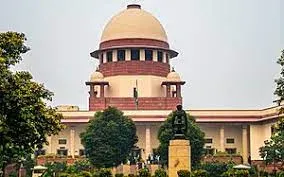
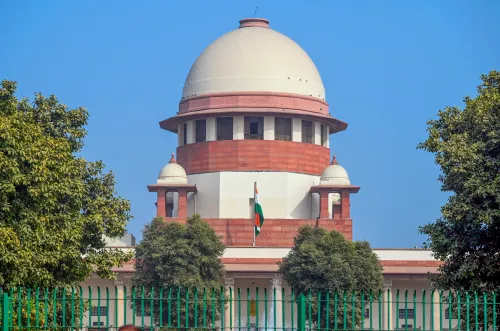
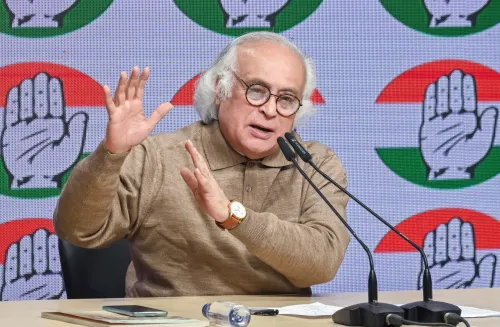
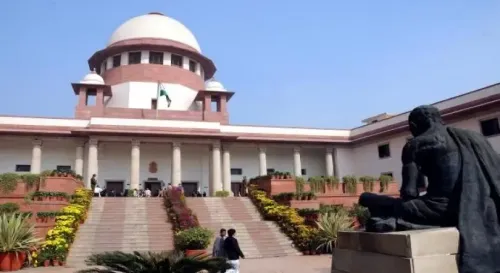
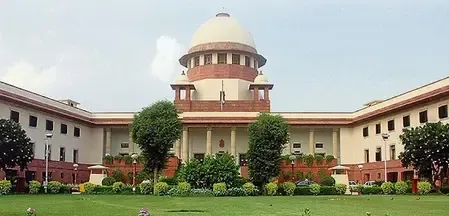
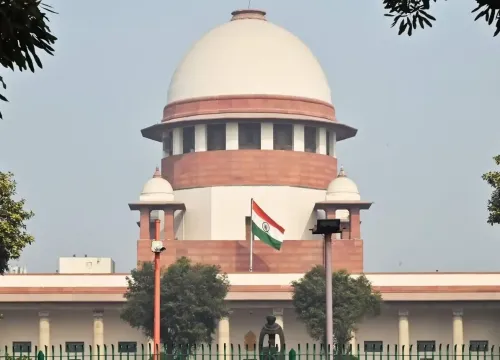
New Delhi, Feb 12 (NationPress) The Supreme Court on Thursday declined to accept a writ petition submitted by Congress leader and Rajya Sabha MP Jairam Ramesh that challenged the issuance of ex-post facto environmental clearances (EC).
In November 2025, a three-judge Bench had permitted a review petition and overturned its previous May 2025 ruling in the Vanashakti case, which had prohibited the Union government from issuing post-facto ECs.
The review ruling reinstated the 2017 notification and 2021 Office Memorandum (OM) that allowed such retrospective approvals.
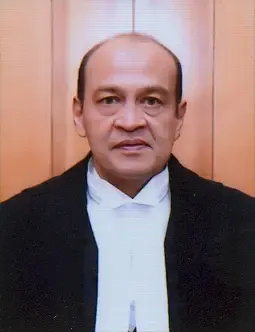
The Bench, consisting of Chief Justice of India (CJI) Surya Kant and Justice Joymalya Bagchi, noted that Ramesh's petition was essentially an effort to review its previous decision and questioned the validity of the petition under Article 32 of the Constitution.
"At the outset, for what reason has this been submitted? You are already aware that a three-judge Bench has made a ruling," the CJI-led Bench observed.
When the petitioner's counsel argued that the current petition contested the 2017 and 2021 OMs as well as a new OM issued in January 2026, the Supreme Court inquired about the maintainability of a writ petition against a decision previously upheld by the Court.
"How is this writ maintainable? The government has issued a notification in accordance with a Supreme Court ruling. By contesting it, you are indirectly seeking a review of that ruling. How can this be possible?" the Bench questioned.
It reaffirmed that if the grievance was directed at the November 2025 verdict, the suitable remedy would be to file a review petition, not a writ petition under Article 32 of the Constitution.
"Why did you not file a review? In a writ petition, how can you seek to review a ruling? If you do so, be prepared for substantial costs," the bench warned, adding: "Have you submitted this for media attention?"
Recognizing the Supreme Court's reluctance to hear the case and its warning regarding costs, the petitioner's counsel requested permission to withdraw the petition.
The Bench permitted the withdrawal and dismissed the petition as withdrawn, allowing the opportunity to pursue remedies as per the law.
In May 2025, the Supreme Court nullified the 2017 notification and 2021 OM that authorized retrospective environmental clearances for projects that started or expanded without prior approvals under the 2006 Environmental Impact Assessment (EIA) notification. Subsequently, a review petition was lodged by the Confederation of Real Estate Developers of India (CREDAI), arguing that the May 2025 ruling imposed severe challenges on the real estate sector and related industries.
In November 2025, a three-judge Bench including then CJI B.R. Gavai, and Justices Ujjal Bhuyan and K. Vinod Chandran accepted the review petition by majority, thereby reinstating the process for granting ex-post facto ECs.
The majority ruling noted that several large-scale public projects, with investments around Rs 20,000 crore, would face demolition if retrospective clearances were not reinstated, which would lead to further environmental harm. However, Justice Bhuyan expressed a strong dissent, asserting that no grounds for review were established and reiterating that ex-post facto environmental clearances are "alien to environmental jurisprudence."
Point of View
This ruling by the Supreme Court is a pivotal moment in the ongoing discourse around environmental regulations in India. It underscores the court's commitment to upholding established legal standards while also addressing the complexities surrounding development and environmental protection. The decision is indicative of the court's role as a guardian of the Constitution, balancing the needs of progress with the imperative of sustainable practices.
NationPress
30 Sept 2026
Frequently Asked Questions
What is the significance of ex-post facto environmental clearances?
Ex-post facto environmental clearances allow projects to receive environmental approval retroactively, which can be contentious as it raises concerns about compliance with environmental regulations.
Who is Jairam Ramesh?
Jairam Ramesh is a prominent leader of the Indian National Congress and a Member of Parliament in the Rajya Sabha.
What did the Supreme Court state about the writ petition?
The Supreme Court stated that the writ petition was not maintainable as it indirectly sought a review of an earlier judgment that had already been upheld.
What are the implications of this ruling for future projects?
This ruling may complicate the approval process for future projects that require environmental clearances, as it reinforces the need for prior approvals.
What was the dissenting opinion in the ruling?
Justice Bhuyan dissented, arguing that there were no grounds for review and emphasized that ex-post facto clearances are inappropriate within environmental jurisprudence.