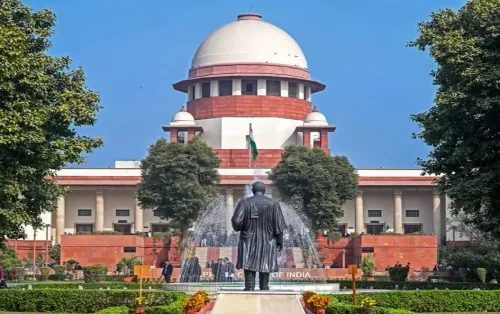
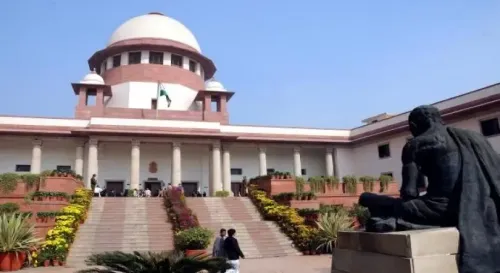
Sabarimala review: SC nine-judge bench reserves verdict on religious freedom questions
Synopsis
India's most consequential religion-versus-equality case just moved to its final stage. A nine-judge Supreme Court bench has reserved its verdict on the Sabarimala reference — a ruling that will not only decide women's entry into a Kerala temple but set the constitutional boundary for how far courts can reach into the practices of every religious community in India.
Key Takeaways
The Supreme Court's nine-judge Constitution Bench , led by Chief Justice Surya Kant , reserved its verdict in the Sabarimala reference on 14 May .
The reference stems from the court's September 2018 ruling permitting women of all ages to enter the Sabarimala Lord Ayyappa Temple .
Seven broad constitutional questions are before the bench, centring on the interplay between Articles 25, 26 (religious freedom) and Article 14 (equality).
The bench also examined related issues: entry of Muslim women into mosques , Parsi women's temple access after interfaith marriage, and female genital mutilation in the Dawoodi Bohra community.
All parties may file written submissions by 29 May .
Solicitor General Tushar Mehta and several intervenors urged the court to adopt a restrained approach in matters of religion and defer to legislatures on reform questions.
The Supreme Court of India on Thursday, 14 May reserved its verdict in the long-pending Sabarimala reference matter, concluding extensive hearings on a batch of petitions that raise foundational constitutional questions about religious freedom, denominational rights, and the limits of judicial review over matters of faith.
A nine-judge Constitution Bench, headed by Chief Justice of India Surya Kant and comprising Justices B.V. Nagarathna, M.M. Sundresh, Ahsanuddin Amanullah, Aravind Kumar, Augustine George Masih, Prasanna B. Varale, R. Mahadevan, and Joymalya Bagchi, heard submissions from the Centre, religious bodies, review petitioners, intervenors, and amici curiae before reserving judgment. All parties have been granted liberty to file comprehensive written submissions by 29 May.
Origins of the Reference
The matter traces its roots to the Supreme Court's landmark September 2018 verdict, which permitted women of all age groups to enter the Sabarimala Lord Ayyappa Temple in Kerala, striking down a centuries-old practice that barred women of menstruating age. The ruling triggered a wave of review petitions.
In 2019, rather than directly reconsidering the 2018 judgment, the court referred seven broad constitutional questions to a larger bench. These questions centre on the interplay between Articles 25 and 26 — which guarantee religious freedom — and Article 14, which ensures equality before the law.
Scope Expanded Beyond Sabarimala
The nine-judge bench did not confine itself to the Sabarimala dispute alone. It also examined allied constitutional questions concerning the entry of Muslim women into mosques and dargahs, the rights of Parsi women to access fire temples following interfaith marriages, excommunication practices, and the issue of female genital mutilation in the Dawoodi Bohra community. The breadth of the reference signals that the eventual verdict could reshape the constitutional framework governing state intervention in religious affairs across communities.
What the Centre and Intervenors Argued
The Centre, represented by Solicitor General Tushar Mehta, repeatedly urged the court to adopt a restrained approach in matters of religion and faith, arguing that courts should ordinarily defer to legislatures and religious communities on questions of reform. Mehta contended that judicial review over faith-based matters must remain limited in scope.
Senior Advocate Gopal Subramanium argued that the intensity of judicial scrutiny under Articles 25 and 26 cannot be equated with standard equality review under Article 14. 'The scope and intensity of judicial review under Articles 25 and 26 is not identical to the scope of review ordinarily exercised under Article 14,' he submitted, contending that rationality standards applicable to faith-based matters differ from arbitrariness review under equality jurisprudence.
Cautions from the Bar and the Bench
Senior Advocate Rajeev Dhavan cautioned against excessive reliance on the 'essential religious practices' doctrine, warning that courts risk becoming arbiters of theology. 'Your Lordships are not the high pope or priest to wander into this particular area,' Dhavan submitted, arguing that applying an essentiality threshold could effectively hollow out protections guaranteed under Articles 25 and 26.
Amicus curiae Senior Advocate K. Parameshwar supported submissions opposing rationality review of religious practices, while clarifying that courts retain authority to intervene where bodily integrity, dignity, or liberty are at stake.
From the bench itself, Justice Nagarathna had observed during an earlier hearing that indiscriminate challenges to religious practices before constitutional courts could disrupt the 'civilisational fabric' of India. 'What is unique about India? We are a civilisation despite having so much plurality and diversity. One of the constants in our society is the relationship between human beings and religion. We cannot break that constant,' she had remarked. Justice Sundresh had similarly cautioned that unchecked judicial scrutiny of religious disputes could destabilise religions themselves, remarking: 'Everybody will question everything. Every religion will break.'
What Comes Next
With the verdict now reserved, parties have until 29 May to file written submissions. The court had earlier conclusively settled the maintainability of the reference and identified seven substantial questions of law for adjudication. The eventual ruling is expected to set binding precedent on the constitutional limits of judicial review in matters of religion — a question with far-reaching implications for temple entry, community rights, and gender equality jurisprudence across India.
Point of View
Which would mark a significant retreat from the 2018 majority. If the bench narrows the 'essential religious practices' doctrine or raises the bar for equality-based challenges to faith practices, the implications for women's rights within religious institutions — across Hinduism, Islam, and minority communities — could be profound and lasting. Mainstream coverage has focused on the Sabarimala headline; the Dawoodi Bohra and Muslim women dimensions deserve equal scrutiny.
NationPress
28 Sept 2026
Frequently Asked Questions
What is the Sabarimala reference case before the Supreme Court?
The Sabarimala reference is a set of seven broad constitutional questions referred by the Supreme Court in 2019 to a nine-judge bench, arising from review petitions challenging the court's September 2018 verdict that allowed women of all ages to enter the Sabarimala Lord Ayyappa Temple in Kerala. The questions examine the constitutional limits of judicial review over religious practices under Articles 25, 26, and 14.
Why did the Supreme Court refer the matter to a nine-judge bench instead of deciding it directly?
In 2019, while hearing review petitions against the 2018 judgment, the Supreme Court found that the constitutional questions raised — particularly the interplay between religious freedom and equality — were of such significance that they required adjudication by a larger bench. The court identified seven substantial questions of law and referred them rather than reconsidering the 2018 ruling outright.
What other religious community issues did the nine-judge bench examine?
Beyond Sabarimala, the bench examined allied questions on the entry of Muslim women into mosques and dargahs, the rights of Parsi women to access fire temples after interfaith marriages, excommunication practices, and female genital mutilation in the Dawoodi Bohra community. The verdict is expected to set precedent across all these areas.
What was the Centre's position during the hearings?
The Centre, represented by Solicitor General Tushar Mehta, argued that courts should adopt a restrained approach in matters of religion and faith, ordinarily deferring to legislatures and religious communities on questions of reform. Mehta contended that judicial review over faith-based matters must remain limited in scope.
When will the Supreme Court deliver its verdict in the Sabarimala reference?
The verdict date has not been announced. The court reserved judgment on 14 May and granted all parties liberty to file written submissions by 29 May. The ruling, once delivered, is expected to set binding constitutional precedent on judicial review of religious practices across India.