SC questions PIL intent that led to Sabarimala judgment
Synopsis
A nine-judge Supreme Court Constitution Bench hearing the Sabarimala review reference has turned its scrutiny on the very PIL that triggered the 2018 verdict — questioning whether the Indian Young Lawyers' Association had the standing or even internal authorisation to file it. One judge called the case a potential 'abuse of the process of law'.
Key Takeaways
A nine-judge Constitution Bench led by CJI Surya Kant is hearing the Sabarimala review reference on 6 May 2025 .
Justice Nagarathna questioned how a juristic entity like the Indian Young Lawyers' Association could claim a right to worship or challenge temple customs.
Justice Sundresh remarked the case appeared to be "nothing but an abuse of the process of law" .
The association's then President, Noushad Ali , was allegedly a "name-lender" unaware of the litigation.
The Bench stressed it will not revisit factual correctness of the 2018 Sabarimala verdict but will examine broader constitutional questions.
Allied issues including Muslim women's entry into mosques , Parsi women's access to fire temples , and Dawoodi Bohra female genital mutilation practices are also under consideration.
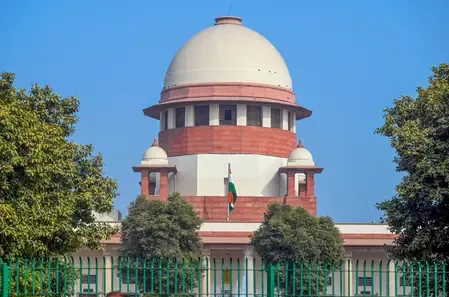
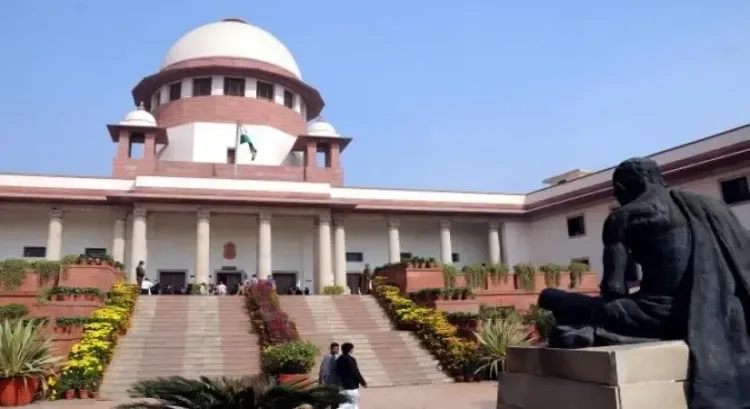
The Supreme Court of India on Tuesday, 6 May 2025, sharply questioned the locus standi and intent of the Indian Young Lawyers' Association (IYLA) in filing the public interest litigation (PIL) that led to the landmark Sabarimala judgment of 2018, with a nine-judge Constitution Bench repeatedly pressing why a lawyers' body had chosen to intervene in a matter concerning religious customs and temple practices.
Bench Poses Sharp Questions on PIL's Origins
The Bench, headed by Chief Justice of India (CJI) Surya Kant and comprising Justices B.V. Nagarathna, M.M. Sundresh, Ahsanuddin Amanullah, Aravind Kumar, A.G. Masih, Prasanna B. Varale, R. Mahadevan, and Joymalya Bagchi, posed a series of pointed questions to advocate Ravi Prakash Gupta, appearing for the petitioner association.
Justice Nagarathna asked pointedly,
Point of View
It raises uncomfortable questions about the integrity of public interest litigation as a mechanism. India's PIL jurisprudence has long struggled with the line between genuine rights advocacy and litigation tourism; this hearing puts that tension squarely on the constitutional record. The broader reference — covering mosque entry, fire temple access, and excommunication — means whatever framework the Bench produces will have consequences far beyond Sabarimala.
NationPress
2 Oct 2026
Frequently Asked Questions
What is the Sabarimala review reference currently before the Supreme Court?
The Supreme Court's nine-judge Constitution Bench is re-examining constitutional questions arising from the 2018 Sabarimala verdict, which allowed women of all ages to enter the Sabarimala Temple in Kerala. The review reference looks at the interplay between religious freedom under Articles 25 and 26 and other fundamental rights, without revisiting the factual correctness of the original ruling.
Why did the Supreme Court question the Indian Young Lawyers' Association's PIL?
The Bench questioned whether the IYLA, as a juristic entity, had the standing to challenge temple customs or claim a right to worship. Justices also raised concerns about whether the association had formally authorised the litigation through a resolution, and noted that its then President, Noushad Ali, was allegedly unaware of the PIL.
What did Justice Sundresh mean by 'abuse of the process of law'?
Justice M.M. Sundresh made the remark after the petitioner's counsel admitted uncertainty about whether the IYLA had passed a formal resolution authorising the PIL. The observation reflects the Bench's concern that the litigation may have been filed without proper institutional sanction, potentially undermining the PIL's legitimacy.
What other religious rights issues is the Constitution Bench examining?
Beyond Sabarimala, the nine-judge Bench will also consider the entry of Muslim women into mosques and dargahs, the rights of Parsi women married to non-Parsis to access fire temples, the validity of excommunication practices, and the legality of female genital mutilation in the Dawoodi Bohra community.
Will the Supreme Court overturn the 2018 Sabarimala judgment?
The nine-judge Constitution Bench has clarified it will not revisit the factual correctness of the 2018 verdict. Its focus is on the broader constitutional questions referred for determination, including the scope of judicial review over religious practices and the extent of denominational rights.