Will the Supreme Court Protect a Kerala Karate Instructor from Arrest in a POCSO Case?
Click to start listening
Synopsis
In a significant ruling, the Supreme Court has intervened in the case of a Kerala karate instructor accused under POCSO, granting him interim protection from arrest. The court seeks responses from the state and the complainant before the next hearing in 2026. This decision raises questions about the misuse of legal provisions in such cases.
Key Takeaways
- Supreme Court grants interim protection from arrest to the Kerala karate instructor.
- SLP challenges the Kerala High Court's dismissal of anticipatory bail.
- Complainant's motivations questioned due to the timing of the allegations.
- Impact of criminal accusations on educators emphasized.
- Next hearing scheduled for February 2026.
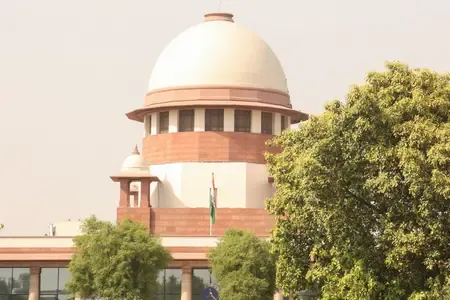
New Delhi, Dec 13 (NationPress) The Supreme Court has ruled that no coercive measures should be initiated against a karate instructor from Kerala who is facing allegations under the Indian Penal Code and the Protection of Children from Sexual Offences (POCSO) Act.
In response to his special leave petition (SLP) contesting the denial of anticipatory bail, a Bench comprising Justices Sanjay Kumar and Alok Aradhe requested feedback from both the state of Kerala and the complainant.
Scheduling the notice to be returnable on February 18, 2026, the apex court has provided temporary protection from arrest for the petitioner.
The court stated, "Provided that the petitioner, Sunil Kumar, participates and cooperates with the investigation... he will not face arrest until the next hearing."
This interim relief is contingent upon the First Information Report (FIR) lodged at the Vadakara Police Station in Kozhikode Rural district for offenses under Sections 354A(1)(i), 354B, and 354D of the IPC, along with Sections 9(l), 10, and 9(o) of the POCSO Act.
The Justice Kumar-led Bench further instructed the petitioner to adhere strictly to the stipulations outlined in Section 482(2) of the Bharatiya Nagarik Suraksha Sanhita, 2023.
The SLP, submitted by advocate Vipin Nair, challenged the Kerala High Court's ruling dated November 4, 2025, which had rejected the anticipatory bail request, asserting that a prima facie case existed against him.
The 46-year-old karate instructor, who serves as the National Secretary of Kenyuryu Karate India, claims that the POCSO provisions have been misused due to a "motivated and belated" complaint from a former student. He argues that the complaint was lodged nearly five years after the alleged incidents, which took place between 2018 and 2020.
Additionally, the SLP points out that despite the timeframe of the alleged events, the complainant maintained a friendly relationship with the petitioner and even praised him publicly in 2022, referring to him as a "father figure."
It further contends that professional rivalry and personal animosity emerged after the complainant departed from the petitioner’s karate center to join a competing club. Citing previous Supreme Court judgments regarding the detrimental impact of criminal allegations on educators' reputations, the petitioner asserted that custodial interrogation was unwarranted due to his cooperation with the investigation and lack of a criminal background.
Point of View
It is vital to recognize the balance between protecting children and safeguarding individuals from potential misuse of laws. The Supreme Court's decision to grant interim relief underscores the need for careful scrutiny in such sensitive cases, ensuring justice is served while maintaining the integrity of the legal system.
NationPress
13/12/2025
Frequently Asked Questions
What is the POCSO Act?
The POCSO Act, or Protection of Children from Sexual Offences Act, is a law in India designed to protect children from sexual abuse and exploitation.
What does anticipatory bail mean?
Anticipatory bail is a provision that allows a person to seek bail in anticipation of an arrest on accusation of having committed a non-bailable offense.
What are the implications of this Supreme Court ruling?
The ruling highlights the importance of ensuring that accusations are carefully examined, preventing misuse of laws intended for child protection.
Who is Sunil Kumar?
Sunil Kumar is a 46-year-old karate instructor and the National Secretary of Kenyuryu Karate India, currently facing allegations under the POCSO Act.
What is the significance of the court's interim protection?
The interim protection indicates that the court acknowledges the need for a thorough investigation before any coercive actions are taken against the accused.