Supreme Court to Review NEET-PG Cut-Off Percentile Reduction on April 28
Synopsis
The Supreme Court of India is set to hear significant petitions regarding the controversial reduction of qualifying cut-off percentiles for the NEET-PG 2025–26 examination on April 28. This decision may significantly impact the future of medical education in India.
Key Takeaways
Supreme Court hearing on April 28 regarding NEET-PG cut-off reduction.
Petitioners argue vacant seats are due to high fees, not a lack of qualified candidates.
Government defends decision as necessary for optimal healthcare resource use.
Concerns raised about patient safety and educational integrity.
Previous years saw similar reductions in cut-off percentiles.
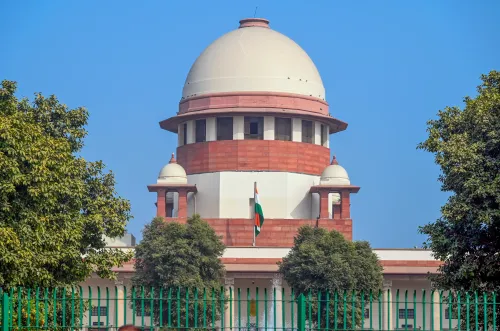
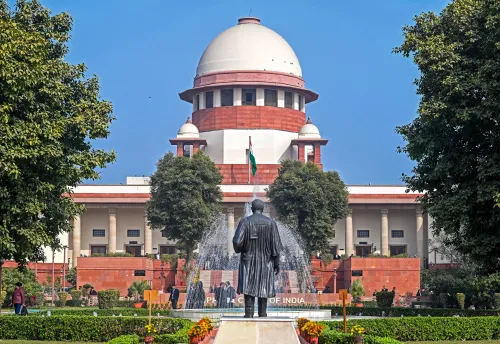
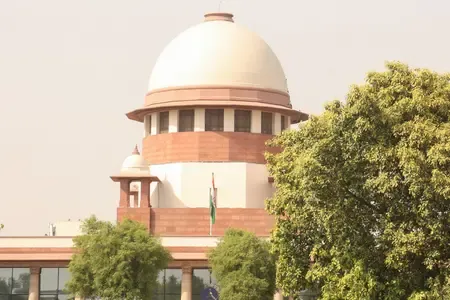
New Delhi, April 7 (NationPress) The Supreme Court announced on Tuesday that it will address a series of petitions on April 28, contesting the recent changes in the qualifying cut-off percentile for the NEET-PG 2025–26 examination.
During a concise hearing, senior advocate Gopal Sankarnarayanan, representing the petitioners, argued that a sufficient number of candidates had already met the requirements to fill all available postgraduate seats, suggesting that the cut-off reduction was unnecessary.
He highlighted that the presence of vacant seats was not due to a shortage of qualified candidates, but rather because many eligible aspirants were deterred by high tuition fees.
Conversely, senior advocate D.S. Naidu, representing a candidate in favor of reducing the cut-off, supported the government's position, asserting that lowering the percentile would not compromise academic integrity, as all candidates must pass the MBBS qualification exam.
However, the bench, comprised of Justices P.S. Narasimha and Alok Aradhe, refrained from delving into the specifics of the debate and scheduled a comprehensive hearing for April 28.
This matter arises from a public interest litigation (PIL) that challenges the drastic reduction of qualifying cut-off percentiles for the NEET-PG 2025–26 exam.
Previously, the Justice Narasimha-led Bench had issued notices to the Union government, the National Board of Examinations in Medical Sciences (NBEMS), the National Medical Commission (NMC), and the Medical Counselling Committee (MCC).
The plea, submitted by advocate Satyam Singh Rajput, argued that the decision to lower qualifying standards to exceedingly low, zero, or even negative percentiles after the results were declared and two rounds of counseling were completed, is arbitrary and unconstitutional, infringing upon Articles 14 and 21 of the Constitution.
It warned that permitting candidates with such scores into postgraduate medical training could jeopardize patient safety, public health, and the credibility of medical education.
Characterizing the action as "unprecedented and extreme," the petition maintained that the NEET-PG, intended to serve as a national screening tool, had been degraded to "an instrument certifying failure as eligibility," asserting that the "rules of the game" should not be altered once the selection process has begun.
In defense of the decision, the Union Ministry of Health and Family Welfare informed the Supreme Court that the cut-off reduction was made after thorough consultations with expert bodies due to the significant number of unfilled postgraduate seats, aiming to maximize the use of healthcare resources.
In an affidavit, the Directorate General of Health Services (DGHS) claimed the challenge was misguided as it pertained to an academic and policy decision made within the legal framework of the National Medical Commission Act, 2019.
The Centre provided data indicating that for the academic session 2025–26, approximately 70,000 seats were available, including 31,742 under the All-India Quota (AIQ), of which 9,621 were vacant after the second round of counseling.
It also mentioned that nearly 20,000 postgraduate seats might remain unfilled across the country, prompting a review of the cut-off.
The Union government stated that this decision made over one lakh additional candidates eligible for the third round of counseling, without compromising inter se merit or standards.
Furthermore, it noted that similar reductions had taken place in previous years, including a cut-off reduction to zero across categories in 2023.
The Centre argued that the courts should avoid interfering in academic and policy issues unless such decisions are shown to be arbitrary or unconstitutional, urging the dismissal of the petition as lacking merit.
Separately, the NBEMS clarified that it played no part in the decision to lower the qualifying percentile, asserting that its role is confined to conducting the examination and publishing results as mandated by the relevant authorities, including the DGHS, the Union Health Ministry, and the NMC.
It informed the apex court that the revised cut-off, announced on January 13 following governmental directives, enabled 95,913 more candidates to qualify for counseling.
The NBEMS further cautioned that any interference from the top court could adversely affect these candidates, who are not involved in the proceedings, and referred to a ruling by the Delhi High Court in Sanchit Seth vs NBEMS & Ors, which upheld the cut-off reduction and dismissed concerns regarding patient safety and merit dilution as unfounded.
Point of View
It is imperative to approach this matter with a nation-first perspective, focusing on the implications of the Supreme Court's upcoming decision on the integrity of medical education and patient safety in India.
NationPress
21 Sept 2026
Frequently Asked Questions
Why is the Supreme Court hearing this case?
The Supreme Court is addressing petitions that challenge the reduction in qualifying cut-off percentiles for NEET-PG 2025–26, which some argue could undermine educational standards.
What are the potential consequences of the cut-off reduction?
Reducing the cut-off may allow candidates with lower scores to qualify for postgraduate medical training, which could raise concerns about patient safety and the quality of medical education.
When will the Supreme Court hear the case?
The Supreme Court is scheduled to hear the case on April 28.
Who filed the petition against the cut-off reduction?
The petition was filed by advocate Satyam Singh Rajput, representing concerns about the arbitrary nature of the cut-off change.