Why Did the SC Request NBEMS to Explain the Cut-off Reduction for NEET-PG?
Synopsis
The Supreme Court's directive to the NBEMS raises significant questions about the impact of drastically low qualifying cut-offs for NEET-PG. With over 1.28 lakh candidates vying for limited seats, the court aims to ensure academic integrity while addressing potential seat shortages. Understanding the balance between access and quality in medical education is crucial.
Key Takeaways
Supreme Court requests affidavit from NBEMS .
Cut-off for NEET-PG significantly reduced.
Concerns raised over educational integrity.
Potential impact on patient safety highlighted.
Petitioners argue against arbitrary reductions.
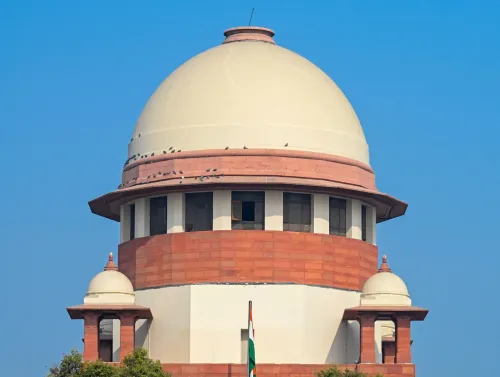
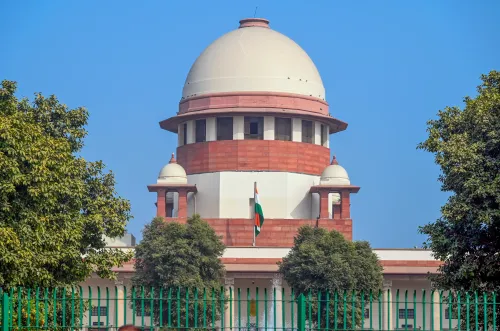
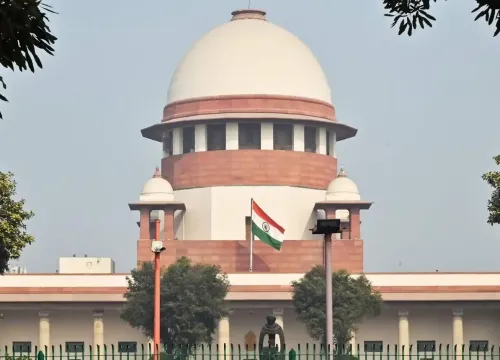
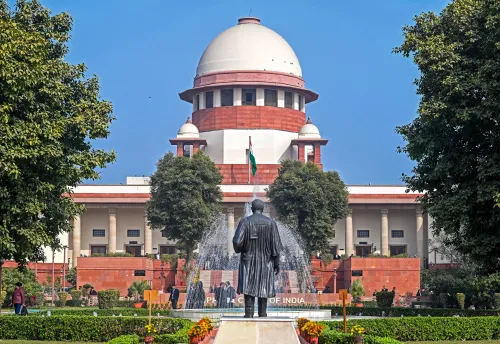
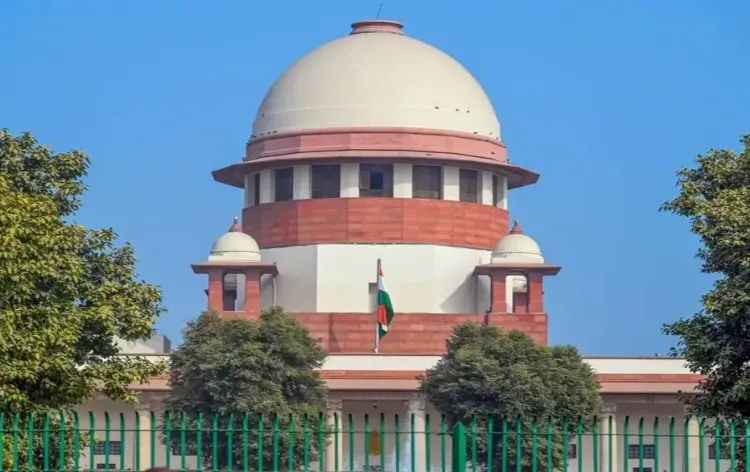
New Delhi, Feb 6 (NationPress) The Supreme Court has directed the National Board of Examinations in Medical Sciences (NBEMS) to submit an affidavit detailing the rationale behind its choice to lower the minimum qualifying cut-off percentiles for the NEET-PG 2025–26 examination.
A Bench, led by Justices P.S. Narasimha and Alok Aradhe, expressed its intention to scrutinize whether the decision was “drastically wrong”.
The Justice Narasimha-led Bench was addressing a public interest litigation (PIL) that contested the notification issued by NBEMS on January 13, which slashed the qualifying cut-off percentiles for postgraduate medical admissions to alarmingly low, zero, and even negative figures after results were declared and two rounds of counseling completed.
Senior advocate Gopal Sankarnarayanan, representing the petitioners, pointed out that there are approximately 80,000 postgraduate medical seats available while over 1.28 lakh candidates fit within the qualifying percentiles of various categories, necessitating an explanation from authorities regarding the steep cut-off reduction.
“You cannot go all the way down to minus 40 marks, which indicates that not taking the exam would have been more advantageous,” he asserted.
Following the arguments, the Justice Narasimha-led Bench acknowledged the Supreme Court's awareness of the delicate balance between ensuring that postgraduate medical seats do not remain vacant and upholding academic standards.
“On one hand, we have the competing value of preventing seats from going unfilled. On the other hand, there is a demand to reduce the cut-off due to insufficient candidates,” the apex court remarked.
“Thus, a balance must be struck,” it continued, emphasizing the need for the top court's conscience to be assured that there was “no devious reason” behind the contested decision.
The Supreme Court has consequently mandated that the NBEMS produce an affidavit clarifying the reasons for lowering the qualifying percentiles.
Earlier, on Wednesday, the Justice Narasimha-led Bench had issued a notice on the issue and sought responses from the Union government, NBEMS, the National Medical Commission, and the Medical Counselling Committee.
The petition claims that the cut-off for General and EWS candidates was reduced from the initial 50th percentile (276 marks out of 800) to the 7th percentile (approximately 120 marks), while for SC, ST, and OBC candidates, the qualifying percentile was dropped from the 40th percentile (235 marks) to zero percentile, allowing eligibility even with negative marks.
The plea, submitted by advocate Satyam Singh Rajput, argued that the drastic reduction is arbitrary, unconstitutional, and violates Articles 14 and 21 of the Constitution, posing a severe threat to patient safety, public health, and the integrity of postgraduate medical education.
It contended that allowing candidates with zero or negative scores into specialist training undermines merit at the highest level of medical education and compromises minimum standards of professional competence.
Labeling the decision as “unprecedented and extreme,” the petition stated that the NEET-PG, intended as a national screening mechanism, has become “an instrument certifying failure as eligibility.”
The petitioners have also contested the reduction on the grounds that the “rules of the game” cannot be modified after the selection process has begun and results have been announced.
Furthermore, it alleges that the decision represents unacceptable executive interference in academic standards, asserting that under the National Medical Commission Act, 2019, the responsibility for maintaining professional standards lies with the NMC as an expert body and should not be subordinated to administrative or seat-filling considerations.
The petitioners are seeking the annulment of the contested notification, urging the apex court to reinstate constitutionally acceptable minimum qualifying standards and provide appropriate guidance to protect patient safety, public health, and the rule of law.
Point of View
I believe the Supreme Court's scrutiny of the NBEMS's decision is essential for maintaining high academic standards in medical education. This balance between filling seats and ensuring competent healthcare professionals is crucial for the public's welfare.
NationPress
10 Oct 2026
Frequently Asked Questions
What is the NEET-PG examination?
The NEET-PG examination is a national-level entrance test for postgraduate medical courses in India, assessing the eligibility of candidates for admission.
Why did the Supreme Court intervene in the NEET-PG cut-off decision?
The Supreme Court intervened to ensure that the reduction of the qualifying cut-off percentiles does not compromise academic integrity and patient safety.
What are the implications of lowering the cut-off percentiles?
Lowering the cut-off percentiles could potentially allow less qualified candidates into postgraduate programs, raising concerns about the quality of medical education and healthcare.
Who is affected by the NBEMS's decision?
The NBEMS's decision affects thousands of candidates seeking postgraduate medical admissions, as well as the overall quality of healthcare services.
What actions are being taken by the petitioners?
The petitioners are seeking to quash the NBEMS's notification and restore minimum qualifying standards to ensure patient safety and uphold educational integrity.