Nvidia Says AI Factories Can Power the Grid, Not Drain It

Synopsis
Nvidia on 10 July 2026 spotlighted Emerald AI's Conductor platform — built on its Vera Rubin DSX AI Factory reference design — as a model for power-flexible AI factories that can supply electricity to the grid rather than strain it, reframing the energy debate around hyperscale AI compute.
Key Takeaways
Nvidia on 10 July 2026 declared that AI factories can act as energy suppliers to the grid, not merely consumers.
The claim is anchored in Emerald AI 's Conductor platform, developed using Nvidia's Vera Rubin DSX AI Factory reference design.
The IEA documented data centres consuming 2–4% of electricity in major economies as of 2023–2024 , driving global efficiency mandates.
Nvidia's framing positions its next-generation GPU platform as an energy-infrastructure component, broadening its pitch to utilities and policymakers.
The grid-interactive AI factory model has direct implications for India 's national AI mission and its peak-demand management challenges.
Regulatory frameworks for AI factories participating in wholesale electricity markets remain nascent globally.
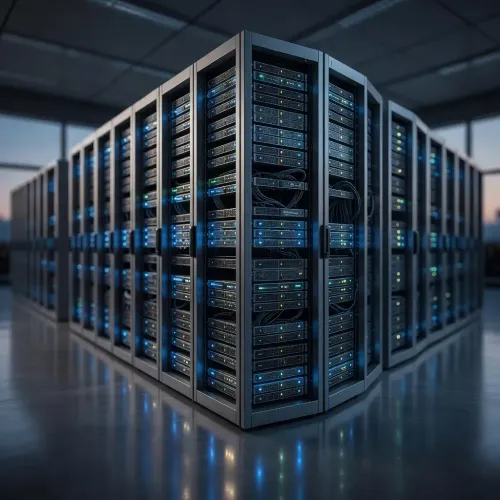
Chip giant Nvidia on Friday, 10 July 2026 promoted a new model for AI data centres — one in which so-called 'AI factories' act as energy suppliers to the electrical grid rather than consumers of it, pointing to Emerald AI's Conductor platform as an early proof of concept.
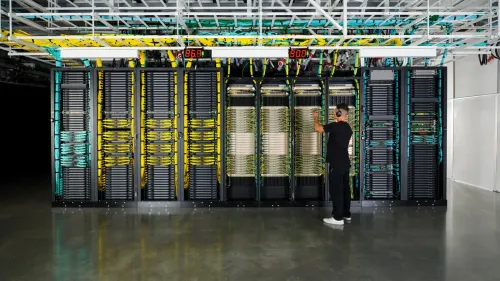
In its post, Nvidia stated: 'AI factories don't have to be a strain on the grid. Instead, they can be an energy supplier.' The company highlighted that Emerald AI's Conductor platform was developed using the NVIDIA Vera Rubin DSX AI Factory reference design and is positioned as a 'power-flexible' facility built to connect to and support the grid.
Context
The announcement arrives as global concern over data-centre power consumption has reached a policy inflection point. Studies by the International Energy Agency (IEA) between 2023 and 2024 documented that data centres already account for 2–4% of electricity consumption in major economies, prompting governments and grid operators to push for efficiency mandates and demand-response frameworks.
Generative AI's explosive growth has amplified this pressure dramatically. Training and running large AI models requires multi-gigawatt power commitments, placing data-centre operators at the centre of energy-policy debates in the United States, Europe, and increasingly in India, where the government has outlined ambitions to become a global AI hub.
Policy Backdrop
The concept of 'grid-interactive' buildings — facilities that can both consume and export electricity depending on grid conditions — has been debated in energy policy circles for years, primarily in the context of solar-equipped commercial buildings and battery storage. Nvidia's framing extends this logic to hyperscale AI infrastructure.
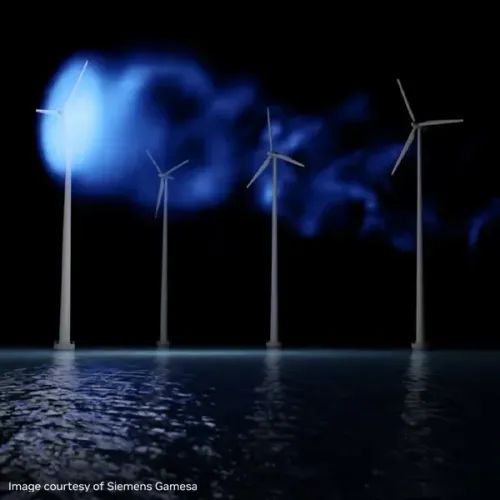
Demand-response programmes, which compensate large industrial consumers for curtailing load during peak periods, are already operational in several US grid regions. The newer proposition embedded in Nvidia's post goes a step further: AI factories that can actively supply power back to the grid, functioning as distributed energy resources rather than passive load centres.
This mirrors a trajectory seen earlier in cloud computing, when hyperscalers began co-locating on-site renewable generation and battery storage with their campuses to reduce grid dependence and meet sustainability commitments.
Stakeholders and Impact
Electric utilities and grid operators stand to benefit if large AI facilities can be dispatched as flexible resources during demand spikes — reducing the need for expensive peaker plants. For data-centre operators, the ability to monetise spare capacity or on-site generation could offset infrastructure costs.
For India, where the government's national AI mission envisions large domestic compute capacity, the grid-interactive AI factory model carries direct relevance. Indian power distribution companies already grapple with peak-demand management, and any large-scale AI compute build-out will need to address grid integration proactively.
Nvidia's promotion of the Vera Rubin DSX reference design as the underlying architecture signals that the company is positioning its next-generation GPU platform not just as a compute product but as an energy-infrastructure component — a significant broadening of its value proposition to policymakers and utilities alike.
What's Next
Industry observers will watch whether grid operators in the United States and elsewhere launch formal pilots to test bidirectional AI-factory connections, and whether new facility permits begin incorporating on-site generation and storage requirements tied to Nvidia's reference designs. Regulatory frameworks governing how AI data centres participate in wholesale electricity markets remain nascent and will likely be the next battleground for both the technology and energy sectors.
Point of View
Nvidia moves the conversation from aspiration to product, lending the claim more credibility than a generic sustainability pledge. For India, which is simultaneously pursuing an AI compute build-out and struggling with peak-power deficits, the policy implication is pointed: grid-interactive AI factories could reframe domestic compute capacity as an energy-sector asset, potentially accelerating regulatory approvals. The broader arc here is the convergence of technology and energy policy — a space where GPU vendors, utilities, and grid operators are now direct stakeholders in each other's futures.
NationPress
11 Jul 2026
Frequently Asked Questions
What is a power-flexible AI factory?
A power-flexible AI factory is a data centre designed for AI workloads that can adjust its electricity consumption in response to grid conditions and, in some configurations, export power back to the grid — functioning as a distributed energy resource rather than a fixed load.
What is the Nvidia Vera Rubin DSX AI Factory reference design?
The Nvidia Vera Rubin DSX AI Factory reference design is a blueprint released by Nvidia for building next-generation AI compute facilities; Emerald AI's Conductor platform is cited by Nvidia as having been developed using this design.
How much electricity do AI data centres consume globally?
According to IEA studies from 2023–2024 , data centres already account for 2–4% of electricity consumption in major economies, a share expected to grow with the expansion of generative AI workloads.
What is Emerald AI's Conductor platform?
Emerald AI's Conductor platform is described by Nvidia as a 'power-flexible AI factory' built on the Vera Rubin DSX reference design, intended to integrate with and support the electrical grid rather than place unidirectional demand on it.
Why does this matter for India's AI ambitions?
India's national AI mission envisions large domestic compute capacity, but the country's power distribution companies already face peak-demand management challenges; a grid-interactive AI factory model could help reconcile compute expansion with grid stability, potentially influencing how regulators approve new facilities.