CM Rekha Gupta Marks World Population Day, Cites Viksit Bharat
Synopsis
Delhi Chief Minister Rekha Gupta marked World Population Day on 11 July 2026 by pledging inclusive growth through healthcare, education, and women's empowerment, anchoring Delhi's development agenda to the national Viksit Bharat@2047 vision.
Key Takeaways
Delhi CM Rekha Gupta issued a World Population Day statement on 11 July 2026 committing to healthcare, education, and women's empowerment.
She explicitly linked Delhi's development agenda to the national Viksit Bharat vision targeting a developed India by 2047 .
Balanced growth and responsible resource management were named as central pillars of her stated policy approach.
World Population Day has been observed annually on 11 July since the UN established it in 1989 .
India's policy shift from fertility-reduction targets to integrated sustainable-development narratives, underway since the National Population Policy 2000 , frames the broader context of this statement.
Key groups identified as stakeholders include Delhi residents, women , and urban youth — central to India's demographic dividend.
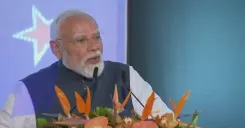
Delhi Chief Minister Rekha Gupta on Friday, 11 July 2026, marked World Population Day by reaffirming the Delhi government's commitment to healthcare, education, women's empowerment, and sustainable urban development, framing these as pillars of inclusive growth under the national Viksit Bharat vision.
Context
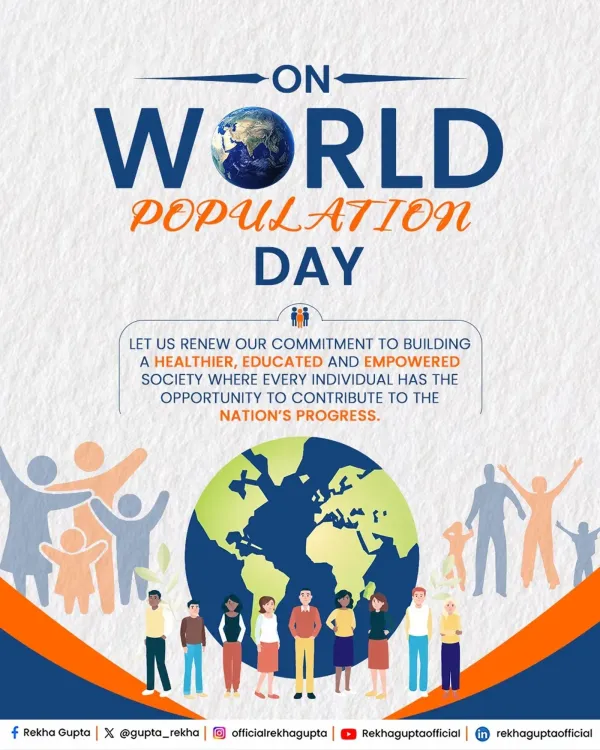
World Population Day, observed every year on 11 July, was established by the United Nations in 1989 to draw global attention to population-related challenges including reproductive health, gender equality, and sustainable development. In her post, Chief Minister Gupta wrote: 'Let us reaffirm our commitment to building a healthier, more inclusive and sustainable future for every citizen.' She linked Delhi's ongoing work in healthcare systems, quality education, and urban development directly to this global observance.
The statement arrives as Indian states have broadly shifted their population-day messaging away from fertility-reduction targets — dominant in the 1970s through 1990s — toward integrated narratives of demographic dividend and quality-of-life improvement.
Policy Backdrop
India's National Population Policy 2000 first moved the country toward voluntary, education-linked approaches to population stabilisation, tying maternal health and girls' schooling to demographic outcomes. The Mission Parivar Vikas programme, launched in 2016, further expanded contraceptive access and population stabilisation efforts across high-fertility districts. Both initiatives reflect the policy lineage that CM Gupta's statement now builds upon.
At the national level, the Viksit Bharat vision — announced in 2022-23 — charts a course to transform India into a fully developed nation by 2047, with inclusive growth and sustainable resource management at its core. Gupta explicitly invoked this framework, stating that 'balanced growth and responsible resource management will remain central to building a stronger and more resilient society.' Delhi's urban scale — as the National Capital Territory — makes its implementation of health, education, and infrastructure schemes a closely watched indicator of how metropolitan governments translate this vision into practice.
India's adoption of the Sustainable Development Goals in 2015 also underpins the themes in the statement, particularly SDG targets on good health, gender equality, and sustainable cities.
Stakeholders and Impact
Delhi's dense, diverse population — spanning established residential zones, urban villages, and resettlement colonies — makes the convergence of healthcare access, girls' education, and slum redevelopment especially consequential. Women and urban youth are the primary beneficiaries cited in the broader policy context, groups that demographers identify as central to India's demographic dividend window, which is expected to remain open through the mid-2040s.
Delhi governments have historically used population-day observances to spotlight local schemes on primary healthcare centres, school enrolment for girls, and neighbourhood infrastructure upgrades. CM Gupta's statement signals continuity with this approach while anchoring it to the Viksit Bharat@2047 roadmap, a framing that aligns state-level messaging with the ruling party's national development narrative.
What's Next
Analysts and policy watchers will look to the next round of the National Family Health Survey for data-backed assessments of how Delhi's health and education indicators are tracking against national targets. Any Delhi-specific announcements in the 2026-27 fiscal year — particularly on urban health infrastructure or women-focused schemes — will be seen as a test of whether this World Population Day commitment translates into budgetary action. The broader Viksit Bharat framework gives the Delhi government a ready policy scaffold to anchor future programme launches to the 2047 development goal.
Point of View
Converting a UN calendar event into a vehicle for national development narrative. The deliberate pivot away from population-control language toward 'quality of life' and 'demographic dividend' framing reflects a broader, post-2000 policy consensus that fertility targets are politically and socially counterproductive. For Delhi specifically — a city-state with acute pressures on healthcare and housing — the statement sets an implicit accountability benchmark: citizens and opposition parties can now hold the government to these stated priorities in budget and scheme announcements. Whether the rhetoric is followed by measurable programme outcomes in the 2026-27 fiscal year will determine its political durability.
NationPress
11 Jul 2026
Frequently Asked Questions
Why did Delhi CM Rekha Gupta issue a statement on World Population Day 2026?
Delhi CM Rekha Gupta used World Population Day on 11 July 2026 to reaffirm the Delhi government's commitment to healthcare, education, women's empowerment, and sustainable urban development, framing these as contributions to the national Viksit Bharat vision.
What is World Population Day and when is it observed?
World Population Day is an annual observance on 11 July, established by the United Nations in 1989 to highlight population-related challenges such as reproductive health, gender equality, and sustainable development.
What is Viksit Bharat and how does it relate to Delhi's policies?
Viksit Bharat is a Government of India vision announced in 2022-23 to make India a fully developed nation by 2047, emphasising inclusive growth and sustainable development. CM Gupta cited it as the overarching framework guiding Delhi's work on healthcare, education, and urban infrastructure.
What policy history shapes India's approach to population issues today?
India's National Population Policy 2000 shifted focus from fertility-reduction targets to voluntary, education-linked approaches. The 2016 Mission Parivar Vikas expanded contraceptive access, and India's adoption of the Sustainable Development Goals in 2015 further anchored population policy to health, gender equality, and sustainable cities.
Who are the key beneficiaries of Delhi's population-day policy commitments?
The primary stakeholders are Delhi residents broadly, with particular emphasis on women and urban youth — groups central to India's demographic dividend, which demographers expect to remain open through the mid-2040s.