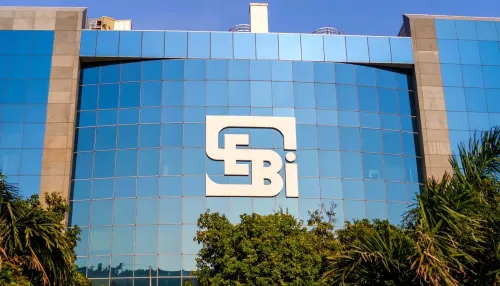
How is SEBI Transforming Mutual Fund Regulations for Better Cost Transparency?

Synopsis
In a move to enhance investor experience, SEBI has revamped mutual fund regulations, focusing on cost transparency and reducing investor expenses. This comprehensive reform, including changes to Total Expense Ratio and brokerage norms, aims to protect investors and clarify fund management costs.
Key Takeaways
SEBI has revamped mutual fund regulations to improve cost transparency .
The new SEBI (Mutual Funds) Regulations, 2026 will replace the 1996 framework.
Statutory levies will now be charged separately from the Total Expense Ratio (TER) .
Brokerage fees have been revised to benefit investors.
The Base Expense Ratio (BER) limits have been reduced for various fund categories.
New Delhi, Dec 17 (NationPress) The Securities and Exchange Board of India (SEBI) has initiated a significant transformation of mutual fund regulations aimed at enhancing cost transparency and alleviating the financial burden on investors.
The changes, approved by the SEBI board, will be enacted under the new SEBI (Mutual Funds) Regulations, 2026, which will supersede the existing framework established in 1996 after a thorough review.
Central to this reform is the restructuring of the Total Expense Ratio (TER).
SEBI has decided to exclude statutory and regulatory charges—including securities and commodities transaction tax (STT/CTT), GST, stamp duty, SEBI fees, and exchange fees—from TER calculations. These charges will now be billed on actuals, in addition to the Base Expense Ratio (BER), providing investors with a clearer understanding of fund management expenses.
Under the updated framework, TER will consist of three parts: base expense ratio, brokerage fees, and statutory or regulatory charges. The SEBI has eliminated the extra 5 basis points (bps) expense allowance that was previously linked to exit loads.
The regulatory body has also tightened the rules surrounding brokerage. For transactions in the equity cash market, mutual funds can now pay a brokerage of up to 6 bps, which is an increase from the previously suggested 2 bps but remains considerably lower than the current limit of up to 12 bps. For derivative transactions, the brokerage cap has been adjusted to 2 bps, not including statutory costs.
Additionally, the SEBI has established stricter limits on distribution commissions and permitted performance-based expense structures for certain mutual fund schemes, subject to regulatory conditions.
Furthermore, the board approved a reduction in the base expense ratio limits for various categories. The BER cap for index funds and exchange-traded funds (ETFs) has been decreased to 0.9 percent from 1.0 percent. A similar reduction applies to liquid-scheme-based funds of funds. For close-ended equity schemes, the BER limit has been lowered to 1 percent from 1.25 percent.
SEBI stated that the updated regulations are designed to better align mutual fund expenses with actual costs while enhancing transparency and investor protection throughout the industry.
Point of View
I recognize SEBI's recent regulatory overhaul as a necessary step towards enhancing transparency and reducing costs for investors. This reform aligns with the growing demand for clarity in mutual fund expenses and underscores SEBI's commitment to protecting investor interests in an evolving financial landscape.
NationPress
30 Sept 2026
Frequently Asked Questions
What is the Total Expense Ratio (TER)?
The Total Expense Ratio (TER) is a measure of the total costs associated with managing a mutual fund, expressed as a percentage of its assets.
How will the new SEBI regulations impact investors?
The new regulations aim to improve cost transparency, reduce the financial burden on investors, and enhance overall investor protection.
What changes have been made to brokerage fees?
Brokerage fees for equity cash market transactions have been adjusted to a maximum of 6 bps, while derivative transactions are capped at 2 bps.