Karnataka drought: Second list of affected taluks coming soon, says CM Shivakumar
Synopsis
Karnataka CM D.K. Shivakumar toured a drought-ravaged Gadag by helicopter and found conditions not seen in 50 years — rainfall 40% below normal, crops yielding as little as 10-15%. With only one taluk officially declared drought-hit so far, the second list is imminent, but Central approval of the state's assessment report is the critical bottleneck standing between farmers and relief funds.
Key Takeaways
Shivakumar announced the second list of drought-hit taluks will be released shortly after a detailed assessment.
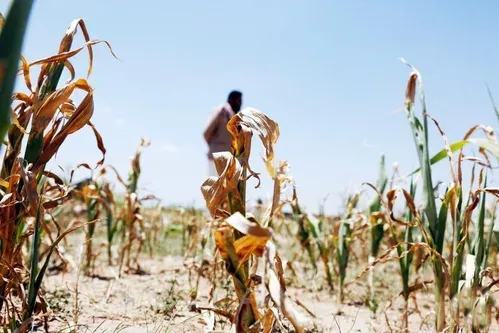
Gadag district is experiencing its worst drought in five decades , with rainfall 40% below normal .
Only Gajendragad taluk has been officially declared drought-affected in Gadag so far; MLAs have demanded all taluks be included.
The state's drought report must align with the Central assessment team's findings before relief funds are released. ₹1 crore allocated per rural Assembly constituency for drinking water; additional contingency funds placed with Deputy Commissioners.
Praja Seva Andolana to launch on 5 September to improve administrative responsiveness at the district level.
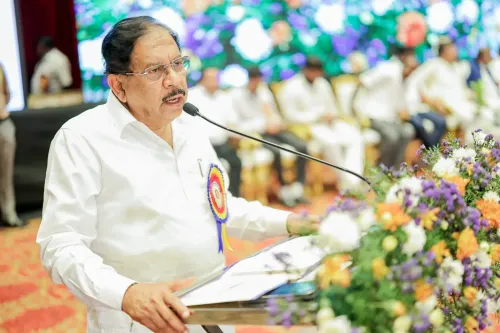
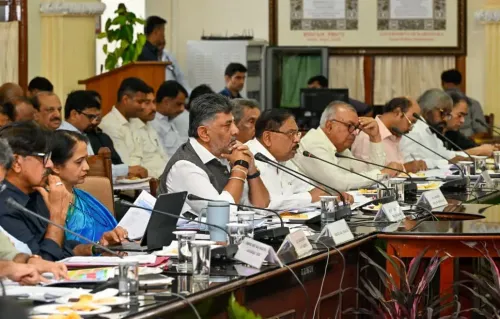
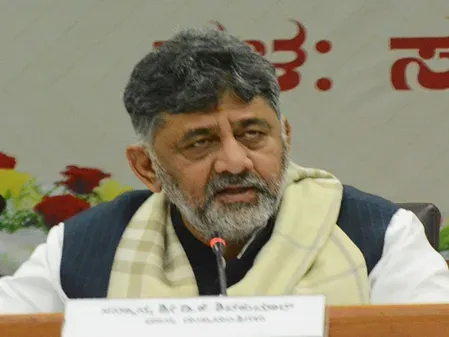
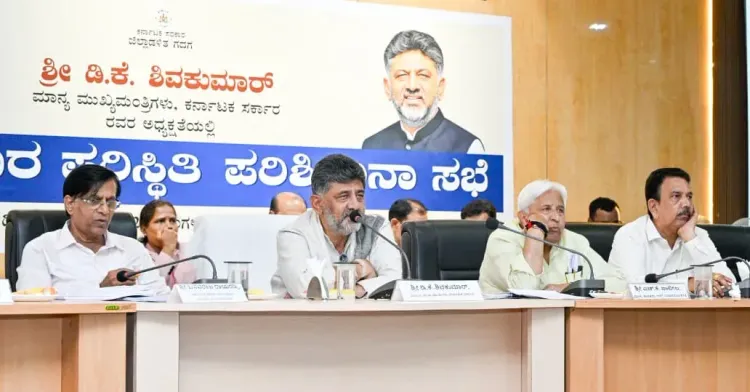
Karnataka Chief Minister D.K. Shivakumar on Tuesday, 1 September said the state government would shortly announce the second list of drought-hit taluks, following a detailed ground-level assessment conducted in line with prescribed Central guidelines. Shivakumar made the announcement after chairing a review meeting with district officials at the Gadag Deputy Commissioner's office.
What the CM Said
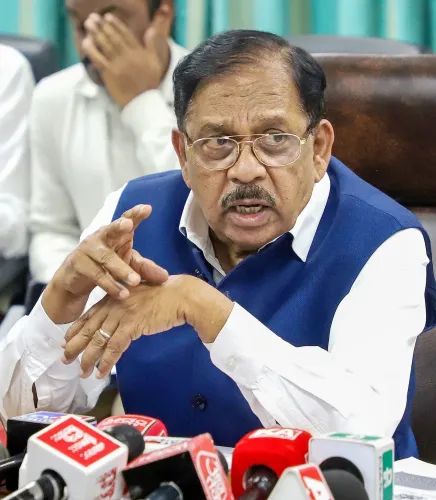
'We have to declare drought-hit areas as per the guidelines. Accordingly, we are conducting a study and will announce the second list shortly,' Shivakumar told reporters. He noted that the district in-charge minister had personally toured every taluk and submitted a field report, while state officials were simultaneously conducting their own independent assessment. Both reports, he said, must be examined before a consolidated submission is made to the Centre.
Ground Situation in Gadag
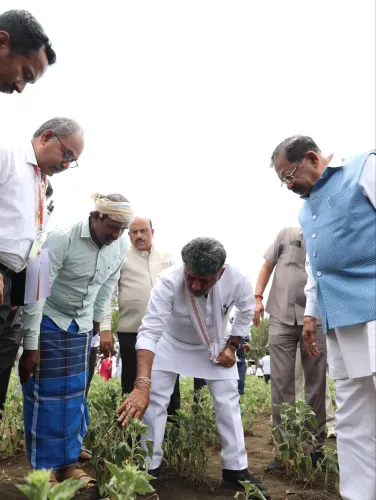
Shivakumar described the agricultural crisis in Gadag as the worst the district had seen in five decades. Rainfall this year is reportedly around 40 per cent below normal, and the Chief Minister, who surveyed the region by helicopter, said large tracts of land had seen no sowing at all. 'Even where sowing has been done, farmers may not get even 10 to 15 per cent of the crop,' he said. He personally inspected fields growing cotton, groundnut, maize, and sunflower and spoke directly with affected farmers about their concerns.
Currently, only Gajendragad taluk has been officially declared drought-hit in Gadag district. All sitting MLAs in the district, under the leadership of the in-charge minister, have submitted a joint representation urging that every taluk in Gadag be designated drought-affected.
Centre's Role and Assessment Alignment
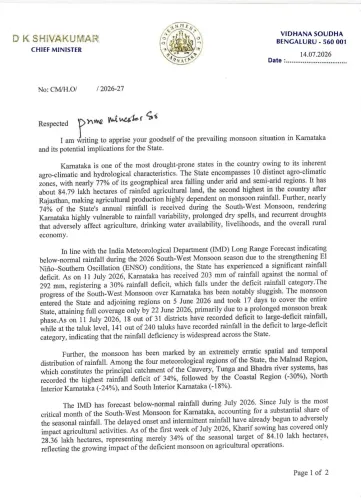
Shivakumar stressed that Karnataka's drought assessment report must align with findings of the Central team deputed from Delhi. 'The report prepared by us has to be accepted by the drought assessment team coming from Delhi. Only then will the Centre provide assistance,' he said. This procedural alignment is critical — a mismatch between state and Central assessments could delay or reduce relief funding for farmers.
Immediate Relief Measures
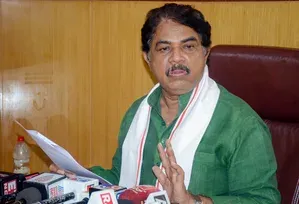
The state has already deployed several emergency measures. ₹1 crore has been allocated to every rural Assembly constituency for drinking water supply, with additional contingency funds placed with Deputy Commissioners for urgent needs. On the proposal for cloud seeding, Shivakumar said MLA H.K. Patil had presented his views, while other legislators raised concerns related to irrigation, the Bennihalla project, and various development works. 'We will take action on these projects keeping the financial situation of the state in mind,' he said.
Governance Initiatives Announced
Shivakumar also announced the launch of Praja Seva Andolana from 5 September, aimed at making district administration more responsive and reducing the burden on citizens to make repeated visits to government offices. The government is additionally undertaking a re-verification of beneficiaries under its guarantee schemes and forming panchayat-level committees to prevent misuse and ensure eligible households are covered. The Chief Minister noted he had planned to present the government's first-100-days achievements during the Assembly session, but was prevented from doing so by Opposition disruptions, and would instead present the details at a dedicated 100-day programme.
Point of View
The gap between ground reality and official designation is stark. The 40%-below-normal rainfall figure, if verified by the Central team, would make a strong case for emergency relief — but the procedural lag means farmers wait while paperwork travels. The Praja Seva Andolana and beneficiary re-verification are sound governance moves, but they address delivery efficiency, not the pace of drought declaration itself.
NationPress
2 Sept 2026
Frequently Asked Questions
When will Karnataka announce the second list of drought-hit taluks?
Chief Minister D.K. Shivakumar said on 1 September that the second list would be announced 'shortly' after the state completes its assessment in line with prescribed Central guidelines. No specific date has been given.
How severe is the drought in Gadag district?
Shivakumar described it as the worst drought Gadag has seen in five decades. Rainfall is reportedly about 40% below normal, large areas have seen no sowing, and even where crops were sown, yields could be as low as 10-15% of normal.
Why does Karnataka need Central approval for drought relief?
Under India's drought relief framework, state governments must submit an assessment report that is accepted by a Central government team before Union funds are released. Shivakumar stressed that Karnataka's report must align with the Central team's findings to qualify for assistance.
Which taluks in Gadag have been declared drought-affected so far?
Only Gajendragad taluk has been officially declared drought-hit in Gadag district as of 1 September. All MLAs in the district have jointly requested that every taluk in Gadag be included in the drought declaration.
What immediate relief measures has the Karnataka government taken?
The state has allocated ₹1 crore to every rural Assembly constituency for drinking water supply and placed additional emergency funds with Deputy Commissioners. The government is also launching Praja Seva Andolana on 5 September to make district administration more responsive to citizen grievances.