Fusion power could hit US grid by early 2030s, says Commonwealth Fusion CEO
Synopsis
The head of the US's largest fusion energy company told G20 representatives that commercial fusion could reach the American grid in the early 2030s — not as speculation, but backed by USD 14 billion in private capital, a near-complete Massachusetts facility, and a Virginia plant ready to break ground. After decades of 'always 30 years away' jokes, the timeline is suddenly credible.
Key Takeaways
Bob Mumgaard , CEO of Commonwealth Fusion Systems , told G20 representatives on 1 September that fusion power could reach the US grid in the early 2030s .
More than 50 fusion companies have secured over USD 14 billion in private investment globally, mostly in the United States .
Commonwealth Fusion Systems has raised approximately USD 4 billion and is completing a facility in Massachusetts , with a commercial plant planned for Virginia .
US regulators adapted existing particle accelerator licensing frameworks to fusion, providing investor certainty where none existed four years ago.
Mumgaard credited AI , advanced materials, and large-scale computing for dramatically accelerating fusion development timelines.
Commonwealth Fusion Systems co-founder and chief executive Bob Mumgaard told G20 representatives on 1 September that commercial fusion energy could begin supplying electricity to the US grid in the early 2030s, citing rapid technological advances and over USD 14 billion in private investment flowing into the sector. The remarks were made at a G20 session on emerging technologies in Chapel Hill, United States.
Where the Technology Stands
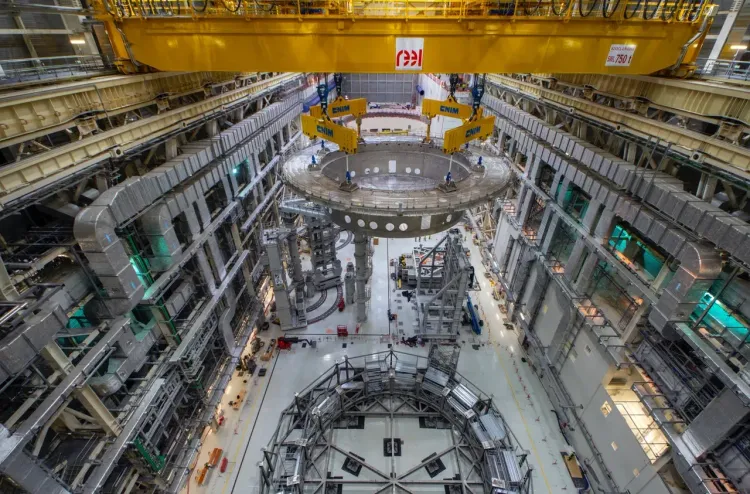
Mumgaard said Commonwealth Fusion Systems is completing a facility in Massachusetts and preparing to begin construction of its first commercial power plant in Virginia. 'And so that could put fusion on the grid in the early 2030s,' he said.
Fusion energy works by joining atomic nuclei — reproducing the process that powers the sun — to generate large quantities of power without the carbon emissions tied to fossil-fuel combustion. Unlike conventional nuclear power, it does not rely on splitting heavy atoms, making it a long-sought clean energy source.
What Is Driving the Acceleration
Mumgaard cautioned against assuming future progress would mirror the slow pace of past decades. 'The first is to avoid the fallacy that the past is prologue,' he said. He attributed the acceleration to large-scale computing, Artificial Intelligence (AI), advanced materials, and a new generation of trained scientists and engineers. 'So we shouldn't deceive ourselves into thinking that things have to go slow,' he added.
Notably, more than 50 fusion companies have collectively secured over USD 14 billion in private investment, with the majority of businesses and financing concentrated in the United States. Commonwealth Fusion Systems alone has raised approximately USD 4 billion.
The Role of Government Partnership
Mumgaard was emphatic that government had acted as a partner rather than a restraint. He pointed to regulatory clarity as a key enabler: four years ago, there was no tested framework for licensing a fusion power plant. US authorities subsequently examined existing regulation for particle accelerators and adapted it to fusion, giving investors sufficient certainty to commit billions.
'We're going to have enough room to be able to get the first products out,' Mumgaard said. 'And that gave the certainty to investors to put billions of dollars into this by removing an obstacle that everyone has seen in advanced new technologies before.'
He also stressed the importance of public-private partnerships, arguing that government expertise must be made available in ways that protect intellectual property. 'It would be easy to say, well, the government should go and build the first generation of power plants,' he said. 'But that's a path to nowhere. Those power plants never make it to the market.'
What Comes Next
Construction of the Virginia commercial plant is expected to follow the completion of the Massachusetts facility, with the early 2030s cited as the target window for first grid delivery. Mumgaard urged all stakeholders to 'plan for the most aggressive speed we can do and bring all the tools to bear on that.' The broader industry's ability to move from private investment to operational plants will be a critical test of whether decades of scientific pursuit can finally translate into commercial reality.
Point of View
Not just applause. The USD 14 billion in private capital is real, but private investment has a poor track record of predicting first-of-kind energy timelines; cost overruns and grid integration hurdles have derailed cleaner technologies before. What is genuinely new here is the regulatory unlock: adapting particle accelerator licensing gave investors a framework where none existed, and that is a structural change, not hype. The deeper question is whether the Virginia plant, once built, can generate electricity at a cost competitive with solar-plus-storage — a bar that keeps falling. If it cannot, grid arrival and grid relevance are two very different things.
NationPress
17 Oct 2026
Frequently Asked Questions
When could fusion power reach the US electricity grid?
Commonwealth Fusion Systems CEO Bob Mumgaard told G20 representatives that commercial fusion energy could begin supplying the US grid in the early 2030s. The company is completing a facility in Massachusetts and planning construction of its first commercial power plant in Virginia.
What is Commonwealth Fusion Systems and how much has it raised?
Commonwealth Fusion Systems is described as America's largest fusion energy company, co-founded and led by Bob Mumgaard. It has raised approximately USD 4 billion in private investment and is developing fusion facilities in Massachusetts and Virginia.
How much private investment has the fusion energy sector attracted?
More than 50 fusion companies have collectively secured over USD 14 billion in private investment, according to Mumgaard's remarks at the G20 session. The majority of these businesses and their financing are based in the United States.
Why is fusion energy considered a breakthrough over conventional nuclear power?
Fusion generates energy by joining atomic nuclei — replicating the process that powers the sun — without the carbon emissions of fossil fuels and without relying on splitting heavy atoms as conventional nuclear fission does. Scientists have pursued it for decades as a potential source of large-scale, clean baseload power.
What role has the US government played in enabling commercial fusion development?
US authorities adapted existing particle accelerator licensing frameworks to cover fusion power plants, providing regulatory clarity where none existed four years ago. Mumgaard credited this approach with giving investors the certainty needed to commit billions of dollars to the sector.