Kishan Reddy: Secunderabad Station Redevelopment 64% Complete
Synopsis
Union Coal and Mines Minister G. Kishan Reddy said the Secunderabad Railway Station redevelopment, pegged at ₹714.73 crore, is 64 per cent complete. He noted the hub handles nearly 180 trains and 1.5 lakh passengers daily, and is being transformed into a world-class transportation node under Indian Railways' modernisation push.
Key Takeaways
Secunderabad Railway Station redevelopment is 64 per cent complete, per Union Minister G.
Project cost is pegged at ₹714.73 crore .
The station handles nearly 180 trains per day and 1.5 lakh passengers daily.
Upgrade aligns with the Amrit Bharat Station Scheme covering over 1,275 stations nationwide.
Reddy described the project as turning Secunderabad into a 'world-class transportation hub'.
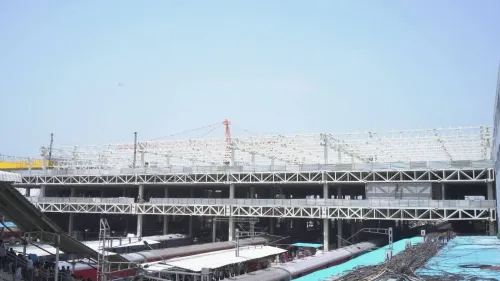
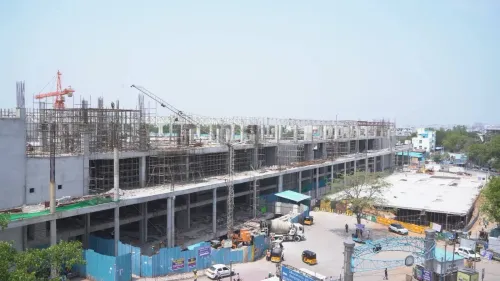
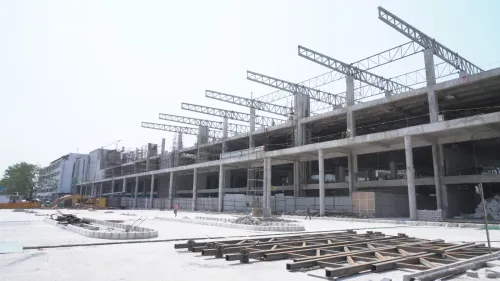
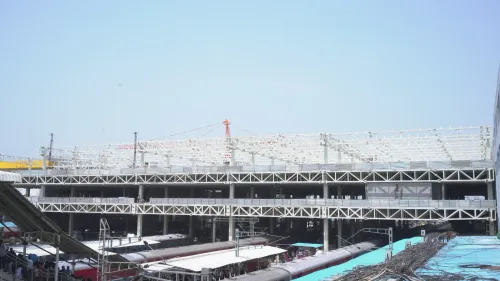
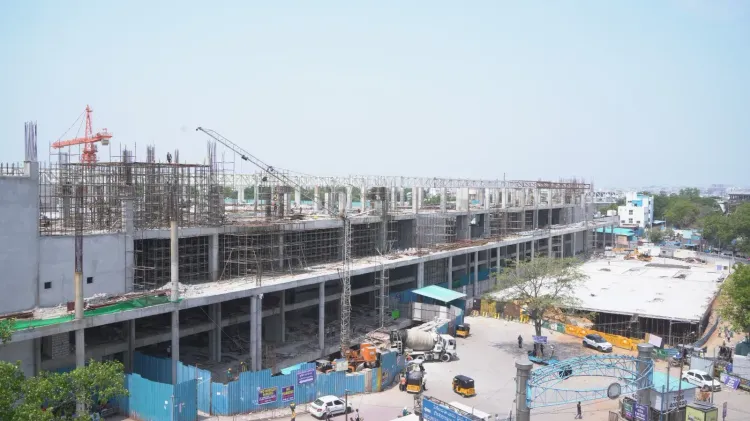
Union Coal and Mines Minister G. Kishan Reddy on Wednesday said the redevelopment of Secunderabad Railway Station, one of the busiest rail hubs in India, is progressing rapidly and is on course to be transformed into a 'world-class transportation hub'. In a post on X, the minister and BJP Telangana state president shared visuals of the construction work and detailed the project's cost and completion status.
Context
Reddy noted that Secunderabad currently handles nearly 180 trains per day with an average daily footfall of 1.5 lakh passengers, placing it among the most heavily used stations in the country. According to his post, the redevelopment is being executed at a project cost of ₹714.73 crore, with 64 per cent of the work already completed.
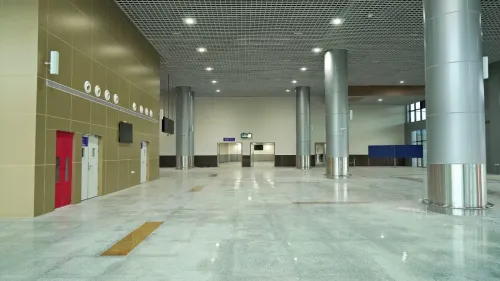
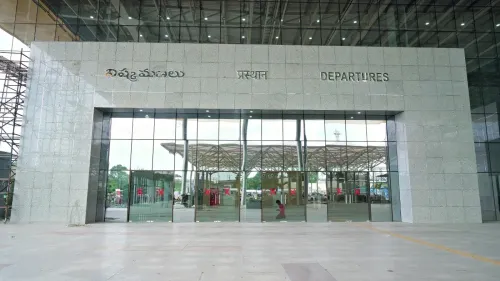
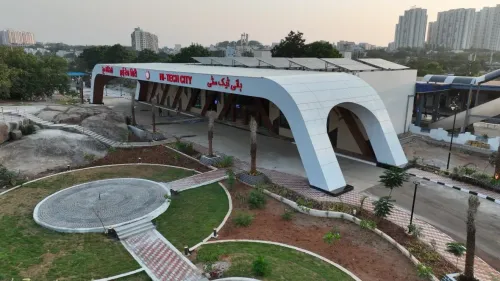
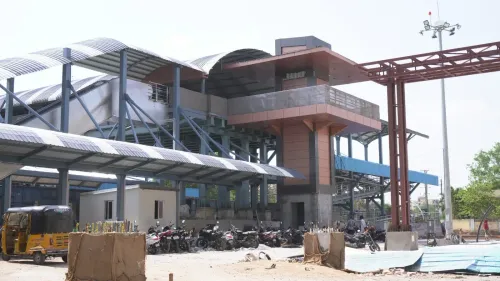
'Its ambitious redevelopment is progressing at a rapid pace, transforming the station into a world-class transportation hub,' the minister wrote, accompanying the message with four images of the ongoing works at the site.
Policy backdrop
The Secunderabad upgrade is part of a wider modernisation push by Indian Railways under the Amrit Bharat Station Scheme, announced in the Union Budget 2023-24 to redevelop more than 1,275 stations across the country. The scheme seeks to bring in modern passenger amenities, multimodal connectivity, improved concourses, separate arrival and departure zones, and aesthetically integrated facades that reflect local heritage.
Station redevelopment has emerged as one of the flagship strands of the central government's infrastructure agenda, broadly mirroring the trajectory of the airport modernisation programme of the previous decade. The emphasis has been on adding capacity at congested terminals, easing passenger flow, and integrating rail nodes with metro, bus and road networks.
Stakeholders and impact
For Hyderabad and the twin city of Secunderabad, the station upgrade carries significant day-to-day implications. With 1.5 lakh passengers moving through the terminal each day, even incremental improvements to ticketing, waiting areas, circulation and platform access are expected to ease persistent congestion.
Long-distance travellers, daily commuters, vendors and licensed operators inside the station precinct form the immediate stakeholder base. The project is also being watched closely by civic agencies in Telangana, since a redeveloped Secunderabad will need to dovetail with city bus services, metro extensions and road approaches around the busy Rathifile and Patny junctions.
Politically, Reddy's frequent updates on rail and infrastructure works in Telangana reflect the BJP's effort to foreground central government spending in the state, where the party has been seeking to expand its footprint. Although the railways portfolio sits outside his ministerial brief, station redevelopment in his home state has become a recurring theme in his public communication.
What's next
With the project pegged at 64 per cent completion, attention will now turn to the commissioning timeline for the remaining works, including final concourse fit-outs, facade work and integration of passenger amenities. The pace of execution at Secunderabad is likely to set a benchmark for similar Amrit Bharat upgrades planned at other major Telangana stations, including Kacheguda, Hyderabad Deccan (Nampally) and Warangal.
If delivered on schedule and to design, the rebuilt Secunderabad terminal could become a template for how India's largest legacy stations are reimagined as multimodal city gateways over the next phase of the rail modernisation push.
Point of View
Like the airport modernisation wave before it, gives ministers a tangible, photographable deliverable that cuts across political constituencies. The choice to spotlight Secunderabad, rather than a smaller project, signals an intent to attach the BJP brand to one of Hyderabad's most recognisable civic landmarks. The political value will hinge on whether commissioning broadly tracks the stated 64 per cent progress.
NationPress
18 Oct 2026
Frequently Asked Questions
What is the cost of the Secunderabad Railway Station redevelopment?
The project cost is ₹714.73 crore, according to Union Minister G. Kishan Reddy's update on X. The works are being executed as part of Indian Railways' broader station modernisation push.
How many passengers use Secunderabad Railway Station daily?
Secunderabad Railway Station handles an average daily footfall of about 1.5 lakh passengers. It also sees nearly 180 train movements per day, making it one of the busiest stations in India.
What is the Amrit Bharat Station Scheme?
The Amrit Bharat Station Scheme is a central programme announced in the Union Budget 2023-24 to redevelop more than 1,275 railway stations across India. It focuses on modern passenger amenities, multimodal connectivity and improved station design.
How much of the Secunderabad station redevelopment is complete?
About 64 per cent of the redevelopment work is complete, as stated by Union Minister G. Kishan Reddy. The remaining works include final fit-outs and passenger amenity integration.
Which other Telangana stations are being redeveloped?
Major Telangana stations such as Kacheguda, Hyderabad Deccan (Nampally) and Warangal are also in line for upgrades under the Amrit Bharat Station Scheme. Secunderabad is the most prominent of these projects.