Is Uttar Pradesh on High Alert for the Babri Masjid Demolition Anniversary?
Synopsis
As the anniversary of the 1992 Babri Masjid demolition approaches, Uttar Pradesh is on high alert. With heightened security measures in Ayodhya and Mathura, authorities are determined to prevent any unrest. The historical significance of this date continues to evoke strong emotions, necessitating careful management to ensure peace.
Key Takeaways
Heightened security in Uttar Pradesh ahead of December 6.
Ayodhya and Mathura are key focus areas for authorities.
Multi-layered security arrangements are in place to prevent unrest.
The anniversary is a divisive date for different communities.
The Supreme Court ruling in 2019 has significant implications for the region.
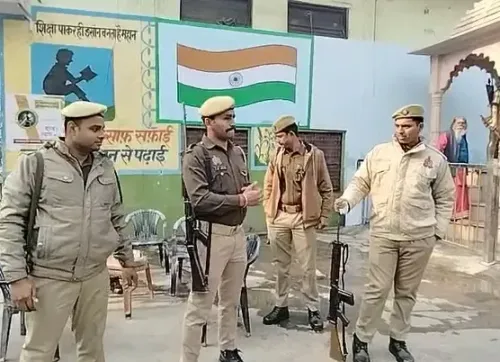
New Delhi, Dec 6 (NationPress) Security measures have been significantly ramped up across Uttar Pradesh in preparation for December 6, marking the anniversary of the 1992 Babri Masjid demolition. Authorities have placed Ayodhya and Mathura, two highly sensitive areas within the state, on maximum alert. Police forces have been directed to stay watchful, and extensive security protocols have been activated to avert any potential disturbances.
A high alert has been issued across various cities in anticipation of the anniversary and in light of the events that transpired in Ayodhya on December 6, 1992.
In Mathura, barricades have been established around key locations such as the Shri Krishna Janmabhoomi complex and the Shahi Eidgah Mosque, where a large deployment of security personnel is present. The area has been organized into two zones, four super zones, and eight sectors to facilitate systematic monitoring. Authorities are utilizing both CCTV networks and drone cameras for surveillance. Similar security enhancements are being enforced in Ayodhya.
In Vrindavan, significant security is in place around the Banke Bihari Temple, Prem Mandir, and other major temples. Police teams are actively inspecting vehicles and overseeing visitor movements around these sacred sites. Support from personnel in the Agra-Aligarh region has also been deployed to assist local law enforcement.
Units of the Provincial Armed Constabulary (PAC) and the Rapid Action Force (RAF) are on standby, while plainclothes officers have been assigned to observe crowd behavior near prominent temples and mosques to ensure a swift response if necessary.
This security buildup is further influenced by the long-standing controversy surrounding the Shahi Idgah Mosque in Mathura. The Hindu community asserts that the mosque was built during the reign of Mughal emperor Aurangzeb after the demolition of a temple believed to signify the birthplace of Lord Krishna. This matter is currently under review by the Supreme Court, heightening the sensitivity of the area.
December 6 is a divisive date; it is recognized as 'Shaurya Diwas' by certain Hindu organizations and referred to as 'Black Day' by various Muslim groups. These opposing commemorations necessitate careful policing and proactive measures to uphold communal peace.
Ayodhya remains deeply etched in history due to the events of December 6, 1992, when the Babri Masjid was demolished, inciting decades of legal challenges and political movements associated with the site.
A pivotal moment occurred on November 9, 2019, when the Supreme Court delivered a unanimous ruling granting the disputed land to Ram Lalla Virajman. The Court mandated the formation of a trust by the Central and Uttar Pradesh governments to oversee the construction and administration of a Ram temple, while also directing that five acres of land in Ayodhya be allocated to the Sunni Waqf Board for the establishment of a new mosque.
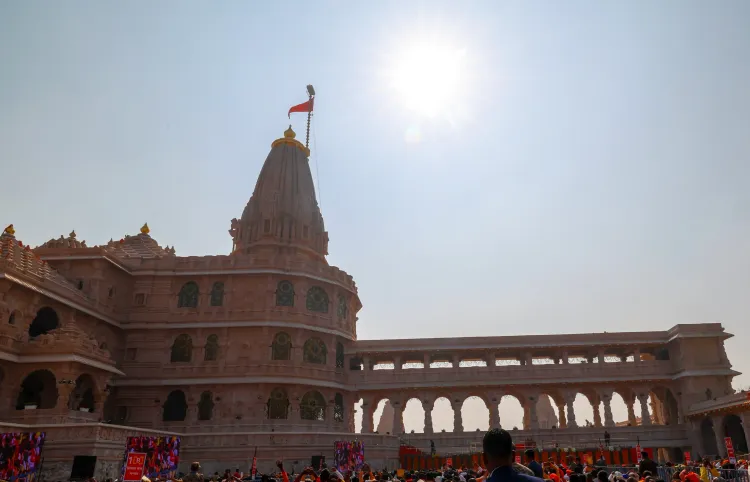
The foundation-laying ceremony for the Ram temple occurred on August 5, 2020, with the attendance of Prime Minister Narendra Modi, trust members, and numerous dignitaries. Construction officially began on the site where the Babri Masjid once stood.
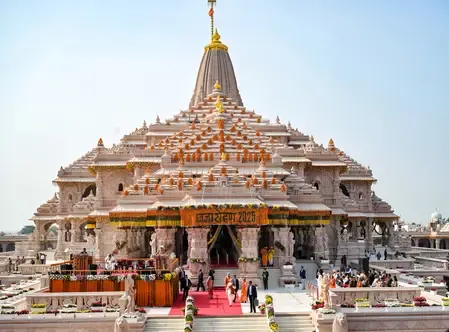
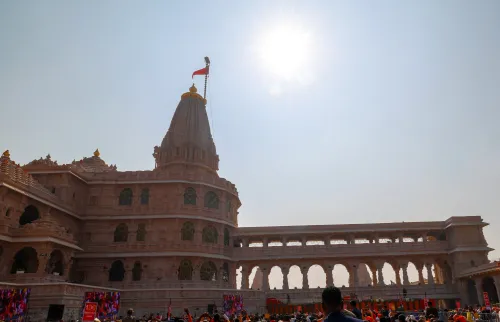
As of December 6, 2025, the Shri Ram Janmabhoomi Mandir has been completely finished. On November 25, Prime Minister Modi raised the saffron Dharma Dhwaj atop the temple’s spire, marking the successful culmination of the Ram Mandir project.
Point of View
It is essential to acknowledge the significance of December 6 in India's socio-political landscape. The heightened security measures reflect the sensitivity of the occasion, necessitating a balanced approach to uphold peace and order while respecting the sentiments of all communities involved.
NationPress
1 Oct 2026
Frequently Asked Questions
Why is there heightened security in Uttar Pradesh?
Heightened security in Uttar Pradesh is due to the anniversary of the Babri Masjid demolition, which is a historically significant and sensitive date for many communities.
What areas are particularly under alert?
Ayodhya and Mathura are the primary areas under high alert due to their historical significance and potential for unrest.
What measures are being taken for security?
Authorities have implemented multi-layered security arrangements, including barricades, CCTV surveillance, and the deployment of police and rapid action forces.
What is the significance of December 6?
December 6 is observed as a polarizing date, recognized as 'Shaurya Diwas' by some Hindu organizations and 'Black Day' by various Muslim groups, reflecting the deep-rooted sentiments associated with the Babri Masjid demolition.
What was the Supreme Court's ruling in 2019?
In 2019, the Supreme Court ruled that the disputed land be granted to Ram Lalla Virajman, allowing for the construction of a Ram Temple while allotting land for a new mosque.