Seven Convicted in Visakhapatnam for Fake Currency Crimes
Synopsis
In a significant ruling, a Special Court in Visakhapatnam has convicted seven individuals in a 2015 fake currency case, imposing sentences of up to 10 years. The case highlights the ongoing threat of counterfeit currency on India’s financial stability.
Key Takeaways
Seven individuals sentenced for fake currency crimes.
Sentences range from 7 to 10 years.
Case highlights threats to India's financial security.
Involvement of individuals from multiple states.
NIA's ongoing efforts in tackling counterfeit currency.
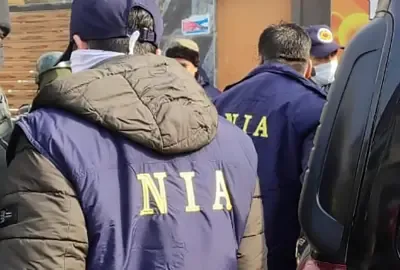
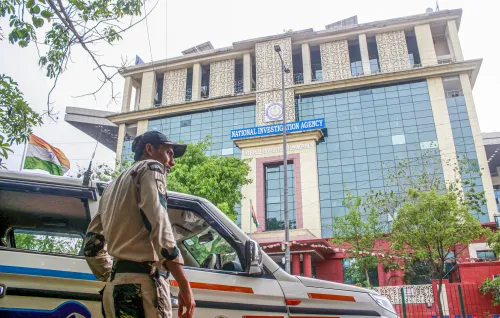
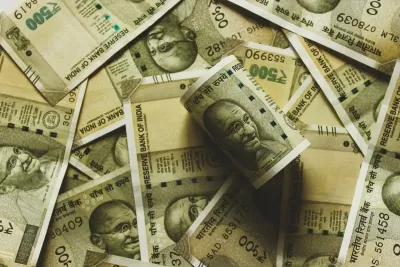
Visakhapatnam, March 3 (NationPress) A Special Court of the National Investigation Agency (NIA) in Visakhapatnam has found seven individuals guilty and imposed prison sentences in connection with a 2015 case involving Fake Indian Currency Notes (FICN).
The court issued varying sentences of simple imprisonment (SI) ranging from 7 to 10 years, alongside fines imposed on the convicted under different sections of the Unlawful Activities (Prevention) Act, as per the NIA's announcement on Tuesday.
The accused are from Assam, West Bengal, and Karnataka, identified as Saddam Hossain, Roustum, Amirul Hoque, Mohammad Hakim Sheikh, Saddam Hussien, Sayed Imran, and Mohammed Akber Ali.
The conspiracy to circulate counterfeit currency involved trafficked high-quality FICN through the India-Bangladesh border, aiming to destabilize India's financial system, according to the NIA's investigations.
According to the court's verdict, Saddam Hossain from Barpeta District, Assam, is sentenced to 10 years of SI and a fine of Rs. 5,000 under Section 16 of the UA (P) Act. He was apprehended by the Directorate of Revenue Intelligence (DRI) in Visakhapatnam in September 2015, after high-quality FICN with a face value of Rs. 5,01,500 was seized at Visakhapatnam Railway Station while he was aboard a train.
Amirul Hoque, also from Barpeta, faces 10 years of SI and a fine of Rs. 5,000 (or an extra year SI for non-payment) under Section 18 of the UA (P) Act.
Rostum from Malda district, West Bengal, has received a 7-year SI sentence and a fine of Rs. 2,000 under Section 20 of the UA (P) Act, with an additional 8 months SI for failing to pay the fine.
The court sentenced Mohammed Hakim Sheikh of Malda to 8 years of SI and a fine of Rs. 5,000 (or another year of SI) under Section 18 of the UA (P) Act.
Saddam Hussein from Bengaluru district, Karnataka, received a 7-year SI sentence and a fine of Rs. 2,000 under Section 20 of the UA (P) Act, with 8 months SI for non-payment. A similar ruling was given to Sayed Imran from Mandya district, Karnataka, and Md. Akbar Ali from Kamrup district, Assam. Sayed Imran is also implicated in a different NIA FICN case in Visakhapatnam.
The NIA took over this case in December 2015, charging Saddam Hossain in July 2016, followed by supplementary charges against the remaining six accused in 2018 and 2019.
Point of View
Which poses a serious threat to India's financial integrity. The sentences reflect the legal system's commitment to addressing unlawful activities that undermine national security.
NationPress
14 Sept 2026
Frequently Asked Questions
What was the basis for the convictions?
The convictions were based on the individuals' involvement in trafficking and circulating fake Indian currency notes, which aimed to disrupt India's financial security.
What are the sentences given to the convicted individuals?
The sentences range from 7 to 10 years of simple imprisonment, along with varying fines under the Unlawful Activities (Prevention) Act.
Where were the counterfeit notes trafficked?
The counterfeit notes were trafficked through the India-Bangladesh border and circulated in various parts of India.
What actions did the NIA take in this case?
The NIA took over the case in December 2015 and completed charges against the accused between 2016 and 2019.
What regions do the convicted individuals come from?
The convicted individuals hail from Assam, West Bengal, and Karnataka.