SFI-DYFI back on Kerala streets as Left rebuilds after historic poll rout
Synopsis
Nine months after the CPI-M's historic collapse to 35 seats, its student and youth wings are back on Kerala's streets — water cannons and all. Tuesday's clashes over a university row and an MDMA case are the visible tip; the real story is a party using agitation to rebuild visibility it can no longer command from the Treasury benches.
Key Takeaways
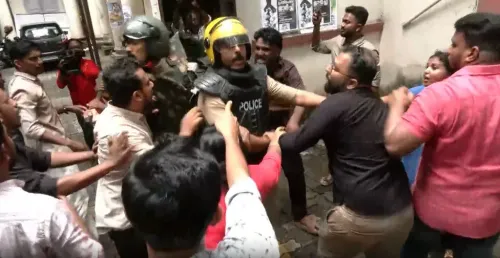
SFI and DYFI staged street protests across Kerala on 1 September 2025 , with water cannons deployed at multiple sites.
SFI marched to Kerala University over alleged UDF-backed 'Sangh Parivar' influence; DYFI protested in Thiruvananthapuram and Kasaragod over an MDMA case involving a Youth Congress leader.
The CPI-M holds just 35 seats in the 140-member Kerala Assembly following its recent electoral defeat.
The Enforcement Directorate is scrutinising Veena Vijayan , the former Chief Minister's daughter, while around 25 party workers face imprisonment over an attack on ED officials.
The protests mark a strategic shift: SFI and DYFI, which operated under a CPI-M government from 2016 to 2025 , are now rebuilding as an opposition street force targeting the UDF government.
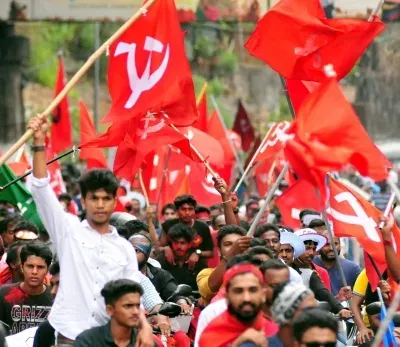
The Students' Federation of India (SFI) and the Democratic Youth Federation of India (DYFI) returned to the streets of Kerala on Tuesday, 1 September, with road blockades, traffic diversions, and water cannons marking their most visible agitation since the Communist Party of India-Marxist (CPI-M) lost power in the state. The protests signal a deliberate pivot by the Left's mass organisations toward street politics after nearly a decade in government.
What Triggered Tuesday's Protests
The immediate flashpoints were twofold. SFI marched to the Kerala University headquarters, alleging that the United Democratic Front (UDF) government was facilitating a 'Sangh Parivar' agenda within the institution — a charge the ruling dispensation has not publicly addressed. Separately, DYFI took out marches in Thiruvananthapuram and Kasaragod, accusing Chief Minister V.D. Satheesan of shielding a Youth Congress leader implicated in an MDMA case in Kasaragod. Water cannons were deployed when demonstrations turned confrontational at multiple points.
The Deeper Political Shift
Beneath the immediate causes lies a more consequential realignment. Between 2016 and May 2025, SFI and DYFI operated under the political cover of a CPI-M government in Kerala. Their street confrontations during that period were primarily directed at the Bharatiya Janata Party (BJP)-led government at the Centre. That dynamic has now inverted sharply.
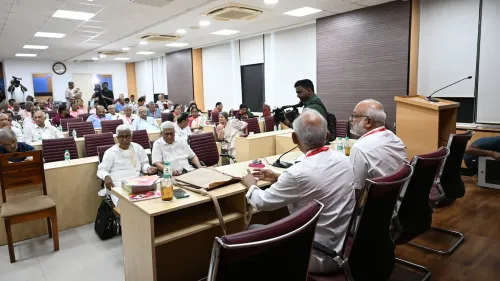
The CPI-M currently holds just 35 seats in the 140-member Kerala Legislative Assembly — a collapse that has left the party navigating questions of organisation, leadership, and long-term strategy simultaneously. Chief Minister Satheesan has been consolidating political momentum with a governing style observers note is markedly different from that of his predecessor, former Chief Minister Pinarayi Vijayan.
Pressures Piling Up on the Left
The party's difficulties extend beyond electoral arithmetic. The Enforcement Directorate (ED) has been scrutinising Veena Vijayan, the former Chief Minister's daughter, adding a legal dimension to the CPI-M's political troubles. Additionally, approximately 25 party workers have been arrested and imprisoned in connection with an attack on ED officials — a development that has further strained the party's public standing.
Friction within the broader Left alliance — including reported differences between the Communist Party of India (CPI) and the CPI-M — has added another layer of internal uncertainty. This comes amid a wider search within the Left for a coherent opposition identity after what analysts are calling an electoral shock of historic proportions.
What the Street Agitation Means
For ordinary commuters, the politics translates into blocked roads, long detours, and hours of disruption — a tangible cost that both the government and the public are likely to absorb in equal measure. SFI and DYFI have historically been among the most effective instruments of Left street mobilisation, and their return to sustained agitation carries organisational muscle that the UDF government will need to manage carefully.
Politically, the streets offer the CPI-M something the Assembly no longer does: visibility. Critics argue the protests also serve as a deflection from the legal and internal pressures mounting on the party. Whether this marks the beginning of a sustained opposition revival or merely the first rumblings of a party still processing electoral defeat remains an open question — one that the coming months of agitation will likely begin to answer.
Point of View
These same organisations were instruments of a ruling party, their agitations calibrated to avoid embarrassing their own government. Now they must reinvent themselves as a genuine opposition force — a muscle memory that atrophies in power. With the ED closing in on party-linked figures and internal Left friction unresolved, the streets offer the CPI-M a controlled narrative it currently cannot find elsewhere. The UDF government should not mistake disruption for weakness, nor should it mistake it for strength.
NationPress
17 Oct 2026
Frequently Asked Questions
Why did SFI and DYFI protest in Kerala on 1 September 2025?
SFI marched to Kerala University over allegations that the UDF government was enabling a 'Sangh Parivar' agenda within the institution. DYFI simultaneously protested in Thiruvananthapuram and Kasaragod, accusing Chief Minister V.D. Satheesan of interfering in an MDMA case involving a Youth Congress leader in Kasaragod.
How many seats does the CPI-M hold in the Kerala Assembly after its electoral defeat?
The CPI-M currently holds 35 seats in the 140-member Kerala Legislative Assembly, a sharp reduction that has left the party in a significantly weakened opposition position. The scale of the defeat has prompted internal questions about the party's organisation and strategy.
What legal pressures is the CPI-M facing alongside its electoral setback?
The Enforcement Directorate is scrutinising Veena Vijayan, daughter of former Chief Minister Pinarayi Vijayan. Additionally, around 25 CPI-M workers have been arrested and imprisoned following an attack on ED officials, compounding the party's political difficulties.
What is the political significance of SFI and DYFI returning to street protests?
It marks a strategic pivot for the CPI-M's mass organisations, which spent nearly a decade operating under a Left government in Kerala. With the party now in opposition, street agitation offers visibility and a platform that the Assembly's reduced numbers no longer provide. Analysts note it also serves to shift public focus away from the party's internal and legal troubles.
Who is V.D. Satheesan and what is his role in the current Kerala political situation?
V.D. Satheesan is the Chief Minister of Kerala, leading the United Democratic Front government that replaced the CPI-M administration. He has been consolidating political momentum with a governing approach observers describe as markedly different from that of his predecessor, former Chief Minister Pinarayi Vijayan.