Amit Shah hails Rs 24,250 cr highway nod for 4 states
Synopsis
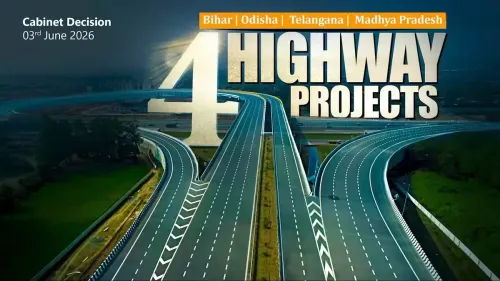
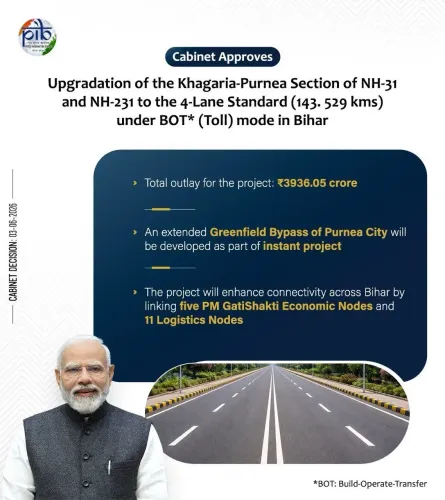
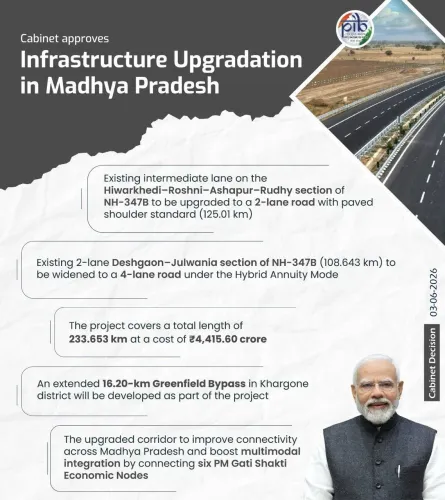
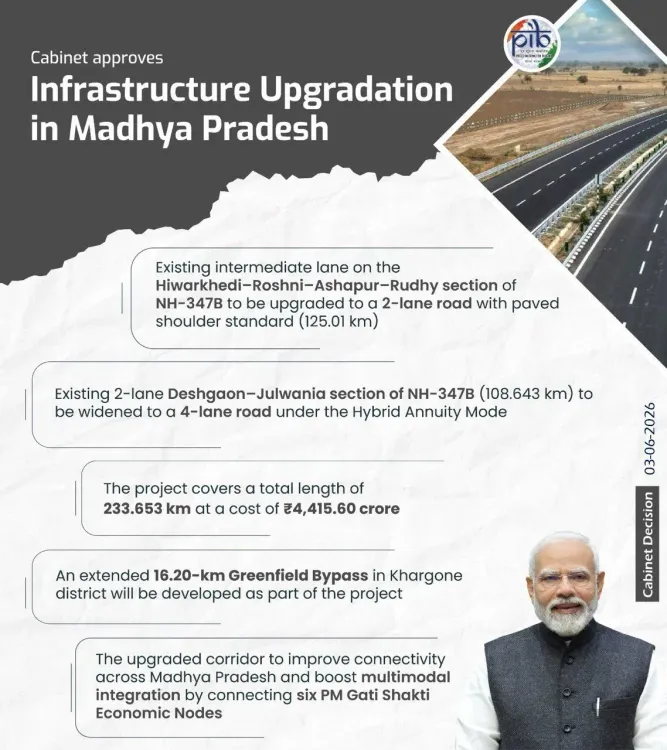
Union Home Minister Amit Shah welcomed the Union Cabinet's approval of four national highway projects across Madhya Pradesh, Bihar, Odisha and Telangana with a total outlay of Rs 24,250 crore, calling them new 'growth expressways' that will cut travel time for citizens and strengthen inter-state connectivity.
Key Takeaways
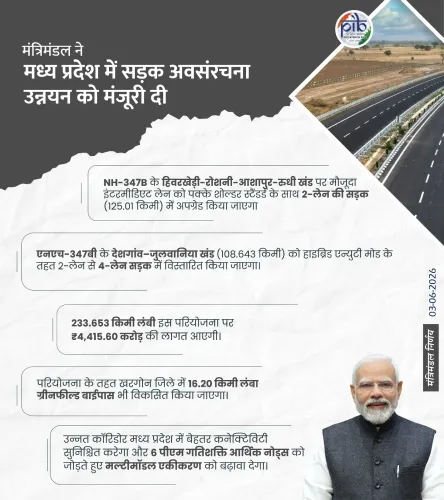
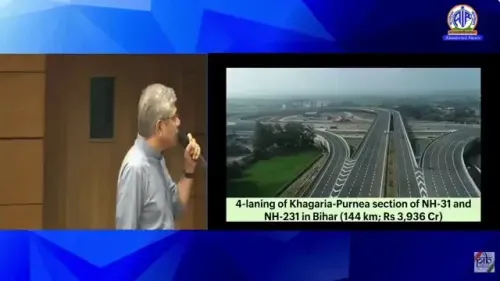
Union Cabinet has approved four national highway projects in MP, Bihar, Odisha and Telangana.
Total outlay for the four projects is Rs 24,250 crore.
Amit Shah described the projects as new 'growth expressways for India'.
Projects are expected to be executed by NHAI under the Ministry of Road Transport and Highways.
Approvals continue the policy arc set by Bharatmala (2015), NIP (2019) and PM Gati Shakti (2021).
Eastern and central states continue to receive a rising share of highway approvals.
Union Home Minister and Minister of Cooperation Amit Shah on Wednesday welcomed the Union Cabinet's approval of four national highway projects across Madhya Pradesh, Bihar, Odisha and Telangana with a combined outlay of Rs 24,250 crore. In a post on X, the senior BJP leader said the projects would 'open new growth expressways for India' and ease transport for citizens by cutting travel time.
'The four national highway projects approved by Union Cabinet for Madhya Pradesh, Bihar, Odisha and Telangana with total outlay of Rs 24,250 crore will open new growth expressways for India,' Shah wrote, adding that the projects would 'usher in ease of transport for citizens by reducing travel time'.
Context
The clearance covers four states that span central, eastern and southern India, reflecting a deliberate spread of capital expenditure beyond traditional western and northern corridors. Madhya Pradesh sits at the geographic heart of the country and serves as a transit spine for north-south freight, while Bihar has historically lagged on road density and has been prioritised in successive Cabinet decisions to close the gap.
Odisha, with its mineral belt and growing port economy along the Bay of Bengal, and Telangana, anchored by the Hyderabad metropolitan region, round out the basket. The four-state package signals continued central focus on inter-state corridors rather than intra-city links.
Policy backdrop
The approvals sit within a long arc of highway expansion that began accelerating after the Bharatmala Pariyojana was cleared by the Cabinet in 2015 with a planned outlay of Rs 6.92 lakh crore for 34,800 km of highways. The National Infrastructure Pipeline, launched in 2019, earmarked roughly Rs 111 lakh crore for roads and other capital projects through 2025.
In 2021, the PM Gati Shakti National Master Plan added a multimodal coordination layer, requiring highway alignments to be planned alongside railways, ports and logistics parks. The four new projects are expected to be tendered and executed by the National Highways Authority of India under the Ministry of Road Transport and Highways.
National highway length has grown from about 91,000 km in 2014 toward a stated target exceeding 2 lakh km, with eastern and central states drawing a rising share of approvals to narrow regional disparities.
Stakeholders and impact
The immediate beneficiaries are commuters and freight operators in the four states, where shorter travel times translate directly into lower logistics costs. State governments stand to gain from improved last-mile connectivity to industrial clusters, mineral hubs and farm-gate markets.
The logistics sector has consistently flagged India's road freight costs as a competitiveness drag, and successive Cabinet approvals have been positioned as a corrective. Small businesses along upgraded corridors typically see land-value appreciation and new retail activity once construction begins.
Shah's framing of the projects as 'growth expressways' aligns with the government's broader pitch that highway capex is a multiplier for GDP, employment and ease of living, rather than a standalone transport intervention.
What's next
Attention now shifts to NHAI tender timelines, detailed project reports and land acquisition progress in each of the four states. Cost revisions, environmental clearances and right-of-way disputes have historically been the principal sources of delay on comparable projects.
Parliamentary scrutiny is likely in the next session, with questions expected on revised cost estimates, completion deadlines and the share of contracts awarded under hybrid annuity or build-operate-transfer models. For the four states, the approvals set up a multi-year construction cycle whose dividends will be measured in travel-time savings and freight throughput.
Point of View
Bihar, Odisha and Telangana, spanning three regions and ruled by parties across the political spectrum, blunts any charge of geographic favouritism. With general election cycles behind and state polls ahead in several of these geographies, highway approvals double as both economic policy and political messaging. The real test, as always, will lie in execution timelines and the eventual reduction in logistics costs that the government has promised.
NationPress
19 Sept 2026
Frequently Asked Questions
Which four states are covered by the new Cabinet-approved highway projects?
The four states are Madhya Pradesh, Bihar, Odisha and Telangana. The Union Cabinet has cleared one national highway project in each of these states.
What is the total outlay for the four highway projects?
The total outlay is Rs 24,250 crore, as stated by Union Home Minister Amit Shah in his post on X.
Who will execute these national highway projects?
National highway projects are typically executed by the National Highways Authority of India under the Ministry of Road Transport and Highways.
How do these projects fit into India's larger highway plan?
They build on the Bharatmala Pariyojana approved in 2015, the National Infrastructure Pipeline of 2019 and the PM Gati Shakti master plan of 2021, all aimed at expanding and integrating highway capacity.
What benefits has the government claimed from these projects?
The government has said the projects will reduce travel time, ease transport for citizens and act as 'growth expressways' that support economic activity in the four states.