Amit Shah pays tribute to Maharshi Aurobindo, invokes Vishwaguru vision
Synopsis
Union Home Minister Amit Shah posted a bilingual Hindi-Bengali tribute to Maharshi Aurobindo on 19 July 2026, quoting the philosopher-yogi's own declaration that India will one day stand before the world as Vishwaguru, reinforcing the BJP's civilizational narrative of India's global rise.
Key Takeaways
Union Home Minister Amit Shah paid tribute to Maharshi Aurobindo on 19 July 2026 via a bilingual post in Hindi and Bengali .
Shah quoted Aurobindo's prophecy that India will establish itself as Vishwaguru — a spiritual guide to all of humanity.
The post targets both Hindi-speaking and Bengali-speaking audiences, reflecting outreach to West Bengal and the Bengali diaspora.
Aurobindo Ghose , born in Calcutta in 1872 , developed Integral Yoga and articulated India's civilizational destiny at the Sri Aurobindo Ashram, Pondicherry .
The tribute continues the BJP leadership's pattern of invoking early 20th-century thinkers to frame India's contemporary rise in civilizational terms.
Further government events around 15 August 2026 — Aurobindo's birth anniversary and India's Independence Day — are anticipated.
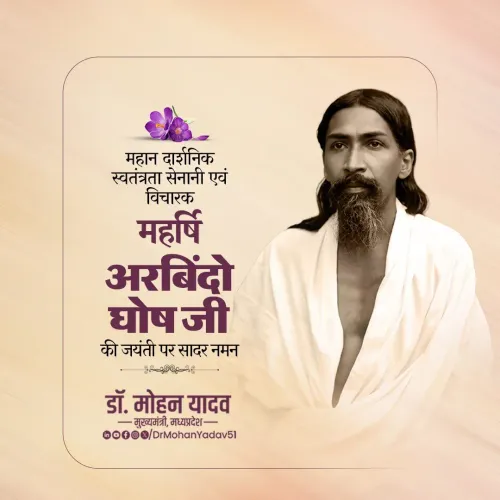
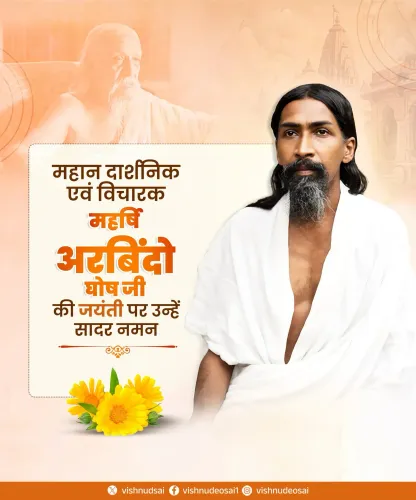
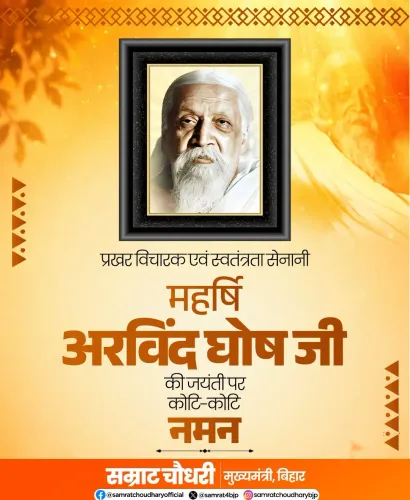
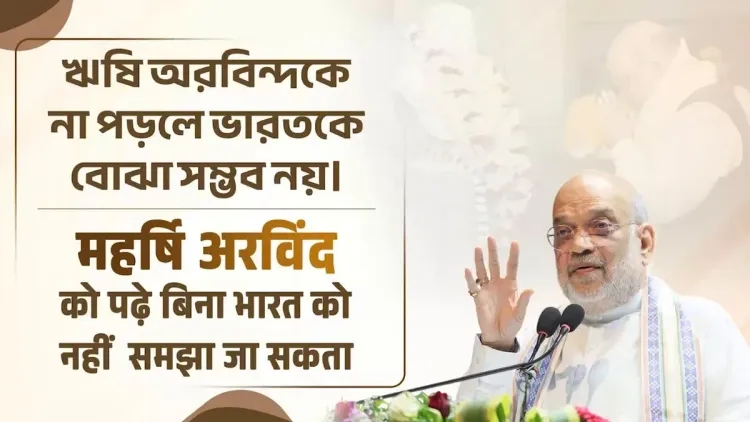
Union Home Minister Amit Shah on Sunday, 19 July 2026, paid tribute to Maharshi Aurobindo, declaring that India cannot be understood without reading the philosopher-yogi, and invoking Aurobindo's own prophecy that India will one day establish itself as Vishwaguru — a spiritual guide to the entire world — before all nations.
Context
Shah posted in both Hindi and Bengali, quoting Aurobindo's vision in the philosopher's own linguistic heritage. The Hindi portion reads: 'Maharshi Aurobindo ko padhe bina Bharat ko nahin samjha ja sakta' — 'India cannot be understood without reading Maharshi Aurobindo.' The Bengali portion mirrors the sentiment, adding that Aurobindo himself had declared India would certainly, one day, establish itself as Vishwaguru before the entire world.
The bilingual post — reaching both Hindi-speaking and Bengali-speaking audiences — reflects a deliberate outreach to West Bengal and the broader Bengali-speaking diaspora, for whom Aurobindo Ghose is a towering civilizational figure born in Calcutta in 1872.
Policy Backdrop
The invocation of Aurobindo fits within a consistent pattern of the BJP leadership drawing on early 20th-century thinkers to frame India's contemporary rise in civilizational and spiritual terms. In 2022, the Ministry of Culture organised nationwide programmes marking Sri Aurobindo's 150th birth anniversary, with the government positioning him alongside other nationalist-philosopher figures as foundational to India's modern identity.
Aurobindo — who evolved from a firebrand revolutionary nationalist to a philosopher and yogi at the Sri Aurobindo Ashram in Pondicherry — developed the concept of Integral Yoga and articulated a vision of India as a spiritual civilisation destined to guide humanity. His writings on the sanatana dharma and India's world-historical role have been cited repeatedly in cultural diplomacy contexts, including at multilateral forums where India projects soft power through yoga and ancient knowledge systems.
Stakeholders and Impact
Philosophy scholars, students of Indian civilizational thought, and the broader general public — particularly in West Bengal and among the Bengali diaspora globally — are the primary audiences of this tribute. The Sri Aurobindo Ashram in Pondicherry, which continues to propagate his teachings, and institutions bearing his name across India are also stakeholders in the government's continued acknowledgment of his legacy.
For the BJP, invoking Aurobindo's Vishwaguru prophecy carries political resonance: it aligns with the ruling party's broader narrative of India's rise under its governance as a fulfilment of a civilizational destiny, not merely a policy outcome.
What's Next
The Ministry of Culture is expected to anchor further events around 15 August 2026 — India's Independence Day — which also marks the anniversary of Aurobindo's birth on 15 August 1872, a coincidence Aurobindo himself considered significant. Parliamentary sessions in the coming months may also see references to civilizational heritage themes, particularly as India continues to assert its identity on the global stage through forums such as the G20 and United Nations. Shah's post signals that Aurobindo's vision of India as Vishwaguru will remain a touchstone for the government's cultural and diplomatic messaging.
Point of View
A state the BJP has invested in heavily, using a shared Bengali cultural icon as a bridge. The invocation of Aurobindo's Vishwaguru prophecy is a recurring instrument in the BJP's civilizational messaging toolkit, one that frames India's global ascent as destiny rather than policy. This positions the ruling party as the steward of an ancient promise, lending cultural legitimacy to contemporary foreign policy ambitions. The timing ahead of 15 August — when Aurobindo's birth anniversary and Independence Day coincide — suggests this tribute is likely the opening note of a larger cultural-diplomatic campaign.
NationPress
19 Oct 2026
Frequently Asked Questions
Who is Maharshi Aurobindo and why is he significant to India?
Maharshi Aurobindo, born Aurobindo Ghose in Calcutta on 15 August 1872, was an Indian philosopher, yogi, poet and nationalist who developed Integral Yoga and articulated a vision of India as a spiritual civilisation destined to guide humanity. He is revered both as a freedom fighter and a spiritual master, and his teachings are propagated by the Sri Aurobindo Ashram in Pondicherry.
What did Amit Shah say about Maharshi Aurobindo?
Amit Shah stated that India cannot be understood without reading Maharshi Aurobindo, and quoted Aurobindo's own declaration that India will one day establish itself as Vishwaguru — a spiritual guide — before the entire world. He posted this tribute in both Hindi and Bengali on 19 July 2026.
What does Vishwaguru mean and why do Indian leaders use the term?
Vishwaguru is a Sanskrit term meaning 'teacher of the world' or 'spiritual guide to humanity.' Indian leaders, particularly from the BJP, invoke it to frame India's civilizational and spiritual heritage as a source of global guidance, aligning with cultural diplomacy efforts around yoga, philosophy and ancient knowledge systems.
Why did Amit Shah post in Bengali about Aurobindo?
Aurobindo Ghose was born in Calcutta and is a towering figure in Bengali cultural and intellectual heritage. By posting in Bengali alongside Hindi, Shah reached Bengali-speaking audiences in West Bengal and the diaspora, reflecting the BJP's sustained political outreach to that region.
What government events have been held to honour Sri Aurobindo?
The Ministry of Culture organised nationwide programmes in 2022 to mark Sri Aurobindo's 150th birth anniversary, positioning him as foundational to India's modern identity. Further events are expected around 15 August 2026, when his birth anniversary coincides with India's Independence Day.