Amit Shah: NCCF, NAFED to buy every pulse grain from farmers
Synopsis
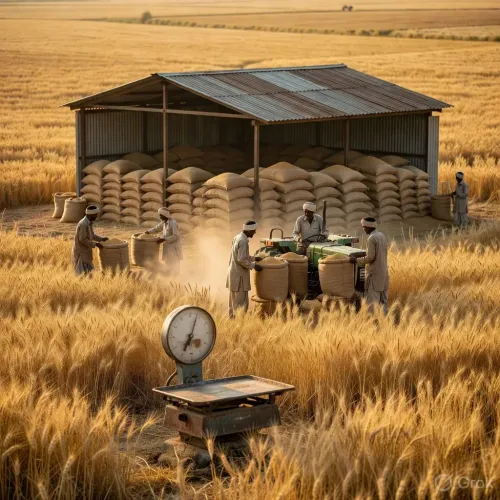
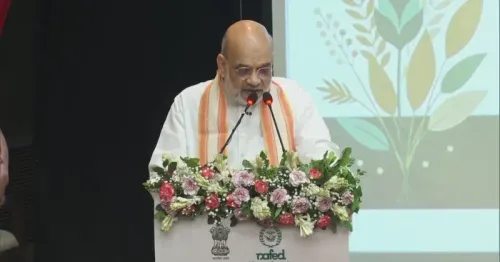
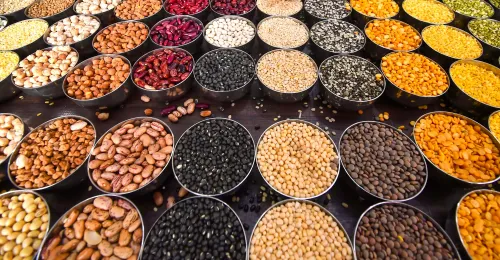
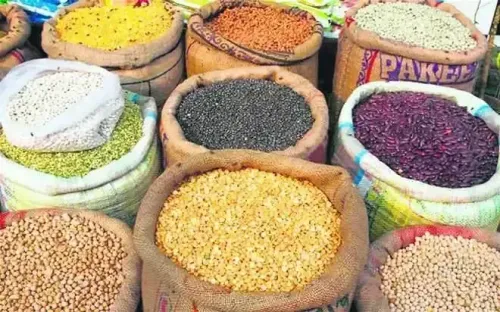
Union Home Minister Amit Shah has announced that NCCF and NAFED will directly purchase every grain of pulses from farmers over the next two years, marking the government's most sweeping cooperative procurement commitment to date under the Ministry of Cooperation.
Key Takeaways
Amit Shah announced on 23 June 2026 that NCCF and NAFED will buy every grain of pulses directly from farmers within two years .
The move aims to eliminate middlemen from the pulse procurement chain and ensure farmers receive full support prices.
Both agencies already conduct pulse procurement under the Price Support Scheme (PSS) , but this commitment extends to all pulse purchases.
The Ministry of Cooperation , formed in July 2021 under Shah, has progressively expanded direct cooperative procurement since its creation.
The policy aligns with the Atmanirbhar Bharat goal of raising domestic pulse output and reducing India's dependence on pulse imports.
Farmer onboarding, storage capacity, and payment timelines through cooperative networks will be critical to implementation.
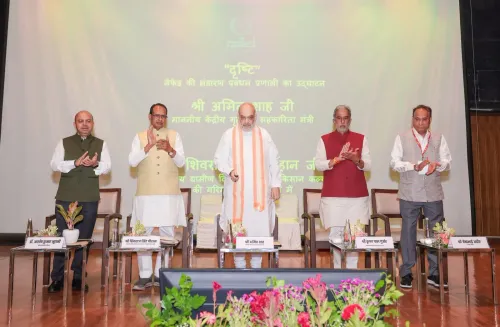
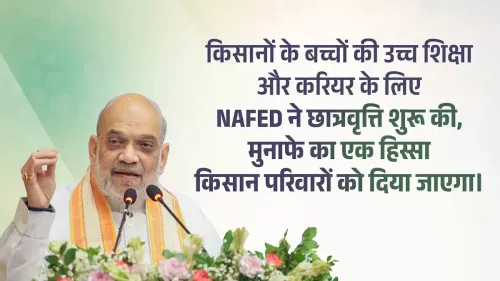
Union Home Minister and Minister of Cooperation Amit Shah announced on Tuesday, 23 June 2026 that NCCF and NAFED will procure every single grain of pulses directly from farmers over the next two years, signalling a significant push to eliminate middlemen from the pulse supply chain.
What Shah said
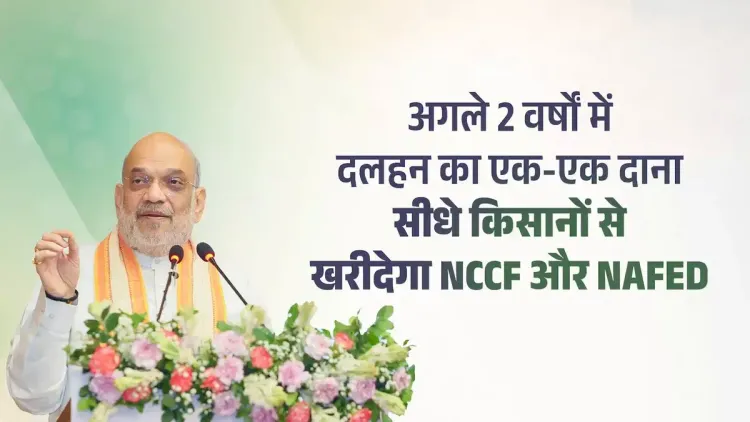
In a post on X, Shah wrote: 'अगले 2 वर्षों में दलहन का एक-एक दाना सीधे किसानों से खरीदेगा NCCF और NAFED' — 'In the next 2 years, NCCF and NAFED will purchase every single grain of pulses directly from farmers.' The statement is a categorical commitment to full direct procurement, leaving no room for private intermediaries in the cooperative purchase chain.
Context
The National Cooperative Consumers' Federation of India (NCCF) and the National Agricultural Cooperative Marketing Federation of India (NAFED) are the two central cooperative bodies mandated to procure essential agricultural commodities. Both agencies have conducted pulse procurement under the Price Support Scheme (PSS) since the 1980s, intervening when market prices fall below the government-declared minimum support price.
The Ministry of Cooperation, created in July 2021 under Shah's leadership, was set up precisely to revitalise the cooperative sector and deepen direct linkages between procurement agencies and producers. Since its formation, the ministry has progressively expanded cooperative procurement across multiple commodities.
Policy backdrop
India has long faced a structural tension in its pulse economy: domestic production has been insufficient to meet demand, making the country heavily reliant on imports. The government's Atmanirbhar Bharat framework has identified pulse self-sufficiency as a priority, with direct procurement seen as a tool to incentivise farmers to grow more by assuring them remunerative prices without the margin losses imposed by intermediaries.
By routing all purchases through NCCF and NAFED, the government aims to ensure that farmers receive the full support price. Similar direct-procurement models have already been extended to other commodities through state and central cooperative agencies since 2021, and the pulse commitment appears to be the most sweeping application of this model to date.
Stakeholders and impact
Pulse farmers — concentrated in states such as Madhya Pradesh, Rajasthan, Maharashtra, Uttar Pradesh, and Karnataka — stand to benefit most directly if the procurement mechanism is implemented as announced. Cooperative societies at the district and state level will serve as the operational backbone for aggregating produce and channelling it to NCCF and NAFED.
Consumers could also see a downstream benefit: a more organised procurement chain can reduce price volatility in pulses, which are a dietary staple across Indian households and a significant driver of retail food inflation.
What's next
The announcement sets a two-year window — running through 2028 — for full direct procurement to be operational. Actual procurement targets, farmer registration processes, and price realisation data will be the key metrics to watch in upcoming Ministry of Cooperation reviews and the budgets of NCCF and NAFED. Implementation at scale will require robust farmer onboarding, adequate storage infrastructure, and timely payment mechanisms through the cooperative network.
Point of View
Moving beyond selective price-support interventions to a blanket commitment covering the entire pulse crop. It reinforces the government's strategy of using cooperative infrastructure as a policy lever to restructure agricultural markets, reduce middlemen, and address food inflation at its source. The two-year timeline is politically significant — it falls within the current electoral cycle — making delivery a reputational test for both the ministry and the cooperative agencies. Whether NCCF and NAFED have the operational capacity and financing to absorb the full pulse harvest at scale will determine whether the pledge translates into tangible farmer income gains.
NationPress
22 Sept 2026
Frequently Asked Questions
What did Amit Shah announce about NCCF and NAFED?
Amit Shah announced that NCCF and NAFED will directly purchase every grain of pulses from farmers over the next two years, bypassing middlemen entirely.
What is NCCF and what does it do?
NCCF, the National Cooperative Consumers' Federation of India, is a central cooperative body that procures and distributes essential commodities including pulses through cooperative networks across the country.
What is NAFED's role in pulse procurement?
NAFED, the National Agricultural Cooperative Marketing Federation of India, is responsible for marketing and price-support procurement of agricultural commodities such as pulses, intervening when market prices fall below the minimum support price.
How will direct pulse procurement benefit farmers?
Direct procurement by NCCF and NAFED ensures farmers receive the full minimum support price without losing a portion of their income to commission agents or other intermediaries.
What is the Ministry of Cooperation and when was it formed?
The Ministry of Cooperation was established in July 2021 to strengthen India's cooperative movement and improve farmer incomes through direct procurement and cooperative linkages; Amit Shah has held the portfolio since its creation.