Major MSP Push: Centre Expands Procurement in Chhattisgarh, Launches Bihar's First Pulse Drive
Synopsis
India's Centre has launched Bihar's first-ever structured masoor procurement drive targeting 32,000 MT under the Atmanirbhar Pulses Mission, while simultaneously accelerating MSP operations across 85 PACS centres in Chhattisgarh — a twin push that could reshape how millions of farmers access guaranteed price support.
Key Takeaways
Bihar's first-ever structured masoor procurement launched under the Atmanirbhar Pulses Mission with a target of 32,000 MT as of April 2026 .
100.4 MT of masoor already procured in Bihar, with 59 farmers onboarded and 16 PACS/FPOs registered as of April 22, 2026 .
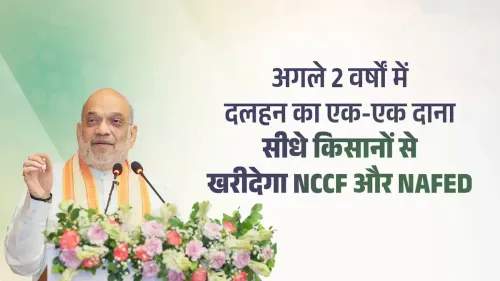
NCCF is leading Bihar's pulse procurement while NAFED prepares to scale operations under the Price Support Scheme .
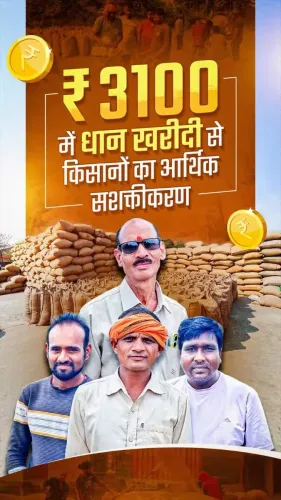
In Chhattisgarh , 85 PACS centres are operational under PM-AASHA , with procurement active in 7 districts and expansion planned to Sarguja, Kondagaon, and Koriya .
Scientific storage is ensured through WDRA-approved warehouses in collaboration with the Central Warehousing Corporation .
The E-Samyukti portal is digitising farmer participation in Chhattisgarh , enhancing transparency and reducing middlemen in the MSP procurement chain.
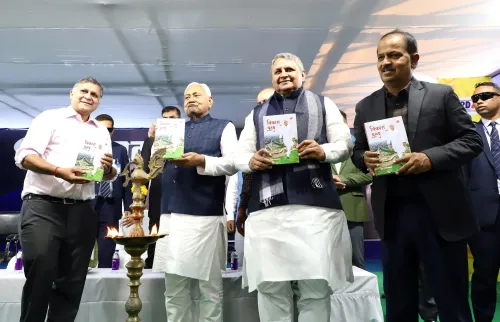
The Central Government on Thursday, April 23, 2026, announced a major expansion of Minimum Support Price (MSP) procurement operations in Chhattisgarh and simultaneously rolled out Bihar's first-ever organised pulse procurement drive under the flagship 'Atmanirbhar Pulses Mission' — a landmark step aimed at strengthening farmer income and achieving national self-reliance in pulse production.
Bihar's Historic First: Structured Masoor Procurement Begins
For the first time in the state's agricultural history, Bihar has seen the launch of a structured, government-backed procurement of masoor (lentils), coordinated by the National Cooperative Consumers' Federation of India Ltd. (NCCF). As of April 22, 2026, the state has set a procurement target of 32,000 Metric Tonnes (MT) of masoor under the initiative.
So far, 16 Primary Agricultural Credit Societies (PACS) and Farmer Producer Organisations (FPOs) have been registered, 59 farmers have been onboarded, and 100.4 MT of procurement has already been completed — marking a tangible early start to what officials describe as a transformative initiative.
The National Agricultural Cooperative Marketing Federation of India Ltd. (NAFED) is also gearing up to scale operations through its cooperative network across Bihar under the Price Support Scheme (PSS). Storage infrastructure is being supported through WDRA-approved warehouses operated in collaboration with the Central Warehousing Corporation (CWC), ensuring scientifically managed stockpiling that reduces post-harvest losses.
Chhattisgarh Operations Gain Momentum Under PM-AASHA
In Chhattisgarh, the PM-AASHA (Pradhan Mantri Annadata Aay SanraksHan Abhiyan) scheme has significantly accelerated MSP-based procurement, with both NCCF and NAFED playing a central operational role. A key driver of this momentum has been the digitisation of farmer participation through the E-Samyukti portal, which has streamlined registration and transaction processes.
Extensive awareness campaigns — including grassroots community outreach and engagement through Doordarshan — have helped bring more farmers into the formal procurement fold. A network of 85 PACS centres is currently operational across the state, with active procurement underway in districts including Dhamtari, Durg, Balod, Balodabazar, Raipur, Raigarh, and Sarangarh.
Operations are set to expand further into Sarguja, Kondagaon, and Koriya districts, broadening the reach of the MSP safety net to farmers in more remote and tribal-dominated regions of the state.
Why This Matters: The Bigger Policy Picture
India's dependence on pulse imports has been a persistent challenge. According to publicly available trade data, the country regularly imports hundreds of thousands of tonnes of pulses annually to bridge the domestic demand-supply gap. Initiatives like the Atmanirbhar Pulses Mission are designed to directly address this structural vulnerability by incentivising domestic production through guaranteed MSP procurement.
The Ministry of Consumer Affairs, Food and Public Distribution stated that these initiatives reflect the government's continued focus on strengthening the MSP-based procurement ecosystem, ensuring better price realisation for farmers, and integrating them into formal supply chains — a critical step toward reducing distress sales to private intermediaries at below-MSP rates.
Notably, Bihar — one of India's most agriculturally significant states — had previously lacked a structured, government-backed pulse procurement mechanism, leaving farmers vulnerable to market price volatility. The launch of this initiative addresses a long-standing policy gap in a state where agriculture employs a majority of the workforce.
Digital Infrastructure and Transparency Drive
The expansion of digital platforms like the E-Samyukti portal in Chhattisgarh signals a broader government push to eliminate leakages and middlemen from the procurement chain. By linking farmers directly to cooperative procurement agencies, the system aims to ensure that the full benefit of the MSP reaches the actual cultivator rather than being absorbed by intermediaries.
The use of WDRA-registered warehouses and collaboration with the Central Warehousing Corporation also adds a layer of scientific storage management, which is critical for maintaining grain quality and reducing post-harvest losses — a problem that has historically cost Indian farmers billions of rupees annually.
What to Expect Next
Both NCCF and NAFED have committed to scaling up operations in Chhattisgarh and Bihar, contributing to national food security objectives and price stabilisation under the broader 'Atmanirbhar Bharat' framework. As procurement infrastructure expands and more farmers are onboarded digitally, the government expects enhanced transparency, greater efficiency, and wider outreach — particularly to smallholder and marginal farmers who have historically remained outside formal market mechanisms. Analysts will be watching whether Bihar's 32,000 MT masoor target is met before the current rabi season closes, which will serve as a key indicator of the initiative's real-world effectiveness.
Point of View
Forcing millions of cultivators into distress sales. While the numbers today — 59 farmers, 100 MT — are modest, the institutional scaffolding being built through NCCF, NAFED, and WDRA-certified warehouses represents a genuine structural shift. The real test, however, will be whether the 32,000 MT target is met before the rabi season closes, and whether digital platforms like E-Samyukti in Chhattisgarh can actually eliminate the middlemen they promise to bypass — or simply digitise the same old inefficiencies.
NationPress
19 Sept 2026
Frequently Asked Questions
What is the Atmanirbhar Pulses Mission launched in Bihar?
The Atmanirbhar Pulses Mission is a Central Government initiative aimed at achieving self-reliance in domestic pulse production by providing farmers guaranteed MSP-based procurement. Bihar's first-ever structured masoor (lentil) procurement under this mission was launched in April 2026, with a target of 32,000 MT.
What is the MSP procurement target for masoor in Bihar in 2026?
Bihar's masoor (lentil) MSP procurement target under the Atmanirbhar Pulses Mission is 32,000 Metric Tonnes for 2026. As of April 22, 2026, 100.4 MT has already been procured with 59 farmers onboarded and 16 PACS/FPOs registered.
How is MSP procurement being conducted in Chhattisgarh under PM-AASHA?
In Chhattisgarh, MSP procurement under PM-AASHA is being carried out through a network of 85 PACS centres, with farmer participation digitised via the E-Samyukti portal. NCCF and NAFED are the key agencies, with procurement active in districts like Raipur, Durg, Dhamtari, and several others.
What role do NCCF and NAFED play in MSP procurement?
NCCF (National Cooperative Consumers' Federation) and NAFED (National Agricultural Cooperative Marketing Federation) are the primary government agencies executing MSP procurement under PM-AASHA and the Price Support Scheme. They manage farmer registration, procurement operations, and storage coordination across states.
Why is Bihar's pulse procurement initiative significant for farmers?
Bihar previously lacked a formal government-backed pulse procurement system, leaving farmers exposed to volatile market prices and exploitation by middlemen. The new initiative provides a guaranteed MSP floor price for masoor, integrating farmers into formal supply chains for the first time.