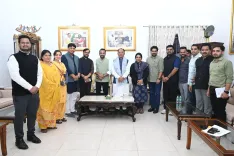
Amit Shah reviews Arunachal border security, calls for stronger Centre-state coordination
Synopsis
Home Minister Amit Shah flew into Itanagar to chair a sweeping review of Arunachal Pradesh's security and development — covering a 1,126-km China border, anti-drug operations, cybercrime, new criminal laws, and a GSDP that has more than doubled since 2015-16. The visit signals that New Delhi is treating the frontier state as both a strategic buffer and an emerging growth story.
Key Takeaways
Home Minister Amit Shah chaired a high-level security and development review in Itanagar on 22 November 2026 .
Arunachal Pradesh shares a 1,126-km international border with China ; Shah stressed better Central-state intelligence coordination.
Under the Vibrant Villages Programme , 1,099 of 2,414 projects worth ₹2,875.17 crore across 455 border villages have been completed.
The state's GSDP has grown from ₹20,373 crore (2015-16) to an estimated ₹50,651 crore (2026-27); road construction has increased six-fold .
Shah reviewed anti-drug campaigns 'Operation Dawn' and 'Mission Suraksha' , reaffirming the target of a drug-free India by 2029 .
Tourist arrivals are targeted to rise from 9.18 lakh to 15 lakh ; state sought Centre's help on new rail, air, and landing-ground infrastructure.
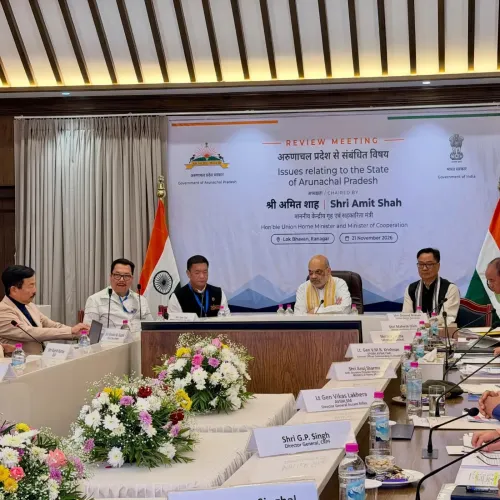
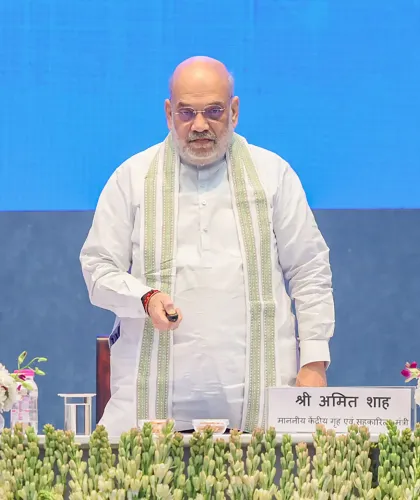
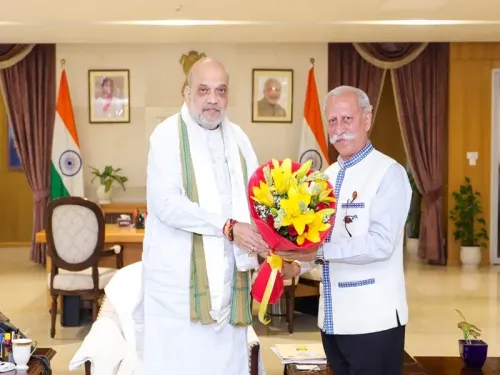
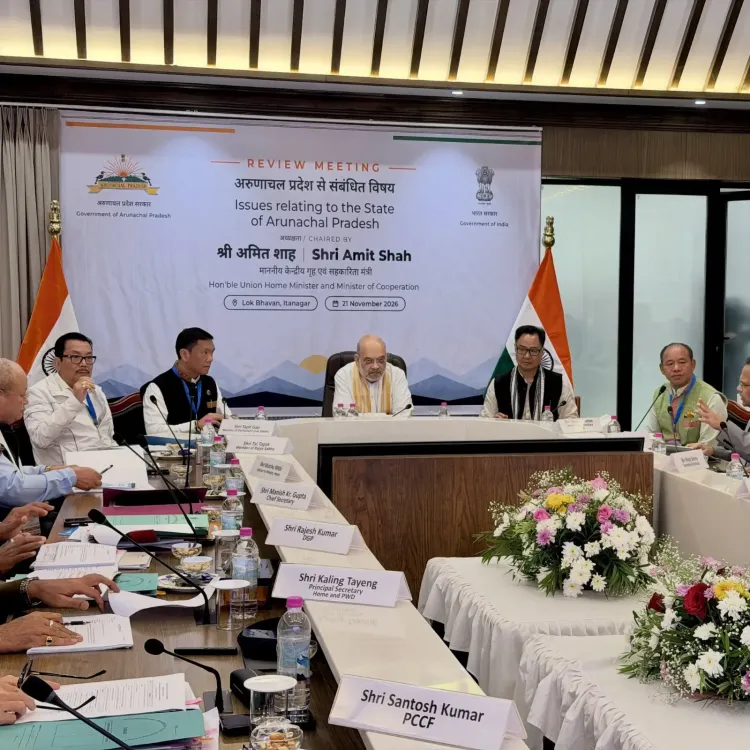
Union Home Minister Amit Shah on Saturday, 22 November 2026, chaired a high-level security review meeting in Itanagar, stressing the urgent need for better coordination between Central and state security agencies to maintain peace across Arunachal Pradesh — a state that shares a strategically sensitive 1,126-km-long international border with China. The meeting, held at Lok Bhavan, covered law and order, border management, internal security, and the state's development trajectory.
Border Security and Strategic Infrastructure
Taking stock of the frontier's strategic sensitivity, Shah directed officials to accelerate the expansion of road connectivity, border outposts, helipads, and telecommunication infrastructure in border areas. He also called for the effective implementation of the Vibrant Villages Programme, under which 1,099 of 2,414 projects worth ₹2,875.17 crore across 455 border villages have been completed so far. The programme is designed to enhance livelihood opportunities for communities living along the frontier, reducing vulnerabilities that adversaries could exploit.
Internal Security: Drugs, Cybercrime, and New Criminal Laws
The meeting covered a wide spectrum of internal security concerns, including drug trafficking, cybercrime, terrorism and insurgency, and the management of foreign nationals. Shah reviewed ongoing anti-narcotics campaigns — specifically 'Operation Dawn' and 'Mission Suraksha' — and reiterated the commitment to a drug-free India by 2029, a goal attributed to Prime Minister Narendra Modi. He called for the destruction of illicit crops, stringent action against trafficking networks, and strengthened de-addiction and rehabilitation facilities.
On cybercrime, discussions included the expansion of the '1930' helpline, bolstering cyber-forensic capabilities, and increasing the availability of trained specialists. Shah also emphasised the effective rollout of new criminal laws, directing that investigations be completed on time, scientific evidence collected systematically, and tools such as e-Sakshya and e-Summons be utilised to modernise the criminal justice process. Expeditious disposal of pending cases and improvements in investigation quality were flagged as priorities.
Development Review: GSDP Growth and Key Targets
In a separate development review meeting at Lok Bhawan, Chief Secretary Manish Kumar Gupta presented the state's progress. Key highlights: Arunachal Pradesh's Gross State Domestic Product (GSDP) has grown from ₹20,373 crore in 2015-16 to an estimated ₹50,651 crore in 2026-27. Road construction has increased six-fold, from 300 km per year to 1,800 km per year. The state has achieved full saturation under PMAY (Rural) and the Jal Jeevan Mission.
Notably, Arunachal Pradesh is now the largest producer of kiwi in the country and has been recognised as the 'Best Performer' in the DPIIT's States' Startup Ecosystem Ranking. Shah directed that road construction priority be given to low-density areas, that tourist arrivals be scaled from 9.18 lakh to 15 lakh, and that the state become self-reliant in eggs, meat, fish, and dairy products. He also called for 100% digitisation in villages, full vaccination of children, and institutional deliveries across the state.
Special Schemes and Requests from the State
Shah directed a differentiated approach under 'Mission Krishi Veer' and 'Mission Arun Himveer' — assessing the needs of security forces first and then enabling villages to meet those needs. Under the 'Gyan Bharatam Mission', he called for an intensive search for manuscripts and an engagement of knowledge-system experts. In addition to kiwi, orange, and large cardamom, he said two more horticultural crops should be identified for focused development.
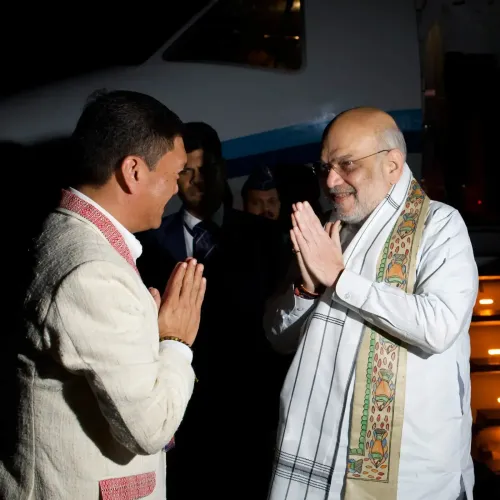
The state government placed several requests before the Centre, including additional helicopters, more commercial flights between Delhi and Arunachal Pradesh, early approval for a railway line from Pasighat to Parshuram Kund, niche tourism in the Subansiri Reservoir, and expansion of the dual-use Advanced Landing Ground in Mechukha. Chief Minister Pema Khandu thanked Shah and assured full implementation of the directives.
Who Attended
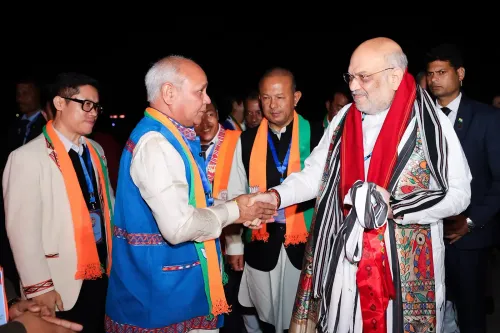
The meetings were attended by Union Minister of Parliamentary Affairs Kiren Rijiju, Deputy Chief Minister Chowna Mein, state Home Minister Mama Natung, Lok Sabha MP Tapir Gao, Rajya Sabha MP Tai Tagak, Union Home Secretary Govind Mohan, and senior officials from the Ministry of Home Affairs, Central Armed Police Forces, the Army, and the state government.
With China's assertive posture along the Line of Actual Control (LAC) and a history of border tensions in Arunachal Pradesh — a state Beijing has repeatedly claimed — the review underscores the Centre's intent to treat this frontier as a combined security and development challenge going forward.
Point of View
And any gap in border infrastructure or intelligence coordination carries real geopolitical cost. The meeting's breadth — spanning drug trafficking, cybercrime, criminal justice reform, and rural development — reflects how the Centre now frames frontier security: not as a purely military problem, but as a governance challenge where underdevelopment itself is a vulnerability. The GSDP doubling and six-fold rise in road construction are headline numbers, but the more revealing metric is the Vibrant Villages completion rate of 45% — substantial progress, yet still leaving over half the projects unfinished in areas that sit directly on the LAC. The pace of that last mile will matter far more than any single review meeting.
NationPress
22 Nov 2026
Frequently Asked Questions
Why did Amit Shah visit Arunachal Pradesh on 22 November 2026?
Home Minister Amit Shah visited Itanagar to chair high-level reviews of border security, law and order, internal security, and the state's overall development. The visit was driven by Arunachal Pradesh's strategic location along a 1,126-km international border with China and ongoing concerns about drug trafficking, cybercrime, and insurgency.
What is the Vibrant Villages Programme and what progress has been made?
The Vibrant Villages Programme is a Central government initiative to develop border villages and improve livelihood opportunities for communities living along India's frontiers. In Arunachal Pradesh, 1,099 of 2,414 projects worth ₹2,875.17 crore across 455 border villages have been completed as of the review.
What are Operation Dawn and Mission Suraksha?
Operation Dawn and Mission Suraksha are anti-drug campaigns being run in Arunachal Pradesh, targeting illicit cultivation and trafficking networks. Home Minister Shah reviewed their progress and directed continued destruction of illicit crops and stringent enforcement, in line with the government's drug-free India target by 2029.
How has Arunachal Pradesh's economy grown in recent years?
Arunachal Pradesh's Gross State Domestic Product has more than doubled, rising from ₹20,373 crore in 2015-16 to an estimated ₹50,651 crore in 2026-27. Road construction has scaled six-fold from 300 km to 1,800 km per year, and the state has achieved full saturation under PMAY (Rural) and the Jal Jeevan Mission.
What infrastructure requests did Arunachal Pradesh make to the Centre?
The state government sought additional helicopters, more commercial flights from Delhi to Arunachal Pradesh, early approval for a Pasighat–Parshuram Kund railway line, niche tourism development in the Subansiri Reservoir, and expansion of the dual-use Advanced Landing Ground in Mechukha. Home Minister Shah assured continuous Central support.