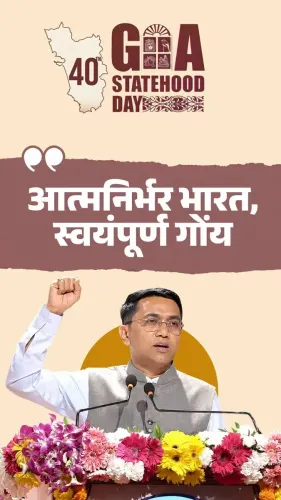
CM Sawant Links Swayampurna Goa to Modi's Atmanirbhar Vision
Synopsis
Goa Chief Minister Pramod Sawant has framed his state's Swayampurna Goa programme as a ground-level adaptation of PM Modi's Atmanirbhar Bharat initiative, targeting self-reliance in tourism, agriculture, and industry — continuing a broader pattern of state-level alignment with the national self-reliance framework since 2020.
Key Takeaways
CM Pramod Sawant described Swayampurna Goa as a direct state-level translation of PM Modi's Atmanirbhar Bharat vision.
Atmanirbhar Bharat was first announced by PM Modi in May 2020 as a national self-reliance and economic-resilience initiative.
Swayampurna Goa targets key Goan sectors including tourism, agriculture, and industry .
Goa's import-heavy, tourism-dependent economy makes genuine self-reliance a structural challenge beyond rebranding.
Indian states have broadly aligned local programmes with the Atmanirbhar Bharat framework since 2020, reflecting cooperative federalism in action.
Upcoming Goa budget allocations and legislative updates will indicate whether Swayampurna Goa has measurable targets and dedicated funding.
When a national vision meets a local blueprint, federalism gets its finest test — and Goa Chief Minister Pramod Sawant is making that case explicitly, declaring that his state's Swayampurna Goa programme is a direct translation of Prime Minister Narendra Modi's Atmanirbhar Bharat framework into Goa-specific self-reliance.
From New Delhi's Vision to Goa's Blueprint
Atmanirbhar Bharat — the national self-reliance initiative announced by Prime Minister Modi in May 2020 — was conceived as an economic reset, pushing India to cut import dependence and build domestic muscle across manufacturing, agriculture, and services. CM Sawant has taken that mandate and given it a Konkan address, branding the state-level effort as Swayampurna Goa — literally, 'self-sufficient Goa' — with a focus on sectors that define the coastal state's economy: tourism, agriculture, and industry.
Sawant's post, shared on Sunday, 22 November 2026, stated plainly: 'Inspired by Hon'ble Prime Minister Shri Narendra Modi Ji's vision of Atmanirbhar Bharat, we have translated it into Swayampurna Goa, striving for self-reliance across various sectors.' The language is deliberate — 'translated' signals active adaptation, not mere endorsement.
A Pattern Playing Out Across Indian States
Goa is far from alone. Since 2020, states across India — cutting across political lines — have mirrored the Atmanirbhar vocabulary in their own programmes, reshaping everything from local procurement policies to agriculture subsidies under the self-reliance banner. What makes the Goa case distinct is the state's economic profile: a small, tourism-dependent, import-heavy economy where genuine self-reliance in food, fisheries, and services demands structural shifts, not just rebranding.
This is cooperative federalism in action — Union policy sets the north star, and state governments chart the navigation. The model works best when states bring sector-specific depth to a broad national theme, and Swayampurna Goa is positioned as precisely that kind of ground-level adaptation.
What Goa's Self-Reliance Push Means in Practice
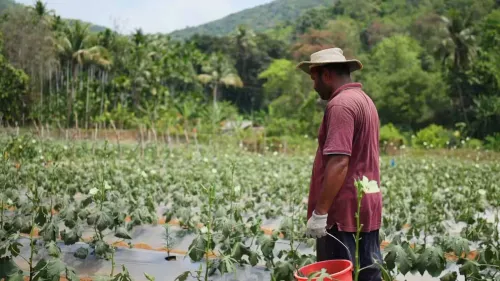
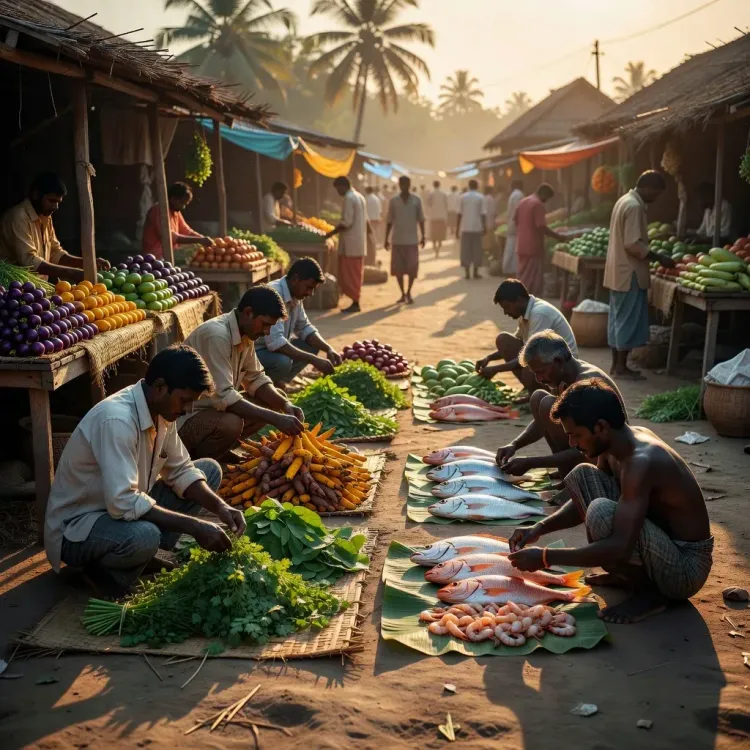
The sectors to watch are telling: tourism — Goa's economic engine — could see localisation drives pushing domestic supply chains and reducing dependence on imported goods for hotels and hospitality. Agriculture and fisheries, historically underleveraged in a state more famous for beaches than farms, stand as the structural test of how deep the self-reliance push goes. IT and industry add a diversification dimension that policymakers have been nudging for years.
Budget allocations and legislative updates in the upcoming Goa assembly sessions will be the real scorecard — whether Swayampurna Goa remains a governance narrative or crystallises into measurable targets and funded schemes.
India's smallest states have often proved that size is no barrier to policy ambition. For CM Sawant, making Goa a proof-of-concept for Atmanirbhar Bharat's smallest-state application may be the most consequential political and administrative bet of his tenure.
Point of View
This kind of rhetorical and policy synchronisation serves a dual purpose: it reinforces the Centre-state partnership narrative ahead of election cycles while applying pressure on the administration to deliver sector-specific outcomes. The real test is whether Goa's programme adds structural depth — particularly in agriculture and fisheries — to what could otherwise remain a rebranding exercise. As India's smallest state by area, Goa could either become a compelling proof-of-concept for the Atmanirbhar framework at scale or a cautionary tale about applying a large-economy blueprint to a niche, tourism-driven economy.
NationPress
22 Nov 2026
Frequently Asked Questions
What is Swayampurna Goa?
Swayampurna Goa is a state-level self-reliance programme launched by Goa Chief Minister Pramod Sawant, designed to adapt PM Modi's Atmanirbhar Bharat vision to Goa's specific sectors including tourism, agriculture, and industry.
What is Atmanirbhar Bharat and when was it launched?
Atmanirbhar Bharat is a national self-reliance initiative announced by Prime Minister Narendra Modi in May 2020, aimed at boosting India's economic independence by reducing import dependence and strengthening domestic production.
How is Goa implementing Atmanirbhar Bharat at the state level?
Goa is implementing it through the Swayampurna Goa programme, which targets self-sufficiency in key local sectors such as tourism, agriculture, fisheries, and industry, mirroring the Centre's self-reliance goals.
Which sectors does Swayampurna Goa focus on?
Swayampurna Goa focuses on tourism, agriculture, fisheries, and industry — sectors central to Goa's economy — as part of its drive toward self-reliance aligned with the national Atmanirbhar Bharat framework.
Is Goa the only state to adapt Atmanirbhar Bharat into a local programme?
No. Since 2020, multiple Indian states across political parties have aligned their development programmes with the Atmanirbhar Bharat framework, reflecting a broader pattern of cooperative federalism between state and central governments.