Arunachal Governor briefs HM Amit Shah on border security, drug menace
Synopsis
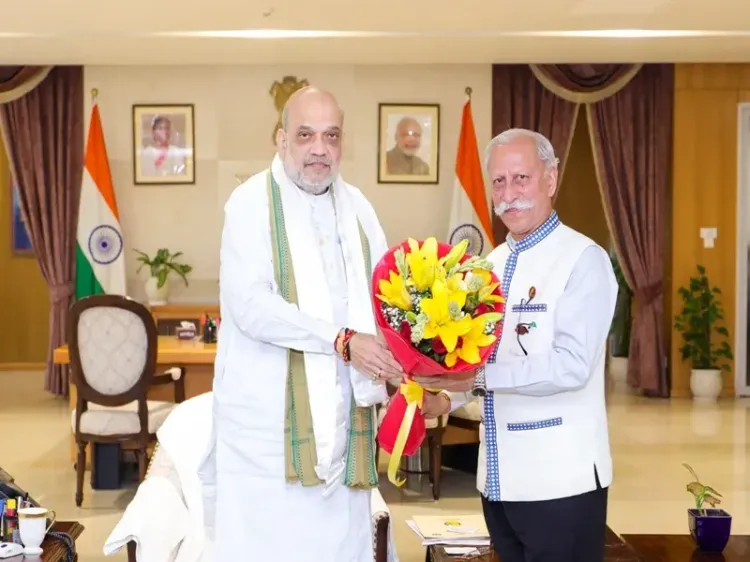
Arunachal Pradesh's Governor didn't just make a courtesy call — he laid out a multi-front security and development brief to the Home Minister, flagging the TCL region's strategic vulnerability, a cross-border drug pipeline targeting the state's youth, and the untapped potential of geospatial tools and cooperatives to transform governance in India's northeastern frontier.
Key Takeaways
Governor Lt Gen K.T.
Parnaik (Retd.) met Home Minister Amit Shah in New Delhi on 17 June for wide-ranging security and development discussions.
The strategically sensitive Tirap, Changlang, and Longding (TCL) region was highlighted as a key border security concern, with border fencing and enhanced surveillance underway.
The Governor flagged a growing drug trafficking crisis fuelled by narcotics entering from across international borders and transiting through neighbouring states.
Substance abuse was described as adversely affecting the youth and posing a long-term threat to social harmony and development in Arunachal Pradesh.
Geospatial technologies were proposed as dual-use tools for both security monitoring and governance improvement.
Strengthening cooperative societies to drive rural prosperity, particularly for farmers, women, and SHGs in remote regions, was also on the agenda.
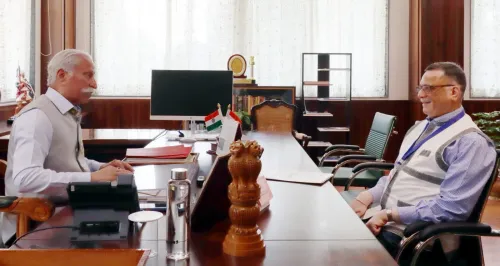
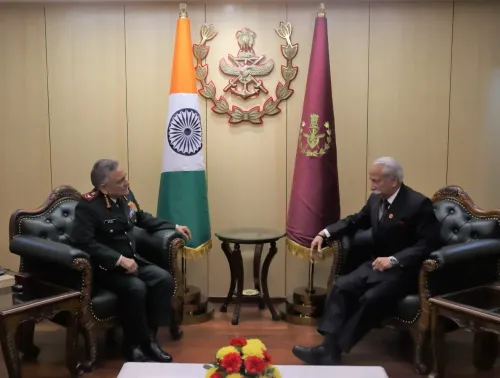
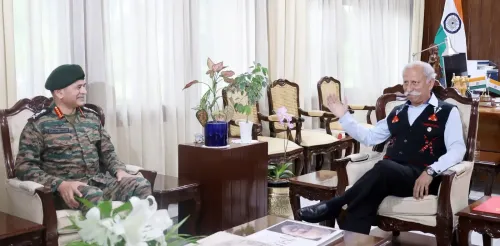
Arunachal Pradesh Governor Lt Gen K.T. Parnaik (Retd.) met Union Home Minister Amit Shah in New Delhi on 17 June for wide-ranging discussions covering law and order, internal security, border management, drug trafficking, geospatial technologies, and the cooperative movement in the northeastern state, officials said.
Border Security and the TCL Region
Governor Parnaik briefed Shah on the security situation along Arunachal Pradesh's sensitive frontier, with particular emphasis on the strategically critical Tirap, Changlang, and Longding (TCL) region. He outlined ongoing efforts to reinforce security infrastructure in these border areas, including the installation of border fencing and the enhancement of surveillance mechanisms to ensure tighter vigilance.
The Governor shared his assessment of prevailing law and order conditions and apprised the Home Minister of recent developments in border management — a domain that carries heightened strategic weight given the state's proximity to international boundaries.
Drug Trafficking: A Growing Threat to Youth
A significant portion of the meeting focused on the escalating drug menace in Arunachal Pradesh. Governor Parnaik drew Shah's attention to the surge in narcotics trafficking, noting that drugs originate from across international borders and transit through neighbouring states before entering the northeastern state.
He underscored the serious social and developmental consequences of substance abuse, warning that it is adversely affecting the youth, disrupting social harmony, and posing a long-term challenge to the state's development. The Governor stressed the need for sustained, coordinated, multi-agency action involving all stakeholders to effectively counter drug trafficking and prevent substance abuse.
Geospatial Technologies for Governance and Security
Governor Parnaik also highlighted the urgent need to equip Arunachal Pradesh's youth with skills in geospatial applications and emerging technologies. He argued that greater adoption of geospatial tools would improve governance and administrative efficiency while creating opportunities in land surveying, analysis, and monitoring.
According to the Governor, geospatial technologies can play a crucial role in tracking narcotics circulation, facilitating disaster management, monitoring infrastructure projects, and improving planning and implementation across sectors — making them a dual-use asset for both security and development.
Strengthening the Cooperative Movement
On the cooperative front, the Governor apprised the Home Minister of various state and agency-level initiatives to strengthen the cooperative movement in Arunachal Pradesh. He highlighted the potential of cooperative societies as instruments of inclusive growth, livelihood generation, and rural prosperity, particularly in remote and underserved regions.
Governor Parnaik stressed that a vibrant cooperative ecosystem can empower farmers, women, Self-Help Groups (SHGs), and rural entrepreneurs, enhance household incomes, generate employment, and foster self-reliant village economies. The meeting also explored ways to strengthen institutional support mechanisms for cooperatives to drive sustainable socio-economic development in the frontier state.
What Comes Next
No formal joint statement was issued following the meeting, but the discussions signal continued Centre-state coordination on security and development priorities in Arunachal Pradesh. With the TCL region remaining a persistent security concern and drug trafficking intensifying, sustained follow-through on multi-agency coordination will be closely watched.
Point of View
Transnational crime, and developmental deficit. The TCL region has been a persistent flashpoint, and the drug trafficking pipeline the Governor described is not new; what is notable is the explicit acknowledgement that narcotics are transiting through neighbouring states, raising questions about inter-state coordination that go beyond any single governor's brief. The push for geospatial skilling is sensible, but without budgetary commitment and institutional follow-through, it risks remaining aspirational. The real test is whether this high-level discussion translates into measurable outcomes on the ground — particularly on drug interdiction, where multi-agency coordination has historically been the weakest link.
NationPress
21 Sept 2026
Frequently Asked Questions
What did Arunachal Pradesh Governor K.T. Parnaik discuss with Home Minister Amit Shah?
Governor Lt Gen K.T. Parnaik (Retd.) met Home Minister Amit Shah in New Delhi on 17 June to discuss law and order, border security, drug trafficking, geospatial technologies, and cooperative development in Arunachal Pradesh. The meeting covered both security challenges and long-term developmental priorities for the northeastern state.
Why is the Tirap, Changlang, and Longding region significant?
The Tirap, Changlang, and Longding (TCL) region is a strategically sensitive border area in Arunachal Pradesh that the Governor flagged as a key security concern. Efforts to strengthen security infrastructure there include border fencing and enhanced surveillance mechanisms.
How serious is the drug trafficking problem in Arunachal Pradesh?
According to Governor Parnaik, narcotics originating from across international borders transit through neighbouring states before entering Arunachal Pradesh, fuelling a growing drug menace. He warned that substance abuse is adversely affecting the state's youth, disrupting social harmony, and posing a long-term developmental challenge.
What role can geospatial technology play in Arunachal Pradesh?
Governor Parnaik argued that geospatial tools can serve as dual-use assets — tracking narcotics circulation, aiding disaster management, monitoring infrastructure projects, and improving governance efficiency. He also stressed the need to skill the state's youth in geospatial applications to create employment opportunities.
How can cooperatives help Arunachal Pradesh's rural economy?
The Governor highlighted cooperative societies as instruments of inclusive growth that can empower farmers, women, Self-Help Groups, and rural entrepreneurs — particularly in remote and underserved regions. He said a well-functioning cooperative ecosystem can enhance household incomes, generate employment, and foster self-reliant village economies.