Amit Shah visits Mansa family of slain anti-drug activist Jhota
Synopsis
Union Home Minister Amit Shah visited Mansa, Punjab to console the family of slain anti-drug activist Parvinder Singh Jhota, blaming the Bhagwant Mann-led AAP government for the state's rampant chitta trade and deteriorating law and order, and vowing the harshest action against drug traffickers.
Key Takeaways
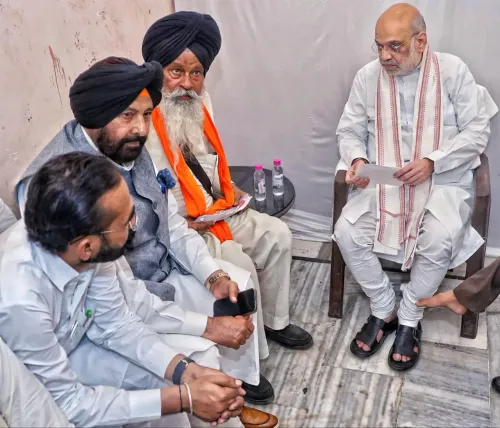
Amit Shah travelled to Mansa, Punjab on October 20, 2026 to meet the family of murdered anti-drug activist Parvinder Singh Jhota .
Shah directly blamed the Bhagwant Mann (AAP) government for the peak of Punjab's chitta drug trade and the collapse of law and order.
Jhota was killed for publicly opposing the local heroin (chitta) trade in Mansa district.
Shah pledged the 'harshest possible action' against drug traffickers, describing them as nasha ke saudagar (merchants of addiction).
The Narcotic Drugs and Psychotropic Substances Act, 1985 provides the central legal framework; the Narcotics Control Bureau may escalate its presence in Punjab.
The murder and Shah's visit intensify the ongoing BJP-AAP political confrontation over Punjab's drug crisis since the 2022 state elections .
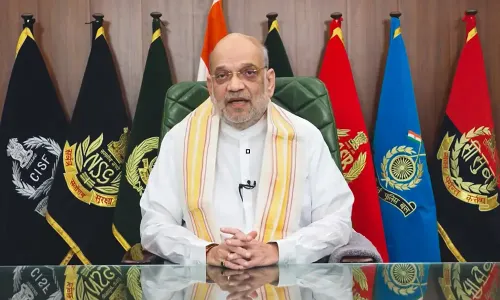
An anti-drug activist is dead, and Union Home Minister Amit Shah travelled to Mansa, Punjab on Tuesday, October 20, 2026 to sit with the family of Parvinder Singh Jhota — a man who stood fearlessly against the chitta (heroin) trade and paid for it with his life. The murder, Shah declared in a bilingual Hindi-Punjabi post on X, has 'completely exposed' both the drug network and the crumbling law-and-order situation under the Bhagwant Mann-led Aam Aadmi Party government in Punjab.
A family in mourning, a minister at their door
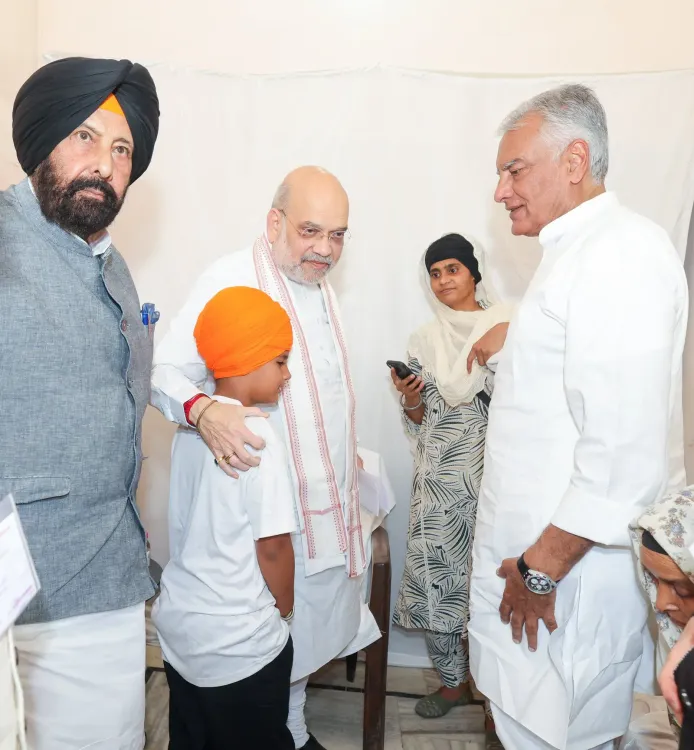
Shah visited the Jhota family's residence in Mansa — the district where Parvinder Singh Jhota had lived and waged his campaign against local drug peddlers — and offered what he described as sambal (strength and solace) in a moment of profound grief. 'His struggle to save Punjab's young generation from drugs will always be remembered,' Shah wrote, honouring Jhota's legacy directly to the family before taking the message public.
The visit carries unmistakable political weight: a Union minister arriving in an opposition-governed state to console the kin of a murder victim and simultaneously indicting the state government's record on narcotics and policing.
Chitta's grip on Punjab — and the political battle around it
Chitta, a white heroin-derived powder, has devastated Punjab's youth for over a decade, feeding off the state's long, porous border with Pakistan through which narcotics flow alongside weapons. The Narcotic Drugs and Psychotropic Substances Act, 1985 provides the central legal architecture for enforcement, but ground-level policing remains a state responsibility — and it is precisely that responsibility that Shah is questioning.
Since the AAP government took power in March 2022, the BJP and Centre have repeatedly charged that drug trafficking has intensified under the Mann administration. The murder of a civilian activist who dared to challenge that trade publicly is, for Shah, the starkest possible proof. 'The drug trade in Punjab has reached its peak under the Bhagwant Mann government,' he stated flatly, framing the killing not as an isolated crime but as a systemic failure.
Shah's warning: 'No stone will be left unturned'
The Home Minister did not stop at condolence. He issued a direct warning to drug traffickers — calling them nasha ke saudagar (merchants of addiction) — and promised that 'the harshest possible action will be taken' against them. Crucially, he also pledged that no effort would be spared to free Punjab from the 'curse of chitta.'
Those words point toward a likely escalation of central enforcement presence in the state. The Narcotics Control Bureau (NCB), which operates under the Home Ministry, is the instrument most readily available for such coordination — and its deployment in a BJP-versus-AAP flashpoint state would carry both operational and political significance.
Parvinder Singh Jhota did not carry a badge or a title. He carried the resolve of a citizen who refused to look away — and that, Shah insists, is exactly the kind of courage that Punjab's drug crisis demands. The state government will now face pointed questions about whether his killers are found, and how fast.
Point of View
Shah is also signalling that the Home Ministry could deploy the NCB more aggressively in Punjab, which would simultaneously pressure Bhagwant Mann and allow the BJP to claim ownership of whatever enforcement gains follow. The murder of a civilian anti-drug activist is precisely the kind of symbol that sustains long-term political campaigns: it gives a name and a face to an otherwise statistical crisis. For the AAP government, the political cost of an unresolved case — and an unanswered Home Minister — rises with every day that passes.
NationPress
20 Oct 2026
Frequently Asked Questions
Who was Parvinder Singh Jhota?
Parvinder Singh Jhota was a Punjab-based activist from Mansa district who publicly opposed the local chitta (heroin) drug trade and was subsequently murdered.
Why did Amit Shah visit Mansa?
Union Home Minister Amit Shah visited Mansa on October 20, 2026 to meet the family of slain anti-drug activist Parvinder Singh Jhota, offer condolences, and publicly blame the AAP-led Punjab government for the deteriorating drug situation and law and order.
What is chitta and why is it a problem in Punjab?
Chitta is a white heroin-derived narcotic powder that has ravaged Punjab's youth for over a decade, largely entering through the state's border with Pakistan. It has become a major social and political flashpoint in the state.
What action did Amit Shah promise against drug traffickers in Punjab?
Shah promised 'the harshest possible action' against drug traffickers and vowed that no effort would be spared to free Punjab from the curse of chitta, suggesting potential escalation of central agency involvement.
What is the BJP's position on Punjab's drug problem under the AAP government?
The BJP, including Home Minister Amit Shah, has consistently charged that the chitta drug trade has reached its peak under Chief Minister Bhagwant Mann's AAP government since 2022, citing deteriorating law and order as evidence.