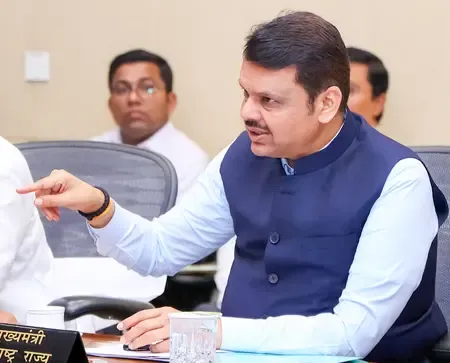
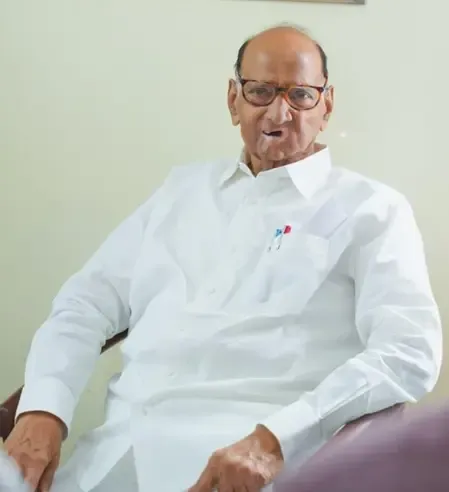
Sharad Pawar urges Fadnavis to declare drought in Maharashtra, demands ₹50,000/hectare aid
Synopsis
With 83 talukas across Maharashtra dry for over 20 days and standing crops withering, Sharad Pawar has publicly demanded an immediate drought declaration and ₹50,000-per-hectare relief — directly challenging CM Fadnavis, who days earlier pledged to make Marathwada drought-free but is now citing NDRF procedural rules to delay formal action until after October 5.
Key Takeaways
NCP-SP chief Sharad Pawar wrote to CM Devendra Fadnavis on 18 September 2026 demanding immediate drought declaration in Maharashtra.
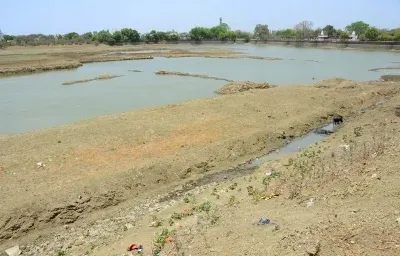
83 talukas across 19 districts have recorded no rainfall for over 20 consecutive days , per state cabinet data.
Pawar demanded a minimum of ₹50,000 per hectare for affected farmers and ₹25,000 for landless farm-labour households.
He also called for an immediate farm loan waiver, retroactive Re 1 crop insurance , and release of ₹17,000 per hectare in pending compensation.
The government says a formal drought declaration cannot be made before 5 October 2026 under NDRF guidelines; premature surveys would disqualify farmers from central aid.
CM Fadnavis has not yet issued an official response to Pawar's nine-point demands.
Nationalist Congress Party-SP (NCP-SP) chief Sharad Pawar has written to Maharashtra Chief Minister Devendra Fadnavis, demanding an immediate drought declaration and a comprehensive nine-point relief package for farmers reeling from deficient monsoon rains across the state. Pawar uploaded the letter on X (formerly Twitter) on Friday, 18 September 2026, flagging a deepening agrarian crisis in Marathwada and other parts of Maharashtra.
Scale of the Crisis
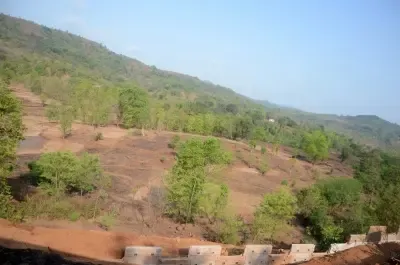
According to state cabinet discussions held earlier this week, 83 talukas across 19 districts have recorded no rainfall for over 20 consecutive days. Pawar warned that standing crops — including soybean, cotton, pearl millet (bajra), maize, pigeon pea (tur), green gram (moong), and black gram (urad) — have withered, compounded by rising pest infestations.
'Due to the failure of rains across most parts of the state this year, the farming community is facing a massive crisis... the situation regarding agriculture, drinking water, and fodder supply is set to worsen,' Pawar said in his post on X.
Key Demands in Pawar's Letter
The former Union Minister has put forward an extensive set of relief measures. He has sought immediate drought declaration, bypassing standard procedural timelines, along with identification of the worst-hit talukas as drought-affected. On financial relief, he demanded a minimum of ₹50,000 per hectare for affected farmers and a special assistance package of ₹25,000 for landless farm-labour households.
Pawar also called for an immediate farm loan waiver and extension of waiver benefits to crop loans from 2025–26 that have defaulted due to current conditions. He urged that the incentive subsidy for farmers who repay loans on time be raised from ₹50,000 to ₹1 lakh. Additionally, he demanded the retroactive implementation of the Re 1 crop insurance scheme and immediate release of previously announced crop insurance compensation of ₹17,000 per hectare for unseasonal rain damage last year.
His letter also called for dedicated MGNREGS (rural employment guarantee scheme) initiatives for water conservation works, deployment of water tankers to protect fruit orchards, rapid surveys in water-scarce villages, the establishment of fodder camps for livestock, and a special campaign by the Energy Department to repair faulty power transformers to address load-shedding. He further urged the formation of state-level and district-level control rooms to monitor rainfall, crop conditions, water scarcity, fodder availability, and livestock health on a daily basis, alongside a complete educational fee waiver — not merely an examination fee exemption — for students in drought-affected talukas.
The Government's Position
Chief Minister Fadnavis has not yet issued an official response to Pawar's demands. Following the state cabinet's review of the monsoon situation on Tuesday, Fadnavis and several ministers acknowledged the gravity of the crisis, but no immediate relief package was announced. The government instead put administrative machinery on high alert.
Officials clarified that a formal drought declaration cannot be made before October 5. Under National Disaster Response Fund (NDRF) guidelines and Central Drought Management norms, official crop-damage surveys — known as Panchnamas — and ground verification must be completed after that date to qualify for central financial relief. Premature surveys, according to the Agriculture Department, would disqualify affected farmers from central aid and risk inaccurate damage assessments. The government is reportedly preparing a comprehensive list of relief measures ahead of that window.
Political and Historical Context
Pawar's letter arrives shortly after Fadnavis publicly pledged to make Marathwada drought-free on the occasion of Marathwada Liberation Day. Critics argue the government's insistence on procedural timelines, while legally sound, does little to address the immediate humanitarian distress of farmers and landless agricultural labourers. This comes amid a broader pattern of Maharashtra's rain-shadow districts — particularly in Marathwada and Vidarbha — facing repeated drought cycles that erode rural livelihoods year after year.
Pawar, a long-standing voice on agricultural policy, has consistently pushed successive Maharashtra governments on farmer welfare. His NCP-SP faction, currently in opposition, is using the crisis to press the ruling Mahayuti alliance on accountability.
What Happens Next
The critical date is 5 October 2026, after which official Panchnama surveys can legally proceed. The pace and scope of that survey exercise will determine which farmers qualify for central relief and in what amounts. Industry observers and farm unions are expected to mount further pressure if the government's preparatory relief measures remain vague in the interim.
Point of View
It exposes the gap between symbolic commitments and on-ground policy action. The government's procedural defence — that NDRF rules prevent a drought declaration before October 5 — is legally accurate but politically costly when farmers are watching crops fail in real time. Maharashtra's recurring drought cycle in Marathwada and Vidarbha is a structural failure, not a seasonal surprise; the state has navigated this calendar constraint before and could activate advance relief measures without triggering disqualification. The real question is whether the Mahayuti government will use the October window to deliver credible surveys and rapid disbursements, or whether this becomes another cycle of well-documented distress followed by delayed, diluted relief.
NationPress
18 Sept 2026
Frequently Asked Questions
What has Sharad Pawar demanded from CM Fadnavis on the Maharashtra drought?
Pawar has demanded an immediate drought declaration, financial aid of at least ₹50,000 per hectare for affected farmers, ₹25,000 for landless farm-labour households, an immediate farm loan waiver, and several other measures including MGNREGS water conservation works, fodder camps, and a complete educational fee waiver in drought-hit talukas. He outlined nine key demands in a letter uploaded on X on 18 September 2026.
Why can't Maharashtra formally declare a drought right now?
Under National Disaster Response Fund (NDRF) guidelines and Central Drought Management norms, official crop-damage surveys (Panchnamas) can only be conducted after October 5. Surveys conducted before that date would disqualify affected farmers from central government relief and risk producing inaccurate damage estimates, according to the state Agriculture Department.
How severe is the drought situation in Maharashtra?
According to data presented to the state cabinet, 83 talukas across 19 districts have gone without rainfall for more than 20 consecutive days. Standing crops including soybean, cotton, maize, pigeon pea, and pulses have withered, and pest infestations have added to the damage. Drinking water shortages and fodder scarcity for livestock are also emerging concerns.
What has CM Fadnavis done so far in response to the agrarian crisis?
Fadnavis chaired a state cabinet review of the monsoon situation and expressed concern, but no immediate relief package has been announced. He directed state administrative machinery to remain on high alert. He has not yet issued a formal response to Pawar's nine-point letter.
What relief measures is Pawar specifically seeking for landless farm labourers?
Pawar has demanded a special assistance package of ₹25,000 for each landless farm-labour household affected by the crisis, in addition to broader measures like MGNREGS employment initiatives for water conservation works in affected talukas and a complete educational fee waiver for students in drought-hit areas.