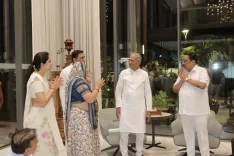
Shekhawat attends Sangeet Natak Akademi awards with President Murmu
Synopsis
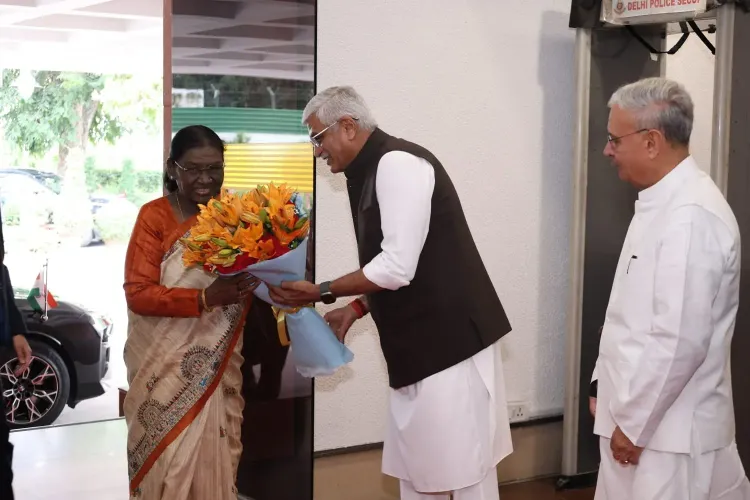
Union Culture Minister Gajendra Singh Shekhawat joined President Draupadi Murmu at the Sangeet Natak Akademi Fellowship and Awards Ceremony on 13 August 2026, where 7 Fellows and 108 artists across 2024 and 2025 were honoured for their lifelong contributions to India's performing arts.
Key Takeaways
115 artists recognised in a single ceremony covering two award cycles — 7 Fellowships and 108 awards for 2024 and 2025.
President Draupadi Murmu , India's first tribal woman president, presided over the event, lending it constitutional weight.
Union Culture and Tourism Minister Gajendra Singh Shekhawat attended and publicly congratulated all awardees.
The Sangeet Natak Akademi , founded in 1952 , is India's apex body for music, dance, and drama under the Ministry of Culture.
The Fellowship ( Sangeet Natak Akademi Ratna ) is the institution's highest honour, recognising extraordinary lifelong contribution to performing arts.
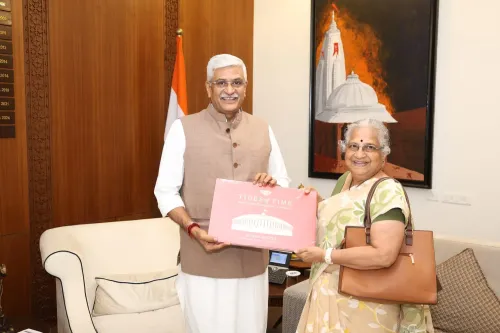
In the dignified presence of President Draupadi Murmu, India's performing arts community gathered on 13 August 2026 for one of the country's most storied cultural honours — the Sangeet Natak Akademi Fellowship and Awards Ceremony. Union Culture and Tourism Minister Gajendra Singh Shekhawat attended the event and extended warm congratulations to the 7 Fellows and 108 distinguished artists recognised for the years 2024 and 2025.
Seven Fellowships, 108 awards — a combined tribute to two years of artistry
Posting in Hindi after the ceremony, Minister Shekhawat described the occasion as a 'suavasara' — a rare and auspicious opportunity — to be part of the felicitation. 'Heartfelt congratulations to the 7 Fellows and 108 distinguished artists honoured for 2024 and 2025,' he wrote, adding: 'We salute their years of sadhana (dedicated practice), devotion, and contribution to India's artistic traditions.'
The combined ceremony covering two award cycles in a single sitting is notable. Together, the two cohorts represent one of the larger single-event recognitions the Sangeet Natak Akademi has hosted in recent memory — 115 artists honoured at once, spanning classical, folk, and tribal performing arts.
India's oldest performing-arts institution and what the Fellowship means
Founded in 1952, the Sangeet Natak Akademi is India's apex national body for music, dance, and drama, functioning under the Ministry of Culture. Its Fellowship — formally the Sangeet Natak Akademi Ratna — is the institution's highest honour, reserved for artists of extraordinary, lifelong distinction. The annual awards recognise excellence across a broader range of practitioners and genres, from Hindustani and Carnatic classical traditions to regional folk and tribal performance forms.
The Akademi has been conferring these recognitions since the 1950s, making it one of the oldest continuous state-supported arts-honour frameworks in independent India. President Draupadi Murmu — the first woman from a tribal community to hold the office of President — presiding over a ceremony that explicitly includes tribal performing arts carries its own quiet resonance.
Culture Ministry's institutional calendar and what follows
The ceremony fits within a broader institutional rhythm: the Ministry of Culture runs a network of autonomous academies — including the Sahitya Akademi (literature) and Lalit Kala Akademi (visual arts) — each holding periodic award cycles to document and honour India's intangible cultural heritage. Parallel ceremonies by sister academies are expected in the months ahead.
For Minister Shekhawat, the event is also a signal of the Culture portfolio's visibility: placing the President at the centre of an arts-honours ceremony elevates the occasion well beyond routine bureaucratic recognition and anchors it firmly in the national calendar.
One hundred and fifteen artists, decades of craft, and a single evening in the President's presence. That is the kind of institutional moment the Akademi was built — seventy-three years ago — to create.
Point of View
Held in the President's presence, reflects the Culture Ministry's deliberate strategy of anchoring arts recognition in high constitutional visibility — a pattern that has intensified under Minister Shekhawat's tenure. Combining two award cycles into one event, honouring 115 artists simultaneously, signals an effort to consolidate institutional momentum rather than let the recognition trickle out quietly. With President Murmu — herself a symbol of tribal heritage — presiding over an event that spans classical and tribal art forms, the government projects cultural pluralism as a core national value. Parallel ceremonies expected from the Sahitya and Lalit Kala Akademis suggest the broader cultural-honours calendar is being actively managed for public impact.
NationPress
27 Sept 2026
Frequently Asked Questions
What is the Sangeet Natak Akademi Fellowship?
The Sangeet Natak Akademi Fellowship, formally called the Sangeet Natak Akademi Ratna , is the highest honour given by India's national academy for music, dance, and drama, awarded to artists of extraordinary lifelong distinction in the performing arts.
How many artists were honoured at the Sangeet Natak Akademi 2024-2025 ceremony?
A total of 115 artists were recognised — 7 Fellows and 108 award recipients — covering both the 2024 and 2025 cycles in a single combined ceremony.
Who attended the Sangeet Natak Akademi awards ceremony in August 2026?
President Draupadi Murmu presided over the ceremony, and Union Culture and Tourism Minister Gajendra Singh Shekhawat attended and congratulated the awardees.
What is the Sangeet Natak Akademi and when was it founded?
The Sangeet Natak Akademi is India's apex national body for music, dance, and drama, established in 1952 under the Ministry of Culture to preserve and promote the country's performing arts traditions.
What is Gajendra Singh Shekhawat's role in the Indian government?
Gajendra Singh Shekhawat is the Union Minister of Culture and Tourism , a senior BJP leader and Lok Sabha MP from Jodhpur, Rajasthan .