Shekhawat Calls Out 'Enemies of Bharat Mata' in Sharp Post
Synopsis
Union Culture and Tourism Minister Gajendra Singh Shekhawat on 20 October 2026 declared that forces damaging national honour, people dividing society, and a mindset hostile to Indian culture are 'enemies of the nation' — a sharp cultural-nationalist statement consistent with the BJP's broader civilisational messaging.
Key Takeaways
Union Culture and Tourism Minister Gajendra Singh Shekhawat posted a pointed cultural-nationalist message on 20 October 2026 .
He named three categories as 'enemies of the nation': forces that damage national honour, people who divide society, and those who hate Indian culture.
The post called on citizens to 'identify and defeat' these enemies of Bharat Mata (Mother India).
The statement is consistent with the BJP 's long-running emphasis on cultural nationalism and civilisational continuity.
As Union Minister of Culture , Shekhawat's framing carries institutional weight beyond ordinary party rhetoric.
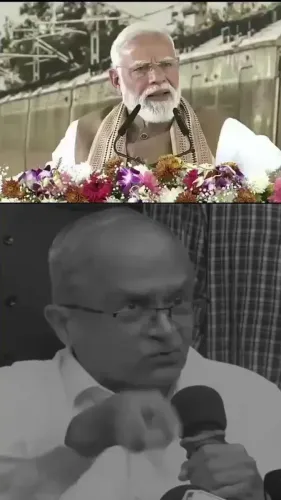
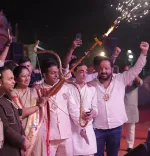
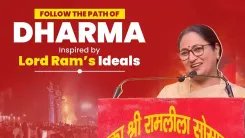
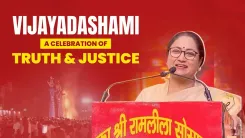
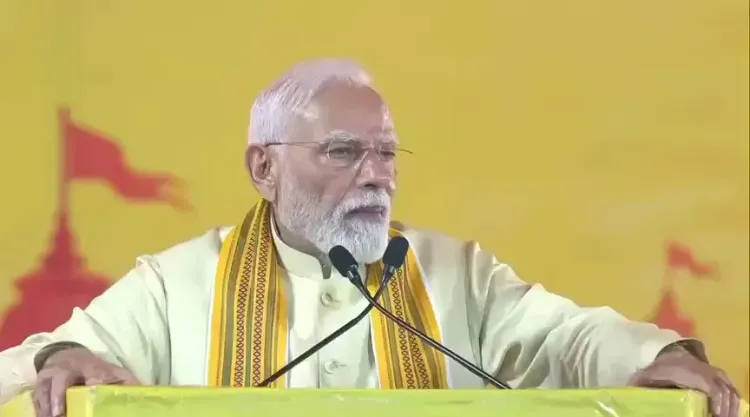
The post included a video, suggesting it may be linked to a broader address or political campaign communication.
A pointed warning about forces that wound national pride, divide society, and harbour hatred for Indian culture — that is how Union Culture and Tourism Minister Gajendra Singh Shekhawat framed his message on Tuesday, 20 October 2026, in a post that cuts straight to the cultural-nationalist register his party has long championed.
In his own words, translated from Hindi: 'हमें माँ भारती के शत्रुओं को पहचानना होगा, उन्हें परास्त करना होगा।' ('We must identify the enemies of Mother India and defeat them.') He went on to name three distinct categories as threats: forces that damage the country's honour and dignity, people who fragment society, and a mindset that actively despises Indian culture. 'These are the enemies of the nation,' he concluded.
Three 'Enemies' Shekhawat Names — and Why That Framing Matters
The post is not a policy announcement — it is a mobilising statement, and the architecture is deliberate. By listing three separate threats rather than pointing to a single adversary, Shekhawat broadens the frame: the cultural enemy is not just an external actor but also an internal divisive tendency and what he describes as cultural self-hatred. That three-part construction has appeared consistently in BJP messaging around cultural nationalism, where the party draws a sharp line between forces of unity and those of fragmentation.
As Union Minister of Culture, Shekhawat sits at the intersection of heritage policy and civilisational identity — a portfolio that carries real institutional weight, from Archaeological Survey of India oversight to tourism promotion. Statements like this one arrive, then, not merely as a politician's opinion but as a signal of where the ministry's philosophical compass is pointed.
BJP's Cultural-Nationalist Arc and What This Post Fits Into
This kind of rhetoric sits squarely within a longer pattern. Since at least 2014, senior BJP leaders have returned repeatedly to the theme of protecting and asserting Indian cultural heritage against what they characterise as external and internal erosion. The Culture Ministry under successive ministers has pursued that agenda through events, heritage site upgrades, and messaging that links governance to civilisational continuity.
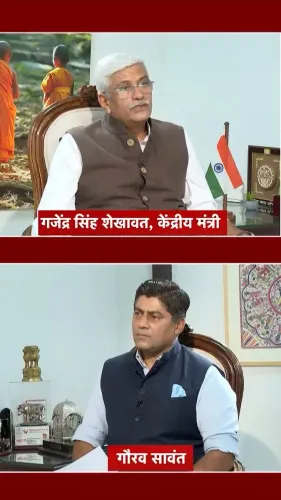
Shekhawat, a Lok Sabha MP from Jodhpur, Rajasthan, has been a consistent voice on these themes. His post includes a video — the contents of which are not described in available information — suggesting the statement may be tied to a larger address or campaign communication rather than a spontaneous observation.
Opposition parties have historically pushed back on this framing, arguing that labelling critics of government policy as 'enemies of the nation' chills legitimate dissent. Whether this particular post draws a formal response in Parliament or from party spokespersons will be worth watching.
A minister of culture declaring war on 'cultural self-hatred' is itself a kind of policy signal — and the question it leaves hanging is: what does 'defeating' those enemies look like in practice?
Point of View
Social cohesion, and cultural pride — maps almost precisely onto the BJP's ideological architecture since 2014, where governance and civilisational identity are presented as inseparable. Issuing this message as Culture Minister, rather than merely as a party leader, subtly elevates it: it implies the ministry itself is a frontline institution in this contest. The post is unlikely to shift any policy needle on its own, but it signals that the Culture portfolio will continue to operate with an assertive civilisational mandate heading into the political calendar. Opposition parties face the familiar dilemma of whether to engage on the terms Shekhawat has set — or risk ceding the cultural terrain entirely.
NationPress
20 Oct 2026
Frequently Asked Questions
What did Gajendra Singh Shekhawat say in his October 2026 post?
Shekhawat declared that forces damaging national honour, people who divide society, and those who hate Indian culture are 'enemies of the nation,' and urged citizens to identify and defeat them.
Who is Gajendra Singh Shekhawat?
Gajendra Singh Shekhawat is the Union Minister of Culture and Tourism, a senior BJP leader, and the Lok Sabha MP representing Jodhpur, Rajasthan.
What is cultural nationalism in the context of BJP politics?
Cultural nationalism in BJP discourse refers to the emphasis on protecting and asserting India's civilisational heritage, presenting it as the binding identity of the nation against forces seen as divisive or culturally hostile.
Why is this statement significant coming from the Culture Minister?
Because the Culture Ministry oversees heritage policy, the Archaeological Survey of India, and tourism promotion, a minister's philosophical framing shapes the institutional direction of those functions — not just party politics.
Has the opposition responded to Shekhawat's post?
No formal opposition response to this specific post has been reported yet; responses from rival parties and any parliamentary follow-up remain to be watched.