Shekhawat hails Prasannachand Mehta as new Jodhpur Mayor
Synopsis
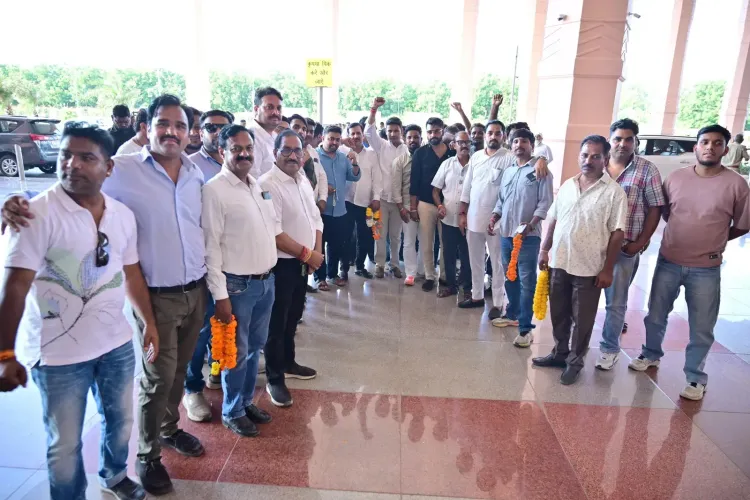
Union Minister Gajendra Singh Shekhawat travelled from Hyderabad to Jodhpur to celebrate Prasannachand Mehta's election as Mayor, crediting BJP workers and the public for the win in a post on 25 September 2026.
Key Takeaways
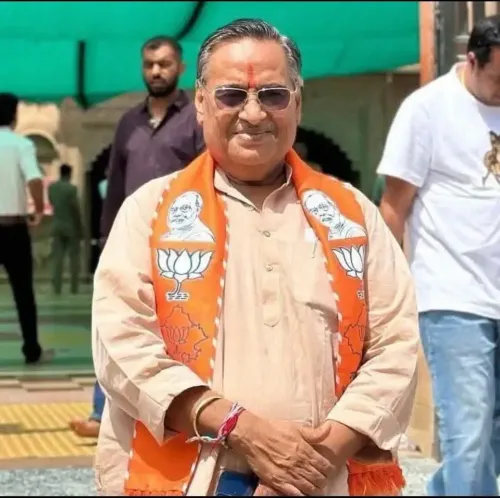
Prasannachand Mehta has been elected as the new Mayor of Jodhpur , Rajasthan.
Union Minister Gajendra Singh Shekhawat flew from Hyderabad to Jodhpur on 25 September 2026 to meet party workers after the result.
Shekhawat attributed the win to public blessings and the 'relentless hard work' of grassroots BJP cadre.
The minister referred to the public as 'maalik' — the true masters — in his post.
Jodhpur is Shekhawat's Lok Sabha constituency and a key BJP stronghold in western Rajasthan.
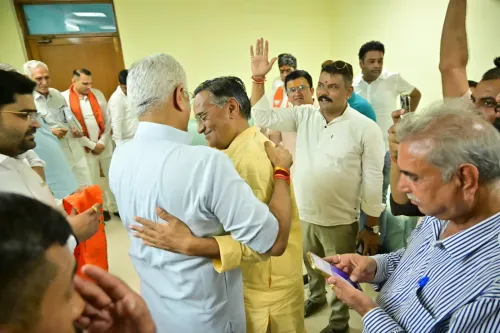
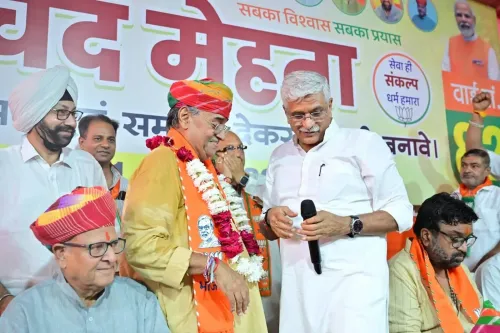
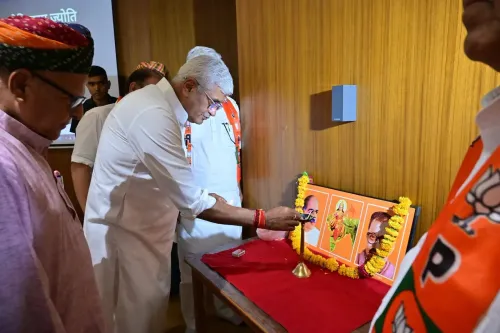
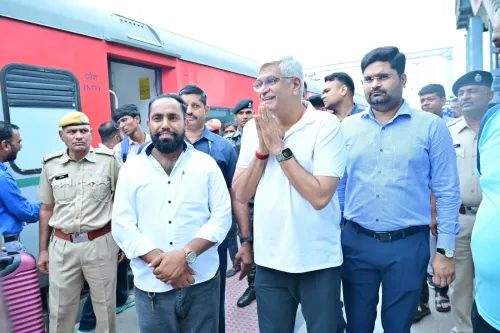
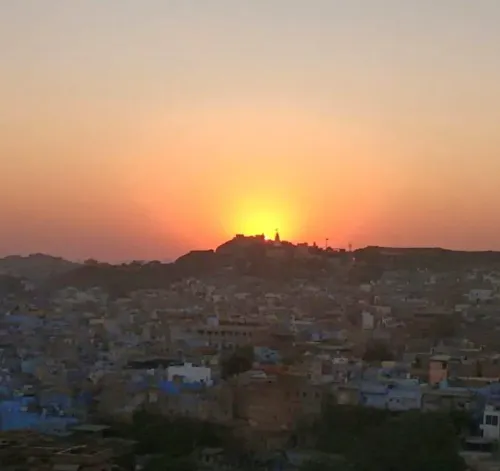
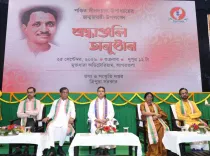
The Blue City got a new Mayor — and Union Culture and Tourism Minister Gajendra Singh Shekhawat flew in from Hyderabad to celebrate with his party faithful on Friday, 25 September 2026, marking the moment with a personal appearance that underscored just how much Jodhpur remains the political heartland he guards most closely.
Posting in Hindi, Shekhawat congratulated Prasannachand Mehta on assuming charge as Jodhpur Mayor, attributing the win squarely to two forces: the blessing of the public — whom he addressed as 'maalik' (the true masters) — and the relentless effort of grassroots party workers. 'Koti-koti pranam to the public, the true master,' he wrote, adding a 'barambar abhinandan' — repeated salutations — for every worker who made it happen.
A minister's homecoming and what it signals
The optics of a Union Minister cutting short a schedule in Hyderabad to attend a local civic celebration in Rajasthan are deliberate. For the BJP, municipal wins in Rajasthan are not footnotes — they are proof-of-organisation, demonstrations that the cadre machine still fires on all cylinders between state and general elections. Jodhpur, the sand-coloured fortress city of western Rajasthan, has long been Shekhawat's base: he holds its Lok Sabha seat and the city's civic outcomes are read as a direct barometer of his political health.
Shekhawat described the evening with workers as 'atyant sukhadaay aur utsavamay' — deeply joyful and festive — a phrase that captures the mood of a party that treats every rung of governance, from Parliament down to the municipal ward, as terrain worth contesting and celebrating.
Mehta's elevation and the BJP's municipal machine in Rajasthan
The elevation of Prasannachand Mehta to the mayoral chair represents the BJP's continued grip on Jodhpur's civic administration. Rajasthan's municipal politics have historically served as a training ground and loyalty-reward system for the party's state organisation, with central leaders such as Shekhawat playing a key role in mediating between competing local factions and projecting unified strength to the public.
The minister's public acknowledgement of workers — far more effusive than a standard congratulatory line — also serves a purpose: in a party built on volunteer energy, recognition from a senior central figure carries weight that no cabinet portfolio can replicate. It binds the grassroots to the hierarchy. And in Rajasthan, that binding is everything.
With municipal and bypolls still unfolding across the state, Shekhawat's visible presence in Jodhpur tonight is less a celebration and more a statement: the ground is watched, the workers are valued, and the city stays home.
Point of View
Municipal outcomes in Rajasthan are never treated as small-ticket events — they are organisational report cards. Shekhawat's conspicuous homecoming from Hyderabad reinforces his role as the undisputed political patron of Jodhpur, keeping the cadre energised at a time when the state's electoral calendar continues to roll. The effusive praise for grassroots workers is also classic BJP messaging: central figures visibly rewarding volunteer effort is the glue that holds together a party whose strength lies in its booth-level organisation, not just its top brass.
NationPress
26 Sept 2026
Frequently Asked Questions
Who is the new Mayor of Jodhpur?
Prasannachand Mehta has been elected as the new Mayor of Jodhpur, Rajasthan, as announced by Union Minister Gajendra Singh Shekhawat on 25 September 2026.
Why did Gajendra Singh Shekhawat go to Jodhpur on 25 September 2026?
Shekhawat flew from Hyderabad to Jodhpur to meet BJP workers and celebrate Prasannachand Mehta's election as Jodhpur Mayor.
Who is Gajendra Singh Shekhawat?
Gajendra Singh Shekhawat is the Union Minister of Culture and Tourism, a senior BJP leader, and the Lok Sabha MP from Jodhpur, Rajasthan.
What does 'maalik' mean in Shekhawat's post about Jodhpur Mayor?
Shekhawat used 'maalik' — meaning 'the true master' — to refer to the citizens of Jodhpur, emphasising that the public's blessing was central to the BJP's mayoral victory.
Is Jodhpur an important city for the BJP in Rajasthan?
Yes. Jodhpur is a key BJP stronghold in western Rajasthan and the home constituency of Union Minister Gajendra Singh Shekhawat, making its civic elections politically significant for the party.