Shekhawat Chairs EoDB Session for Tourism & Hospitality Sector
Synopsis
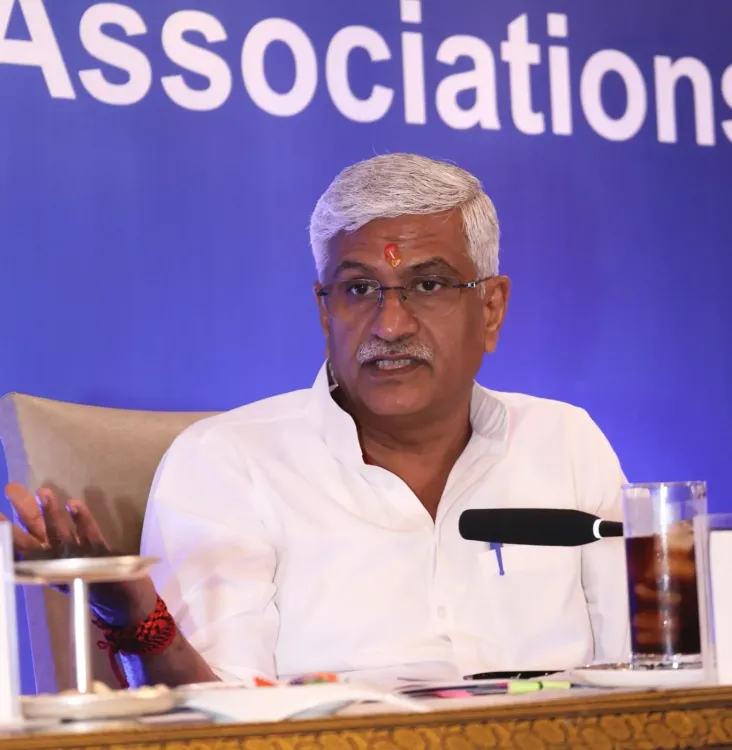
Union Culture and Tourism Minister Gajendra Singh Shekhawat on 22 June 2026 participated in an Ease of Doing Business Interactive Session with tourism and hospitality sector representatives in New Delhi, emphasising the sector's role in generating employment and prosperity under PM Modi's leadership.
Key Takeaways
Union Tourism Minister Gajendra Singh Shekhawat participated in an EoDB Interactive Session with tourism and hospitality sector representatives in New Delhi on 22 June 2026 .
The minister described tourism and hospitality development as a means of transforming the lives of crores of Indians .
The session aimed at identifying regulatory barriers and creating new opportunities for employment, development, and prosperity in the sector.
The event was tagged #12YearsOfSeva , linking it to the BJP-led government's 12-year governance milestone.
Outcomes from the session are expected to feed into policy consultations between the Ministry of Tourism , state governments, and regulatory bodies.
Smaller hospitality operators and MSMEs are seen as the primary beneficiaries of any resulting EoDB reforms.
Union Culture and Tourism Minister Gajendra Singh Shekhawat on Monday, 22 June 2026, participated in an Ease of Doing Business (EoDB) Interactive Session with representatives from the tourism and hospitality sector in New Delhi, reaffirming the government's commitment to making the industry a vehicle for mass economic transformation.
Context
Posting on X, Minister Shekhawat described the session as part of a larger mission: 'टूरिज़्म और हास्पिटैलिटी क्षेत्र का विकास करोड़ों लोगों के जीवन में बदलाव का माध्यम है' ('the development of the tourism and hospitality sector is a means of transforming the lives of crores of people'). The interactive format brought together industry stakeholders to identify regulatory friction and explore reforms that could accelerate investment and job creation in the sector.
The minister framed the session within Prime Minister Narendra Modi's broader governance agenda, noting that under his leadership the government is 'creating new opportunities for employment, development, and prosperity.' The post was tagged #12YearsOfSeva, linking the event to the BJP-led government's 12-year governance milestone.
Policy Backdrop
Ease of Doing Business reforms have been a centrepiece of the Modi government's economic strategy since 2014, initially focused on manufacturing and foreign investment rankings. In recent years, the framework has been extended to service sectors, including tourism and hospitality, where licensing requirements, land-use approvals, and compliance burdens have historically deterred private investment.
The Ministry of Tourism and the Ministry of Culture — both held by Shekhawat — together oversee a sector that spans heritage sites, pilgrimage circuits, adventure tourism, and hotel infrastructure. Government data has consistently positioned tourism as one of India's largest employers, with the sector's formal and informal workforce running into crores of workers across urban and rural geographies.
EoDB sessions of this kind typically result in a compiled list of industry recommendations that are forwarded to relevant ministries and state governments for regulatory review, making stakeholder dialogue a formal part of the reform pipeline.
Stakeholders and Impact
Representatives from across the tourism and hospitality value chain — including hoteliers, tour operators, travel agents, and heritage property owners — participated in the New Delhi session. For these players, regulatory simplification directly affects the cost and speed of project approvals, licence renewals, and compliance filings.
Smaller operators and micro, small, and medium enterprises (MSMEs) in the hospitality space stand to benefit most from EoDB improvements, as they typically lack the legal and administrative bandwidth to navigate complex multi-agency clearance processes. Streamlined norms could also encourage greater foreign direct investment in hotel and resort infrastructure, supporting the government's inbound tourism targets.
What's Next
The outcomes of the interactive session are expected to feed into ongoing policy consultations between the Ministry of Tourism, state governments, and regulatory bodies. As the government marks 12 years in office, tourism sector reforms are likely to receive heightened attention, given the industry's dual role as a foreign-exchange earner and a domestic employment generator.
If the recommendations from sessions like these translate into concrete regulatory changes — reduced approval timelines, single-window clearances, or rationalised licensing — the impact could be felt across India's vast and diverse tourism ecosystem, from Rajasthan's heritage circuits to the Himalayan adventure tourism belt and coastal destinations.
Point of View
Using tourism and hospitality as a politically visible test case ahead of what the ruling party is marking as a 12-year governance anniversary. For Shekhawat, who holds the dual portfolio of Culture and Tourism, convening industry dialogue in New Delhi reinforces his ministry's activist posture on economic policy rather than purely ceremonial functions. The framing around 'crores of lives' is a deliberate political signal connecting regulatory reform to mass welfare — a rhetorical bridge the BJP has used consistently to link governance milestones to ground-level impact. Whether the session produces actionable regulatory change or remains a consultative exercise will be the metric by which the industry ultimately judges its significance.
NationPress
22 Jun 2026
Frequently Asked Questions
What is the EoDB Interactive Session that Gajendra Singh Shekhawat attended?
It is an Ease of Doing Business interactive dialogue held in New Delhi on 22 June 2026, where Union Tourism Minister Gajendra Singh Shekhawat met representatives from the tourism and hospitality sector to discuss regulatory reforms and reduce business barriers in the industry.
What did Gajendra Singh Shekhawat say about tourism at the EoDB session?
Minister Shekhawat stated that the development of the tourism and hospitality sector is a means of transforming the lives of crores of people, and that the government is creating new opportunities for employment, development, and prosperity under PM Modi's leadership.
What is #12YearsOfSeva and why was it used in this context?
#12YearsOfSeva is a hashtag used by the BJP and the Modi government to mark 12 years of governance. Shekhawat used it to link the EoDB tourism session to this broader milestone, framing the reform initiative as part of a decade-plus governance record.
Who benefits from Ease of Doing Business reforms in India's tourism sector?
The primary beneficiaries are hotel operators, tour operators, travel agents, heritage property owners, and especially MSMEs in the hospitality space, who face complex multi-agency clearance processes. Simplified norms can also attract greater foreign direct investment in hotel and resort infrastructure.
What is Gajendra Singh Shekhawat's role in the Indian government?
Gajendra Singh Shekhawat is the Union Minister of Culture and Tourism in the Modi government. He is a senior BJP leader and a Lok Sabha Member of Parliament from Jodhpur, Rajasthan.