Shekhawat Credits Border-Area Service as His Political Turning Point
Synopsis
Union Culture and Tourism Minister Gajendra Singh Shekhawat reflects that serving in Rajasthan's border districts was the unexpected turning point that drew him directly into politics — a narrative common among BJP leaders from western Rajasthan.
Key Takeaways
Gajendra Singh Shekhawat posted on 28 October 2026 that his entry into politics came unexpectedly while serving in border areas of Rajasthan.
He used the word anayaas ('unexpectedly') to frame his political entry as driven by duty rather than personal ambition.
Shekhawat is the Union Minister of Culture and Tourism and a Lok Sabha MP from Jodhpur, Rajasthan .
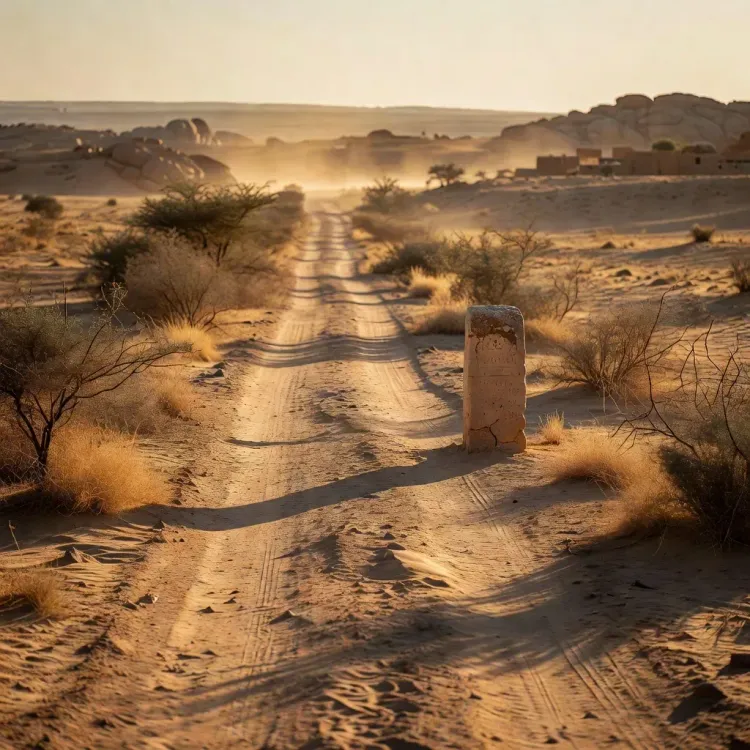
Western Rajasthan's border districts — including areas near Barmer and Jaisalmer — have historically been cited by BJP leaders as formative political grounds.
The post carried a video but no further official context, suggesting a moment of personal rather than institutional communication.
A spontaneous moment of public service along Rajasthan's border districts, not a calculated career move, set Union Culture and Tourism Minister Gajendra Singh Shekhawat on his political path — or so he reflected in a candid post on Wednesday, 28 October 2026.
Shekhawat wrote, 'सीमावर्ती क्षेत्रों में सेवा देते हुए राजनीति से सीधा जुड़ाव मेरे जीवन का टर्निग पॉइंट था, जो अनायास आया!' — translating plainly as: 'While serving in border areas, my direct connection with politics was the turning point of my life — and it came unexpectedly!' The single sentence carries the weight of a politician publicly crediting grassroots service, rather than party machinery, as his real origin story.
Border Districts as Political Schools for Rajasthan's BJP
Shekhawat represents Jodhpur, a Lok Sabha constituency that sits deep in western Rajasthan, close to the districts that run along the India-Pakistan border. For BJP leaders from this belt, early exposure to the logistical and human challenges of border communities — sparse infrastructure, security sensitivities, remote populations — has long served as both a moral credential and an organisational proving ground.
This pattern is well-established in the party's Rajasthan chapter: leaders who spent formative years in Barmer, Jaisalmer, Bikaner or the Shekhawati belt frequently invoke that experience when explaining why they entered formal politics. The implicit argument is always the same — service preceded ambition, not the other way around.
The 'Unplanned Entry' as Political Narrative
The word 'अनायास' (anayaas — 'unexpectedly, without effort') is doing real work in Shekhawat's post. In the vocabulary of Indian political self-presentation, describing one's entry into politics as unplanned distances the speaker from the perception of personal ambition and aligns them instead with a call to duty. It is a rhetorical move as old as modern Indian politics itself — and it tends to resonate most when the speaker can point to concrete ground-level work as evidence.
Shekhawat, now a senior Cabinet face of the BJP and a minister who straddles both cultural policy and tourism development, has previously spoken about Rajasthan's border regions in the context of heritage tourism and frontier infrastructure. Whether this post foreshadows a fresh initiative linking his personal biography to border-area policy remains to be seen — but the timing, mid-week and without a stated occasion, suggests a moment of genuine personal reflection rather than a planned communications exercise.
For a minister whose current brief spans ancient heritage sites and a multi-billion-rupee tourism sector, the reminder that his roots lie not in Delhi's corridors but in the dust of Rajasthan's border districts is, at minimum, a pointed piece of personal branding — and at most, a hint of where his political identity still lives.
Point of View
The reminder of a border-area origin also subtly repositions him within the BJP's internal geography — as someone whose credentials are rooted in hardship, not patronage. It may also be a quiet signal ahead of any Rajasthan-focused political cycle, where ground-level credibility with border communities carries real electoral weight.
NationPress
28 Oct 2026
Frequently Asked Questions
Who is Gajendra Singh Shekhawat?
Gajendra Singh Shekhawat is the Union Minister of Culture and Tourism in India, a senior BJP leader, and the Lok Sabha MP from Jodhpur in Rajasthan.
What did Shekhawat say about his entry into politics?
He said that serving in border areas of Rajasthan was the turning point of his life that led him directly into politics — and that it happened unexpectedly, without prior planning.
Which border areas is Shekhawat referring to?
Shekhawat has not specified exact locations in the post, but as a leader from Jodhpur in western Rajasthan, his reference to border areas is widely understood to mean the districts along the India-Pakistan frontier such as Barmer and Jaisalmer.
Why do BJP leaders from Rajasthan often talk about border area service?
Western Rajasthan borders Pakistan, and BJP leaders from that belt frequently credit early community or social service in those remote, underserved districts as the foundation of their political careers, lending grassroots credibility to their public image.
What ministry does Gajendra Singh Shekhawat currently head?
He currently heads the Ministry of Culture and Tourism in the Government of India.